Learn More About Sales Training and Onboarding Software
What is Sales Training and Onboarding Software?
In a competitive market where buyers have many options, selling a product or service requires more than basic sales experience. Even seasoned salespeople need time to understand a new product, target audience, messaging, and sales process before they can perform effectively.
For incoming sales representatives, onboarding sets the foundation for their success and shapes their perception of the company, product, and leadership. A weak or disengaging training program can slow ramp time and reduce confidence, while a strong onboarding experience equips reps with the knowledge, skills, and best practices they need to sell effectively.
Sales training onboarding tools SaaS distributed teams help organizations create structured, engaging programs for new hires. These tools often support product education, coaching, video roleplay, assessments, content creation, rep engagement, analytics, and integrations. Based on G2 reviews, sales managers and enablement leaders evaluate Sales training and onboarding software platforms by comparing onboarding workflows, coaching capabilities, ease of use, reporting, and how well the tools help reps develop and refine their selling skills.
Key Benefits of Sales Training and Onboarding Software
- Creates effective digital course materials for new sales reps
- Assesses the critical thinking skills of salespeople during and after the onboarding process
- Ensures comprehensive product knowledge and mastery of the internal sales process
- Expedites the onboarding process to ensure salespeople are effectively closing deals sooner
Who Uses Sales Training and Onboarding Software?
The programs in this software category are built for onboarding new employees in a sales-based role. As opposed to more generalized training eLearning software, these programs focus on developing educational content, practice tools, and skills assessments for sales organizations and dedicated sales teams within larger organizations.
Managers and sales leaders — Using these robust platforms, managers and sales leaders construct highly effective learning plans to ensure the employee onboarding process is as seamless as possible. Managers can create employee onboarding plans that are easily repeatable for each new hire brought onto the team, streamlining the onboarding process and saving time and resources for the organization.
Managers and team leaders who work closest to the sales process will use these tools at the outset. These individuals determine the proper onboarding process for each role on their sales team, and build out courses, workflows, and assessments for new employees in these positions. Every sales team is different. Depending on the size and structure of an organization, it may have a number of distinct roles across the sales floor (e.g. account executives, business development representatives). While varying positions share general product and company knowledge, they might require unique training programs tailored to their responsibilities. Within these software platforms, managers can construct specialized regimens for the employee onboarding process across all roles, with content, workshops, and assessments designed to help ramp new hires in each unique position.
New sales employees — As sales employees are hired, they are granted access to their respective training programs on the platform. Whether training for online sales, in-person sales, or global sales, new employees on a sales team benefit from the added instruction from these tools. Following the onboarding process developed by their managers can help new hires master the sales process and product offerings at their company, along with the customer interactions they are likely to encounter.
What are the Common Features of Sales Training and Onboarding Software for SaaS Distributed Teams?
Sales training and onboarding software for SaaS distributed teams helps companies train, enable, and ramp sales representatives across different locations, time zones, and work environments. These platforms are designed to support remote learning, consistent messaging, skills development, and performance tracking so that new and existing sales team members can become productive quickly, no matter where they work.
Remote lesson building — Sales training and onboarding platforms commonly include lesson-building tools that allow managers, sales enablement teams, and administrators to create structured training programs for distributed sales teams. These lessons may cover SaaS product knowledge, buyer personas, sales methodology, pricing models, objection handling, competitive positioning, CRM workflows, and account management processes. Since distributed teams cannot always attend live training together, these platforms often support self-paced learning modules, video lessons, templates, quizzes, and content libraries. Managers can organize lessons in a logical onboarding sequence so new hires understand the product, market, and sales process step by step.
Asynchronous training delivery — For SaaS teams working across multiple regions or time zones, asynchronous learning is an important feature. Sales reps can access onboarding materials, recorded trainings, product walkthroughs, and sales playbooks whenever it fits their schedule. This helps organizations deliver consistent training without requiring every employee to attend the same live session. Asynchronous training also allows new hires to revisit lessons, refresh their knowledge, and learn at their own pace while still following a structured onboarding path.
Training assessments and certifications — These platforms often include testing and assessment tools to evaluate whether sales reps understand key topics before moving forward. Managers can create quizzes, scenario-based assessments, product knowledge checks, and certification requirements. For SaaS sales teams, assessments may focus on explaining product features, qualifying leads, handling objections, using the CRM correctly, or demonstrating knowledge of subscription pricing and renewal processes. Some platforms also allow administrators to award badges, certificates, or completion milestones when reps meet specific requirements.
Virtual practice tools — Sales training software for distributed teams frequently includes practice tools that help reps build confidence before speaking with prospects. These tools may include virtual roleplays, call simulations, pitch recordings, email-writing exercises, and video-based practice assignments. Managers can ask reps to record a product demo, respond to a mock objection, or draft a follow-up email. These exercises are especially useful for remote SaaS teams because they allow managers to evaluate communication skills without needing to be in the same physical location.
Onboarding analytics and progress tracking — Analytics features help managers monitor course completion, engagement, assessment scores, readiness, and knowledge gaps across distributed teams. These insights help sales leaders identify who is ready for live selling, who needs additional coaching, and which parts of the onboarding program may need improvement.
Other Features of Sales Training and Onboarding Software: Feedback, Gamification, Instructor-Led Training, Manager Portals, Video Simulations
What is the best-rated onboarding software for sales teams?
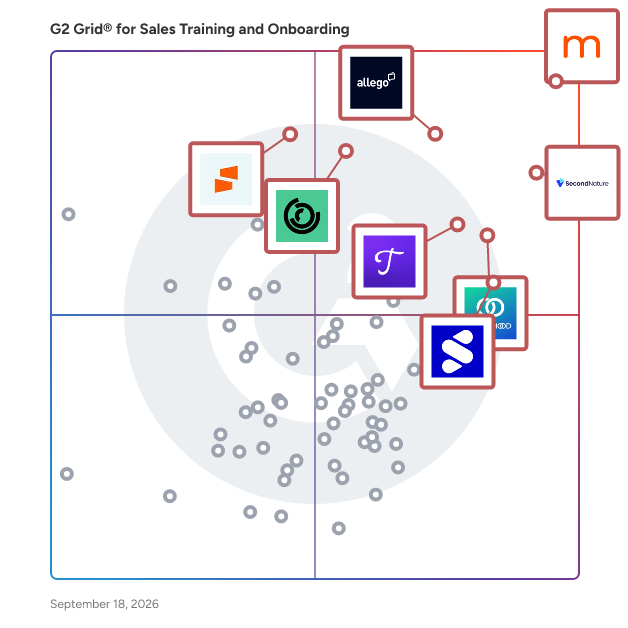
The best-rated onboarding software for sales teams blends learning content, coaching tools, and performance analytics to help reps ramp up quickly and consistently. Based on G2 reviews and sales team feedback, these platforms are recognized for their impact and usability:
-
SmartWinnr: Specializes in microlearning, gamification, and rep engagement tracking, making it a powerful tool for reinforcing key concepts and driving knowledge retention during onboarding.
-
SalesHood: Offers a collaborative onboarding and coaching platform with peer learning, manager-guided content, and real-time insights into rep readiness and engagement.
-
360Learning: Combines collaborative learning with customizable onboarding paths, enabling sales leaders to co-create training content and measure skill progression through integrated assessments.
Sales Training Software for Live Coaching, Interactive Skill Building, and Exercises
The best sales training software for live coaching and interactive skill building goes beyond static content by helping reps practice, receive feedback, complete exercises, and improve through coaching workflows. Based on G2 reviews and user feedback, these platforms are recognized for role-play, assessments, guided practice, coaching, and practice-based learning:
-
Mindtickle: Offers a strong sales readiness platform with coaching, assessments, certifications, scoring, and structured skill-building. It is a strong fit for teams that want to reinforce learning, track rep progress, and help managers identify where sellers need more practice.
-
Allego: Supports live and video-based coaching, feedback, practice, and rep skill development. It is especially useful for distributed teams that need recorded pitch reviews, coaching examples, guided feedback, and a more interactive alternative to one-way training.
-
SalesHood: Provides interactive sales training, pitch practice, coaching, and structured learning paths. It is well suited for teams focused on onboarding, reinforcing messaging, practicing sales conversations, and giving managers visibility into rep progress and skill gaps.
-
Second Nature AI: Specializes in AI-driven role-play and interactive sales exercises. It is a strong option for teams that want simulated sales conversations, scoring, feedback, and practice environments that help reps build confidence before real customer interactions.
Software and Services Related to Sales Training and Onboarding Software
Organizations can invest in a number of solutions to help their sales department. These solutions often help them close deals, satisfy customers, or represent a company’s brand well. A company might consider one or more of the following solutions when researching the onboarding programs featured in this category.
Sales coaching software — Throughout the process of onboarding new hires—and, for many companies, long after training is complete—managers and team leads might offer hands-on feedback related to sales calls and other customer interactions. Sales coaching software enables managers and senior team members to observe, collaborate on, and analyze sales calls by less experienced sales reps. In some cases, these tools allow observers to give live feedback during real calls. This gives peace of mind and valuable direction to new recruits as they refine their technique, while satisfying customers and closing deals along the way.
Coaching platforms might generate analytics related to calls to help identify winning tactics (e.g. upsell opportunities) and responses that have the highest chance of success. These platforms can be a natural complement to the structured learning programs of employee onboarding software tools, allowing for continuous improvement of sales techniques and a winning relationship between managers and sales reps.
Sales training providers — In a number of cases, enlisting outside professionals can reap significant benefits when it comes to ramping sales reps and managers. Sales training providers offer educational services along the spectrum of sales expertise, with interactive workshops designed around common practice areas in the field. Managers might consult these specialists for focused onboarding of new recruits or continuing education of existing sales teams. Depending on the training provider you work with, courses might be offered digitally, in person, or through a combination of the two. By working with these providers, sales departments can bypass several aspects of internal onboarding, or supplement internal training to ensure maximum results.
Sales enablement software — Sales enablement software provides salespeople with a repository of valuable content to be accessed throughout the sales cycle, and in some cases, during customer meetings. There is a great deal of information that can be studied and retained in a traditional sales role. These platforms ensure sales reps can access real-time content such as sales playbooks at critical moments. They can also access these features in their downtime.
Sales managers can program these solutions with all the useful content they want, so that at different points in the sales journey, sales reps can pull resources from proven sales pitches and granular product details. They can include marketing collateral that can be accessed and shared with customers during important meetings. By properly utilizing sales enablement technology, companies ensure alignment between marketing and sales teams This gives sales reps the tools to stay “on brand" and deliver proven messaging when it matters most. In some cases, these platforms offer data on customer engagement related to specific marketing content or sales pitches, helping teams understand what works and continually improving results.
AI sales assistant software — AI sales assistant software harnesses the power of artificial intelligence to help sales professionals perform their jobs at the highest level. This includes automation of routine tasks (e.g. updating customer databases, lead follow-ups) and predictive insights about specific meetings or customer accounts. This is an emerging software space, as AI technology continues to be improved and refined for this and other use cases. AI sales assistants can be a transformative addition to a sales department in their current state, and will become more common in sales departments in the future.