Learn More About Influencer Marketing Platforms
Influencer Marketing Platforms Features
Influencer recruitment — Influencer marketing software enables companies to locate and recruit social influencers, either through a proprietary influencer marketplace or through an AI-powered algorithm which searches for influencers across social networks. Recruitment tools help marketers build digital profiles of relevant influencers with information about them and their audience.
Influencer scoring — Influencer scoring features help businesses identify which influencers will be most relevant to their brand’s message or products, and help provide the most engagement. Platforms use proprietary algorithms to “score" influencers and assess their authority within a business’s target market.
Audience analysis — Influencer marketing platforms analyze the demographic and psychographic characteristics of influencers and their followers. Marketers can use this feature to understand an influencer’s brand affinities, interests, and aesthetic. For example, a beauty brand can use audience analysis to target influencers who are interested in makeup or skincare products.
Influencer segmentation — Segmentation features allow brands to separate their influencers into groups based on specific characteristics, such as their past work on brand initiatives, follower count, or campaign engagement. These tools help marketers manage groups of influencers according to the business’s needs, as well as target the appropriate creators for each campaign.
Influencer collaboration — Influencer marketing software acts as an influencer CRM of sorts, enabling marketers to maintain records of past partnerships and communications. Collaboration tools ensure all members of a marketing team can view and access their business’s past engagement with influencers so everyone is on the same page.
User-generated content (UGC) management — Influencer campaigns generate large quantities of user-generated content for brands. UGC management tools help them schedule, publish, and optimize this content for their own purposes. From a centralized platform, marketers can configure content usage and ownership rights for the various types of content their ambassadors produce.
Workflow capability — Since influencer campaigns are essentially paid advertisements, businesses need to approve the content before the influencer posts it on social media. Influencer marketing software provides workflow capabilities that allow marketers to automate the review and approval processes.
Influencer analysis — Influencer analytics features evaluate the performance of influencers and their associated campaigns. These tools rank influencers according to their impact on key performance indicators (KPIs) such as revenue, brand mentions, and contributed work.
Reporting and dashboards — Campaign analytics features are essential for measuring the success of a business’s influencer marketing strategy. Influencer marketing software allows marketers to monitor and visualize all influencer campaigns through a dashboard that displays key success metrics in real time. These platforms can also generate comprehensive reports to be distributed to relevant stakeholders.
Data importing and exporting — Import tools enable marketers to import their existing list of brand ambassadors to an influencer marketing platform. Businesses can create more detailed profiles for their influencers and manage relationships directly from the platform. Export tools allow marketers to export influencer data from the platform, such as contact information and audience analytics.
Other Features of Influencer Marketing Platforms: E-commerce integration, Influencer compensation, Influencer database, Influencer whitelisting, Opt-in network, Social commerce
Influencer Marketing Platforms FAQs
Most Popular FAQs
Which influencer marketing platform has the best reviews on G2?
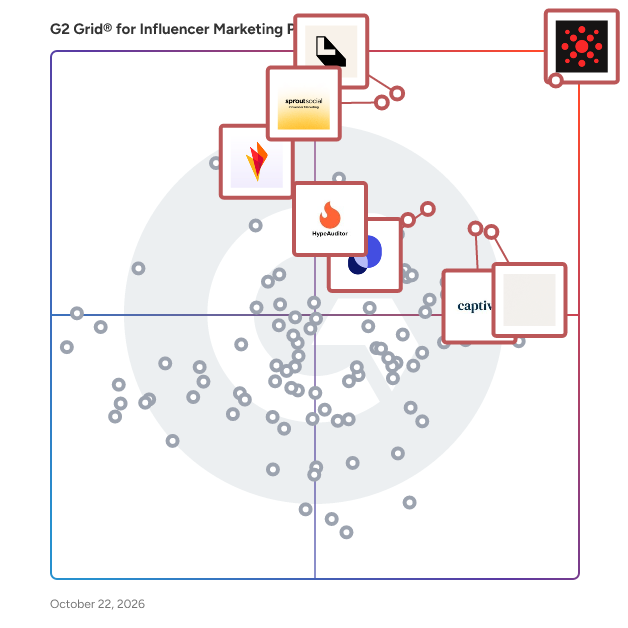
The highest-reviewed influencer marketing platforms on G2 span affiliate and partnership management tools, creator marketplaces, and full-suite influencer campaign platforms.
-
impact.com: The most reviewed platform in the category, used by brands and agencies for partnership and influencer program management across affiliate, creator, and ambassador channels.
-
Sprout Social Influencer Marketing: The second most reviewed platform with strong SMB representation, covering influencer discovery, campaign management, and reporting within a social media management context.
-
Insense: The third most reviewed platform and one of the highest-rated, with brands and agencies citing its UGC-focused creator marketplace as a fast path to sourcing content at scale.
-
Tracknow: The fourth most reviewed platform and among the highest-rated in the entire category, with a predominantly SMB reviewer base citing its affiliate and influencer tracking capabilities and near-perfect ease-of-use scores.
How much do influencer marketing platforms cost?
Pricing varies widely depending on whether the platform is self-serve, managed, or performance-based. Self-serve tools typically charge monthly subscription fees ranging from a few hundred to several thousand dollars, depending on the creator database size and campaign volume. Managed and marketplace platforms often charge per campaign or take a percentage of creator fees. Enterprise contracts are almost always custom-quoted based on seat count, integrations, and support tier.
Which influencer marketing platforms are recommended for strong ROI?
ROI is the most cited evaluation benchmark in G2 reviews for this category, with buyers measuring it through conversion tracking, affiliate revenue attribution, and cost-per-piece of creator content.
-
Tracknow: Among the highest-rated platforms in the category with near-perfect recommendation scores, reviewed by performance-focused teams for precise affiliate and influencer tracking that ties creator activity directly to revenue outcomes.
-
Agentio: Highly rated with strong recommendation scores, cited by brands for its creator-to-conversion workflow that makes it straightforward to attribute campaign spend to measurable business results.
-
Statusphere: Reviewed by consumer brands for its managed micro-influencer model, with teams citing consistent content output and product placement rates as the basis for favorable ROI calculations compared to running campaigns in-house.
What is the best influencer marketing platform for mobile users?
Mobile usability is a practical requirement for both brand-side marketers managing campaigns on the go and creators interacting with platforms from their phones. These platforms earn the strongest ease-of-use and ease-of-setup scores among reviewers in this category.
-
Trackdesk: Earns the highest ease-of-setup score in the category among well-reviewed platforms, with SMB reviewers consistently describing a smooth, mobile-accessible experience from onboarding through campaign tracking.
-
Modash: Among the highest-rated platforms in the category, reviewed by marketing teams for its clean influencer discovery and campaign management interface that works effectively across devices without requiring desktop access.
-
SARAL: A highly rated platform with SMB reviewers citing its accessible interface and streamlined outreach workflows as well-suited to marketers managing influencer relationships from mobile devices.
Which tool is commonly used for influencer marketing?
The most commonly used influencer marketing tools on G2 vary by company size and use case.
-
impact.com: Leads the category by review volume and is the most widely adopted among mid-market and enterprise teams running multi-channel partnership programs.
-
Sprout Social Influencer Marketing: The second-most-reviewed platform, most frequently used by teams already on social media management platforms.
-
Insense: Among the most actively reviewed tools for smaller teams and creator-first programs, with consistently high satisfaction scores.
-
Tracknow: Also among the most actively reviewed options for smaller teams and creator-first programs, with consistently high satisfaction scores.
What are the best influencer marketing platforms for mid-market teams that need real-time analytics?
Based on G2 reviews, mid-market marketing teams evaluating the best influencer marketing platforms typically weigh real-time analytics depth against per-campaign pricing, since they are running enough creator programs to justify dedicated software but not at the volume that absorbs enterprise contracts. Reviewers from growing teams cite real-time reporting on engagement, attribution, and conversion as the analytics features that determine whether the platform earns its budget, with the strongest platforms surfacing campaign performance within the same dashboard used for daily creator communications.
Which influencer marketing platforms are best for streamlined workflow and strong team adoptio
Based on G2 reviews, the most trusted influencer marketing platforms are those that combine streamlined workflow automation with strong team adoption across operations managers, campaign leads, and partnership teams. Reviewers consistently mention centralized creator communications, automated payouts, and unified campaign tracking as the workflow features that replace spreadsheet-based programs at scale. For operations managers running multi-creator programs, the platforms most often recommended in user reviews are those that consolidate creator discovery, contract management, content approval, and performance reporting into a single environment that finance and brand stakeholders can also access. The best influencer marketing platforms pair that streamlined workflow with strong team adoption from the first campaign cycle, and reviewers tie this directly to long term adoption and retention: influencer marketing platforms stay in the stack when daily users keep choosing them over spreadsheets after the initial rollout, while tools that add steps to creator communications or reporting quietly lose their seats at renewal.
What are the most reliable influencer marketing platforms according to operations managers at technology companies?
The most reliable influencer marketing platforms in reviews from operations managers at technology companies hold up on the risk points that matter most: tracking that never drops, payouts that clear on schedule, and creator data that stays accurate. Based on G2 reviews:
-
impact.com: Reviewers describe dynamic tracking that consistently holds up alongside fast, solution-oriented support, with information technology and services among the platform's top reviewer industries.
-
Later Influence: Reviewers credit payment-history transparency for standardizing creator rates and account reps who keep programs stable through process changes, on top of the content delivery consistency enterprise reviewers already cite.
-
Awin: Carries the category's strongest preserved evidence for tracking infrastructure reliability at high transaction volumes.
The honest counterweight from recent reviews: payment configuration rigidity still frustrates some operations teams, so validating payout workflows during a trial remains the practical test of reliability claims.
Small Business FAQs
What is the most affordable influencer marketing platform for small businesses?
Small business buyers prioritize low-cost or performance-based pricing, minimal setup, and platforms that don't require a dedicated influencer marketing team to operate. See the full list of influencer marketing platforms for SMBs on G2.
-
Influencers.club: A well-reviewed platform with a strong SMB reviewer base, cited by small brands for connecting with creators at an accessible price point without requiring a minimum campaign spend commitment.
-
PartnerStack: Reviewed positively by small teams for its partner and influencer program management with transparent pricing, cited as a practical option for businesses running affiliate and creator programs without a dedicated influencer budget.
-
Afluencer: A well-rated platform reviewed by small businesses for connecting brands directly with creators at a price point suited to teams without dedicated influencer marketing budgets.
What is the best influencer marketing platform for startups?
Startups on G2 prioritize platforms that require minimal onboarding, deliver quick creator matches, and don't lock teams into long contracts before a program is proven.
-
Tracknow: The highest-rated platform in the category among tools with 50 or more reviews, with a strong SMB reviewer base citing fast setup and reliable tracking as reasons early-stage teams adopt it for affiliate and influencer programs.
-
SARAL: A highly rated platform with an SMB-skewed reviewer base, reviewed by startup marketing teams for streamlined influencer outreach and relationship management that doesn't require a large team to operate.
-
Creator.co: Reviewed by small brands and startups for its self-serve marketplace model, allowing teams to run influencer campaigns without a managed service or agency layer.
Which influencer marketing platform is the most user-friendly for small teams?
Ease-of-use and ease-of-setup scores from G2 reviewers at smaller companies identify a clear group of platforms that marketers can operate without technical onboarding or dedicated support.
-
Trackdesk: Earns one of the highest ease-of-setup scores in the entire category, with small team reviewers describing it as one of the fastest platforms to get running from sign-up to first tracked campaign.
-
Agentio: Among the highest-rated platforms in the category, with strong ease-of-use scores, reviewed by small marketing teams for its clean interface and straightforward creator matching and campaign workflow.
-
Storyclash by Kolsquare: A platform with a predominantly SMB reviewer base, reviewed for its accessible content tracking and creator discovery interface that small teams can navigate without prior influencer marketing tool experience.
What are the best influencer marketing platforms for e-commerce and DTC brands?
Consumer goods, retail, and apparel and fashion together represent three of the top five industries in G2 reviews for this category, with DTC and e-commerce brands seeking platforms that connect creator content directly to conversion tracking.
-
Statusphere: Reviewed by consumer brands and DTC teams for its managed micro-influencer seeding model, with reviewers citing consistent product placement and content output for e-commerce teams without in-house influencer management capacity.
-
Aspire: A well-rated platform with a strong SMB and retail reviewer base, cited by e-commerce brands for end-to-end creator relationship management and affiliate link tracking built around DTC campaign workflows.
-
#paid: Reviewed by consumer brand marketers for its curated creator marketplace and content approval workflow, with reviewers noting its fit for brands that want editorial control over influencer content before it goes live.
How do small marketing teams measure ROI from influencer campaigns without a data analyst?
Most modern influencer platforms address this through built-in dashboards that aggregate reach, engagement, and conversion data without manual tracking. Reviewers at small teams consistently rate platforms higher when reporting is automated and tied directly to affiliate links or promo codes rather than relying on self-reported metrics from creators.
Enterprise FAQs
What is the best-rated influencer marketing platform for tech enterprises?
Marketing, advertising, information technology, and services are two of the top industry segments in G2 reviews for this category. See the full list of influencer marketing platforms for enterprises on G2.
-
impact.com: The most reviewed platform in the category with the strongest enterprise representation, consistently rated by large organizations running complex multi-channel partnership programs.
-
Sprout Social Influencer Marketing: The second most reviewed platform with enterprise reviewer representation, cited by large marketing teams for integrating influencer campaign management within a broader social media and analytics workflow.
-
Meltwater: An enterprise media intelligence platform with influencer marketing capabilities, reviewed by large organizations for combining creator discovery and social listening in a single environment.
What is the most reliable influencer marketing platform for enterprises?
Enterprise teams on G2 evaluate reliability through platform uptime, consistency of tracking and attribution data, quality of account management, and stability of creator database updates.
-
Awin: A global affiliate and influencer marketing network reviewed by enterprise buyers for its established publisher relationships, reliable tracking infrastructure, and payment processing at high transaction volumes.
-
Later Influence: Reviewed by enterprise and mid-market marketing teams for campaign management stability and consistent creator vetting, with reviewers citing reliable content delivery timelines as a key operational strength.
-
StatSocial: An audience intelligence and influencer analytics platform reviewed by enterprise buyers for the consistency and depth of its social audience data, particularly for brand safety and audience verification use cases.
What is the best-reviewed influencer marketing platform for enterprise app integration?
Integration with CRM, social media management, and marketing analytics tools is a primary technical requirement for enterprise buyers, with large teams evaluating how cleanly creator and campaign data flows into existing marketing stacks.
-
Influential powered by Captiv8: Among the highest-rated platforms in the entire category, reviewed by enterprise buyers for its AI-driven creator matching and data integrations that connect influencer performance to broader brand measurement frameworks.
-
HypeAuditor: Reviewed by mid-market and enterprise teams for its API access and data export capabilities, with analytics teams citing its audience quality scoring as a reliable data source for campaign attribution models.
-
Meltwater: Cited by enterprise reviewers for integrating influencer discovery and performance data within a platform that connects to PR, social listening, and media monitoring workflows.
Which influencer marketing platforms are best suited for brand safety and creator vetting at scale?
Brand safety and creator audience authenticity are among the most cited enterprise requirements in G2 reviews for this category, with large organizations needing platforms that can verify follower quality, flag risk factors, and maintain audit trails across creator relationships.
-
Influential powered by Captiv8: One of the highest-rated platforms in the category, reviewed by enterprise brand teams for its AI-powered creator vetting and audience quality analysis that supports brand safety workflows at scale.
-
Kolsquare: A well-reviewed platform cited by brand safety-focused teams for its audience authenticity scoring and compliance-oriented creator profile data across European and global markets.
-
Humanz: A highly rated platform reviewed for its creator audience verification capabilities and campaign transparency features that support brand safety requirements in regulated industries.
What do enterprise buyers most commonly dislike about influencer marketing platforms?
The most cited dislikes in enterprise G2 reviews include gaps in creator databases in non-English markets, inconsistent attribution data when campaigns run across multiple channels, and integrations that require custom development to maintain. Sprout Social Influencer Marketing reviewers frequently flag the complexity of pricing at scale. impact.com reviewers cite a steep learning curve for new users managing complex partner program structures. Piloting with a single campaign type before expanding to a full enterprise rollout is the most commonly recommended approach.
Last updated on April 23, 2026