







2026 Best Software Awards are here!See the list

File Type

by Dibyani Das
File type refers to the format in which a file is saved and how software reads it. Learn common file type examples, how they work, and why they matter.

What is a file type?

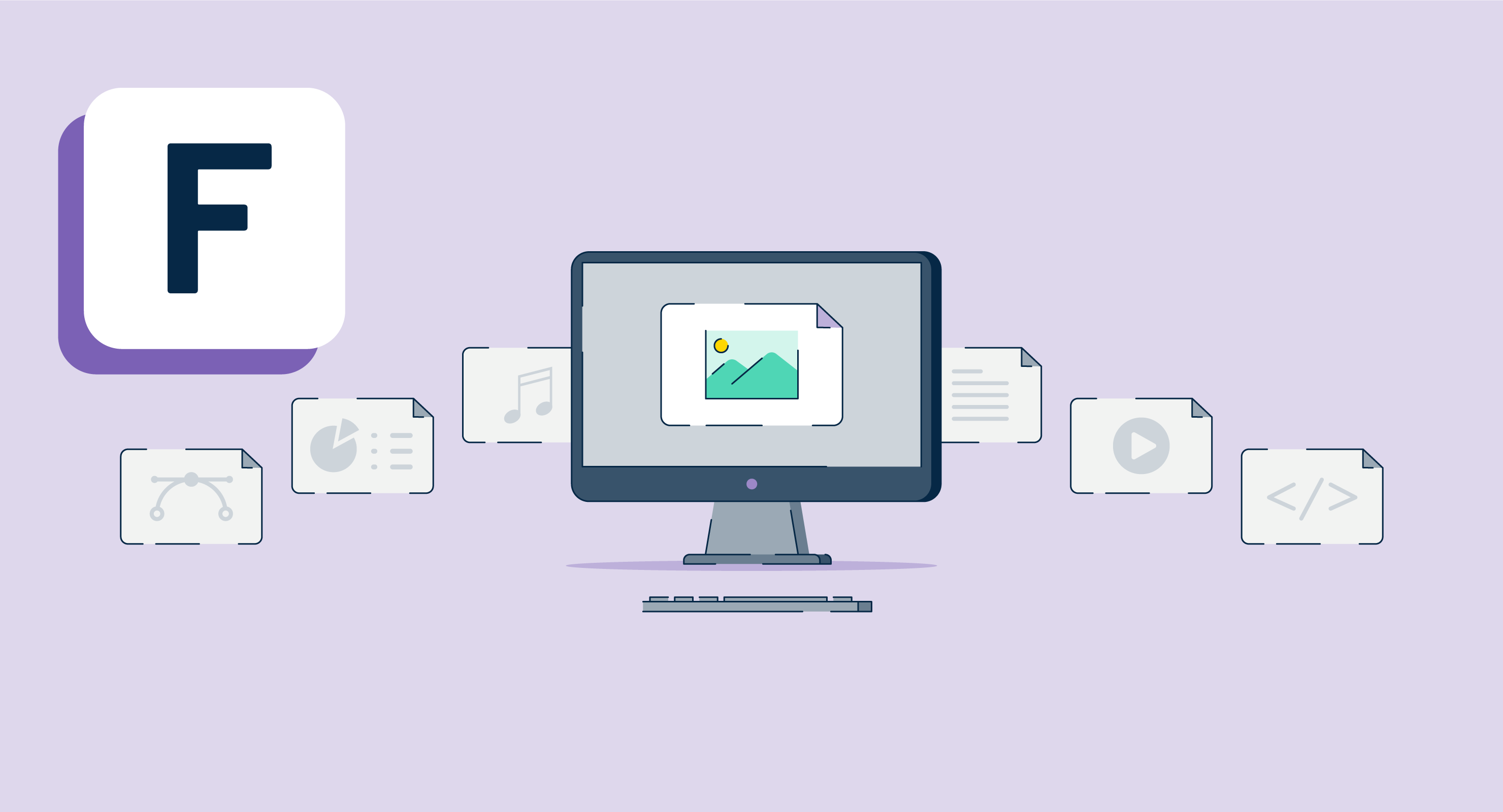
A file type is the classification of a digital file that determines how its data is structured, stored, and opened by software applications. It is typically identified by a file extension (such as .pdf, .docx, or .jpg), which signals the file format and the program required to access or edit it.

A file format defines the internal structure and encoding of the data within the file, ensuring compatibility between systems and applications. Businesses rely on various file types to store documents, images, databases, and multimedia content, making proper file management and compatible file reader software essential for secure storage, efficient retrieval, and data integrity.

What are the types of files?

File types are categories of digital files grouped by their content, function, and format, each identified by a file extension that determines how the file is stored and which software can open it. These classifications help individuals and businesses organize data, manage storage, and maintain system compatibility.

  • Text files: A text file is a file that contains lines of electronic text. Common extensions for this file type include .doc, .docx, .rtf, .txt, and .pages.
  • Data files: A data file is a file that contains input and output data to be used by a computer program. Common extensions for this file type include .csv, .sdf, .ppt, .pptx, and .xml.
  • Audio files: Audio files contain digital audio content to be stored in a computer. Common extensions for this file type include .mp3, .wav, .m4a, and .wma.
  • Video files: A video file is a type of file used to store digital video content on a computer system. Common extensions for this file type include .mp4, .mpg, .wmv, and .m4v.
  • 3D image files: A 3D image file is used to store three-dimensional modeling data. Common extensions for this file type include .max, .obj, and .3dm.
  • Raster image files: A raster image file is a collection of pixels that define an assortment of colors to be displayed on a screen. Common extensions for this file type include .psd, .tiff, .bmp, and .png.
  • Vector image files: Vector image files are graphic files commonly used for print and digital graphics. Common extensions for this file type include .ai, .eps, and .spg.
  • Page layout files: Page layout files contain both text and image data to create printable publications. Common extensions for this file type include .indd, .pct, and .pdf.

    Understanding these file types improves file management, data organization, storage efficiency, and cross-platform compatibility across digital environments.

What are the uses of file types?

File types are used to classify, organize, and manage digital data, ensuring files can be opened, grouped, and secured efficiently within business systems. They help developers and organizations store, retrieve, and process data using the correct software applications.

  • Application identification:  File types determine which programs can open or edit a file, as the file extension signals the associated software and file format.
  • Content recognition and organization: File types and extensions allow developers and business stakeholders to identify file contents without opening them, making it easier to group similar files and streamline file management.
  • Security verification: File types help assess file trustworthiness before access. For example, executable (.exe) files in email attachments are often flagged as potentially malicious, helping security teams prevent unauthorized or harmful activity.

What are the basic elements of files?

The basic elements of a file are the file name, file extension, and file metadata, which together identify, classify, and describe a digital file. These components make files recognizable, searchable, and accessible within business systems and storage environments.

  • File name: A unique name assigned to a file to help users identify and locate it quickly within folders or storage systems.
  • File extension: The set of letters that appears after the filename (such as .pdf or .xlsx) and indicates the file type and associated file format.
  • File metadata: Embedded information that describes the file’s properties, including creation date, modified date,  file size, creator, and file type, supporting file management and retrieval.

Together, these elements ensure efficient file organization, compatibility with software applications, and streamlined data management across systems.

What are the best practises for file types in business?

The best practices for managing file types in business include standardizing file-naming conventions, organizing files by type, maintaining clear documentation, and ensuring secure, centralized storage. A structured file management system improves accessibility, reduces duplication, and supports data integrity across teams.

Key best practices include:

  • Organize files by file type and function: Group documents, images, databases, and media files into clearly labeled folders to improve retrieval and workflow efficiency.
  • Use consistent naming conventions: Standardized file names help prevent duplicates, improve searchability, and simplify version control.
  • Document file management policies: Create clear guidelines for file formats, storage locations, retention policies, and access controls.
  • Centralize storage with controlled access: Store business files in shared drives or cloud platforms with role-based permissions to enhance collaboration and security.
  • Ensure software compatibility: Use appropriate file readers and management tools to support different file formats and maintain cross-platform compatibility.

What is the difference between file types and file formats?

File types and file formats are related but distinct concepts: the file type identifies the file category and extension, while the file format defines how the data is structured and stored internally. Understanding this difference ensures proper software compatibility, accurate file management, and seamless data exchange across platforms.

File type File format
Identifies the file by its extension (e.g., .pdf, .jpg, .docx).

Defines the internal structure and encoding of the data within the file.

Indicates which software application can open or edit the file. Determines how the file’s content is stored, rendered, and interpreted by systems.

Frequently asked questions about file type

Q1. What is a file type example?

A file type defines the format and structure of a digital file, determining how it is stored and opened by software. For example, a PDF is a document file type, a JPG is an image file type, and a DWG is a CAD file type used in engineering design. Each file type affects file size, compatibility, and how data can be shared or used in processes like data export.

Q2. What are 5 file extensions?

Five common file extensions are .pdf, .docx, .jpg, .png, and .xlsx. These extensions indicate the file type and help operating systems and applications recognize how to open the file. Other examples include .dwg for a CAD file and .csv for data export. File extensions also influence file size , compression, and storage requirements.

Q3. How can I check the file type?

You can check a file type by looking at its file extension, which appears after the period in the file name (e.g., .pdf or .png). On Windows, you may need to enable “File name extensions” in File Explorer settings. On macOS, you can right-click the file and select “Get Info” to view its type.  The file properties or details section also shows the associated application and format.

Q4. What are the 5 file formats for images?

Five common image file formats are JPEG (.jpg), PNG (.png), GIF (.gif), TIFF (.tiff), and BMP (.bmp). JPEG is widely used for photographs, PNG supports transparency, GIF allows simple animations, TIFF is used for high-quality images, and BMP stores uncompressed image data.

Learn how file size is measured and managed efficiently to optimize system performance and data transfer.

Dibyani Das
DD

Dibyani Das

Dibyani is a former Content Marketing Specialist at G2. In her free time, you can find her scribbling fanfiction and brushing up her knowledge on various fandoms (Harry Potter, mostly).

File Type Software

This list shows the top software that mention file type most on G2.

Google Workspace enables teams of all sizes to connect, create and collaborate. It includes productivity and collaboration tools for all the ways that we work: Gmail for custom business email, Drive for cloud storage, Docs for word processing, Meet for video and voice conferencing, Chat for team messaging, Slides for presentation building, shared Calendars, and many more.

Dropbox lets you save and access all your files and photos in one organized place, and share it with anyone. Whether you run a solo biz or lead a large, complex team, Dropbox helps your work flow better.

Software delivers even more imaging magic, new creative options, and the Adobe Mercury Graphics Engine for blazingly fast performance.

Adobe Acrobat means a more seamless experience for your users, fewer hassles for your IT team.

Notepad++ is a free, open-source text and source code editor for Windows, designed to provide a lightweight yet powerful alternative to the standard Notepad. Developed in C++ and utilizing the Scintilla editing component, it offers enhanced performance and a wide array of features tailored for developers and general users alike. Key Features and Functionality: - Syntax Highlighting and Folding: Supports over 70 programming, scripting, and markup languages, including C, C++, Java, HTML, XML, and Python, facilitating easier code reading and organization. - Tabbed Document Interface: Allows users to work with multiple open files within a single window, enhancing productivity and ease of navigation. - Auto-Completion: Provides suggestions for code completion, reducing typing effort and minimizing errors. - Search and Replace with Regular Expressions: Enables powerful text manipulation capabilities across multiple documents. - Multi-View and Multi-Edit: Supports split-screen editing and synchronized scrolling, allowing simultaneous editing of different parts of a document or multiple documents. - Macro Recording and Playback: Automates repetitive tasks by recording sequences of actions for later use. - Plugin Support: Extensible through a robust plugin architecture, with over 140 plugins available to add functionalities such as FTP support, spell checking, and more. Primary Value and User Solutions: Notepad++ addresses the need for a versatile and efficient text editor that caters to both simple text editing and complex coding tasks. Its lightweight design ensures quick startup and responsiveness, while the extensive feature set supports a wide range of programming and scripting needs. By offering a customizable interface, support for numerous languages, and the ability to handle large files, Notepad++ enhances productivity and streamlines the development process for programmers, web developers, and general users seeking an advanced text editing solution.

With Microsoft OneDrive you can store any file on your SkyDrive and it's automatically available from your phone and computers. No syncing or cables needed.

The free global standard for reliably viewing, printing, and commenting on PDF documents

Quickly create images and videos to give feedback, solve a problem, or show off something cool.

Box is the leader in Intelligent Content Management, helping teams securely manage, collaborate, and automate their work with AI-powered tools. It provides one secure platform for the entire content lifecycle, from storing and sharing to signing, automating, and activating content with AI. With Box AI, teams can query documents, summarize reports, and streamline processes across departments.Box enforces advanced security and compliance with HIPAA, GDPR, FINRA, and FedRAMP certifications, plus AI guardrails that protect data in motion and at rest. Trusted by AstraZeneca, Morgan Stanley, and the U.S. Air Force, Box powers mission-critical collaboration across regulated industries and global businesses. With over 1,500 integrations, including Microsoft 365, Google Workspace, Salesforce, Slack, and DocuSign, Box connects seamlessly with your everyday tools.APIs and SDKs enable customization so Box adapts to your workflows.

Vector graphics software used by designers of all types who want to create digital graphics, illustrations, and typography for all kinds of media: print, web, interactive, video, and mobile.

UltraEdit is a powerful text editor and code editor for Windows, Mac, and Linux that supports nearly any programming language and easily handles huge (4+ GB) files. Includes (S)FTP, SSH console, powerful find/replace with Perl regex support, scripting / macros, and more.

DVBlast is a lightweight and robust streaming application developed by VideoLAN, designed for streaming digital TV (DVB) channels over a network. It operates by accessing a DVB device, tuning it to the desired frequency, applying PID filters, configuring a Conditional Access Module (CAM), and demultiplexing the transport stream packets to multiple RTP outputs. DVBlast is intended to serve as the core of custom Integrated Receiver Decoders (IRD) or Conditional Access Systems (CAS) on Linux-based PCs equipped with compatible DVB hardware. Key Features and Functionality: - Minimal Resource Usage: DVBlast is engineered for environments with limited memory and CPU resources, ensuring efficient performance without unnecessary overhead. - Broad Input Support: It supports various input methods, including DVB-S, DVB-S2, DVB-C, DVB-T devices, DVB-ASI cards, and UDP/RTP streams carrying transport streams. - Flexible Output Options: The application can output multiple RTP streams with options for hardware or software PID filtering, PID-based or service-based demultiplexing, and optional descrambling via CAM devices. - Stability and Reliability: Designed for continuous 24/7 operation, DVBlast emphasizes stability and minimal interference with the original stream source. - IPv6 Support: It includes support for IPv6 networks, accommodating modern networking requirements. - Open Source: Released under the GPLv2 license, DVBlast allows for community contributions and customization. Primary Value and User Solutions: DVBlast addresses the need for a straightforward, efficient, and reliable tool to stream DVB channels over networks without the complexities of transcoding or remultiplexing. Its focus on stability and minimal resource consumption makes it ideal for setting up custom IRD or CAS solutions, particularly in scenarios requiring continuous, uninterrupted streaming. By supporting a wide range of input methods and offering flexible output configurations, DVBlast provides users with a versatile solution for their digital TV streaming needs.

Slack brings all your communication together in one place. It’s real-time messaging, archiving and search for modern teams.

Office Productivity Suite Includes Word, Excel, and PowerPoint

Canto's digital asset management technologies enable organizations to manage digital content.

GIMP is a cross-platform image editor available for GNU/Linux, macOS, Windows and more operating systems. It is free software, you can change its source code and distribute your changes.

Apache OpenOffice is a free and open-source productivity suite that offers a comprehensive set of applications for various office tasks. It includes Writer for word processing, Calc for spreadsheets, Impress for presentations, Draw for graphics, Base for database management, and Math for formula editing. Designed to be compatible with other major office suites, Apache OpenOffice supports the OpenDocument Format (ODF) and can handle files from Microsoft Office and other formats. Its user-friendly interface and extensive language support make it accessible to a global audience. As a mature and powerful product with a history spanning over two decades, Apache OpenOffice provides a reliable and cost-effective solution for individuals, businesses, and educational institutions seeking a versatile office suite without licensing fees.

Adobe Photoshop Lightroom is a comprehensive photo editing and management application designed for photographers of all skill levels. It offers a suite of tools to import, organize, edit, and share digital images seamlessly across desktop, mobile, and web platforms. Lightroom's non-destructive editing ensures that original photos remain unaltered, preserving image quality while allowing creative experimentation. Key Features and Functionality: - Generative Remove: Quickly eliminate unwanted objects or distractions from photos with a few taps, enhancing image composition effortlessly. - Lens Blur: Apply AI-powered blur effects to create depth and focus, simulating professional lens effects without specialized equipment. - Adaptive Presets: Utilize one-tap presets to enhance specific areas of a photo, such as brightening skies or smoothing skin tones, streamlining the editing process. - Assisted Culling: Leverage AI to intelligently filter and group similar shots, expediting the photo selection process by highlighting the best images. - Cross-Platform Accessibility: Edit and manage photos seamlessly across devices, with cloud storage ensuring that edits and collections are synchronized and accessible anywhere. Primary Value and User Solutions: Lightroom addresses the needs of photographers by providing an intuitive platform that simplifies the photo editing workflow. Its AI-driven features reduce the time spent on manual adjustments, allowing users to focus more on creativity and less on technicalities. The non-destructive editing approach ensures that original images are preserved, offering peace of mind and flexibility. With cloud integration, photographers can access and edit their work from any device, facilitating collaboration and sharing. Overall, Lightroom empowers users to produce professional-quality photos efficiently, enhancing both productivity and creative expression.

Brandfolder empowers marketers by providing an easy to use, visual platform for organizing and sharing official brand assets.