




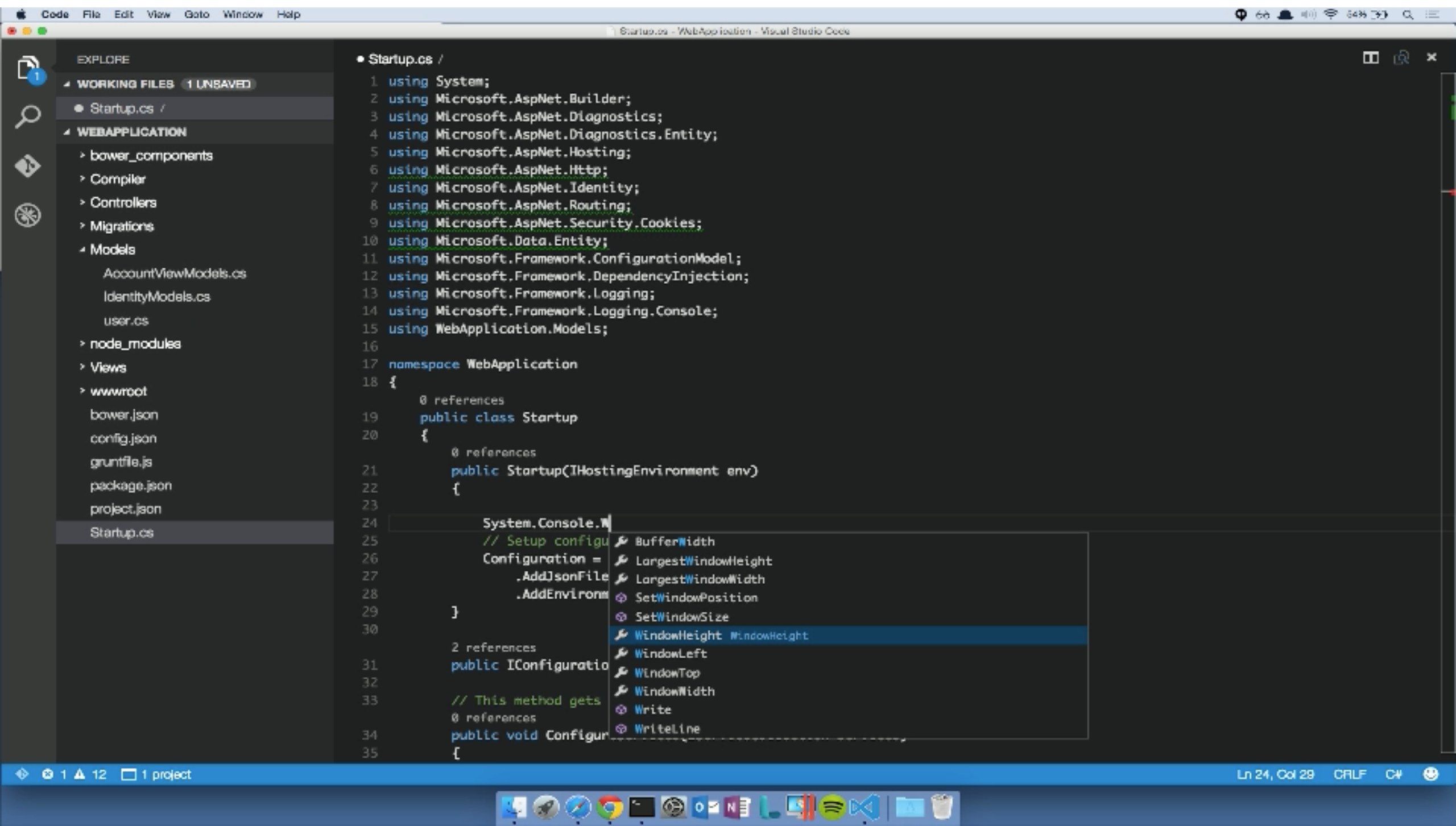


I use VS Code daily for development, and honestly it’s one of those tools that just works without getting in the way. The biggest thing for me is how lightweight it feels compared to full IDEs, but still has almost everything I need.
The extensions are probably the best part. I use things like Python, Git integrations, and a few formatting/linting extensions, and they make a big difference. Instead of switching tools, I can do most things directly inside VS Code — editing, debugging, version control, all in one place.
The UI is clean and customizable. I’ve set up my workspace with split editors, terminal, and extensions in a way that fits how I work, and once it’s set up, it saves a lot of time daily.
Performance is also really good. Even with multiple files, terminals, and extensions open, it rarely feels slow. Startup time is quick, which is something I notice a lot compared to heavier IDEs.
I also use features like IntelliSense and auto-suggestions quite a bit. They help speed up coding, especially when working with unfamiliar code or APIs.
Overall, it improves my workflow mainly by keeping everything in one place and reducing friction between tasks. Review collected by and hosted on G2.com.
One thing I’ve noticed with VS Code is that once you start adding a lot of extensions, things can get a bit messy. Some extensions overlap in functionality or conflict with each other, and figuring out what’s causing an issue can take time. It doesn’t happen all the time, but when it does, it breaks the flow.
The initial setup is another area that could be better. Out of the box it’s quite basic, so you need to install and configure extensions to make it really powerful. That flexibility is great, but it can be a bit overwhelming, especially if you’re setting it up for a new language or project.
Settings can also feel a bit scattered. There’s the UI settings and then the JSON config, and sometimes it’s not obvious where to change what. I’ve had moments where I knew something could be customized but had to dig around to find the right place.
Performance is generally good, but I’ve noticed slight slowdowns when working on larger projects or when too many extensions are active. Startup is fast, but over time it can feel a bit heavier depending on setup.
Debugging works well for most cases, but for more complex setups it sometimes needs extra configuration compared to full IDEs, which can slow things down.
AI features like GitHub Copilot are useful, but they’re not part of the core experience and require an additional setup and subscription, which not everyone may want.
Overall, VS Code is very flexible, but managing extensions, settings, and configurations can take some effort to keep everything running smoothly. Review collected by and hosted on G2.com.