NOTE: Solutions in this category are designed to be used by educational institutions, such as K-12 schools, colleges, universities, and professional schools. If you are looking for an LMS to use in a business or corporate setting, please visit our Corporate LMS software category.
Learning management systems (LMSs) are platforms designed to help instructors manage educational coursework online. They provide educators with a single platform for making course material accessible online, including lesson content, assignments, and assessments. LMSs are used to help streamline the delivery of online learning for educational institutions, allowing for a more connected and accessible educational experience for students.
An LMS enables instructors to build digital courses that include various types of content, such as syllabi, lectures, multimedia files, and readings, as well as distribute assignments to students. LMSs also offer online assessment functionality, such as quizzes and tests. Communication features enable instructors to communicate with students and parents via direct messages, mobile notifications, and discussion forums.
Although there are similarities between education-focused LMSs and corporate LMS software products, platforms designed for K-12 or higher education typically include features specific to educational environments, such as grading functionality and individualized feedback on student assignments. LMSs work in concert with other education software, such as student information systems (SIS), to streamline student data management.
To qualify for inclusion in the Learning Management System (LMS) category, a product must:
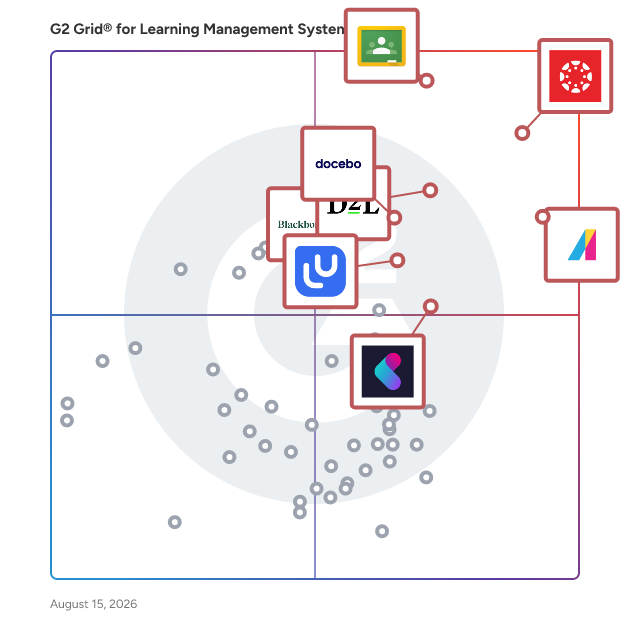
G2 takes pride in showing unbiased reviews on user satisfaction in our ratings and reports. We do not allow paid placements in any of our ratings, rankings, or reports. Learn about our scoring methodologies.
A weekly snapshot of rising stars, new launches, and what everyone's buzzing about.
This description is provided by the seller.
The Otus Student Performance Platform is a hybrid of three different types of systems: a learning management system, a formative and summative assessment system, and a data warehouse. In addition to these core functionalities, Otus also contains several classroom management tools including digital portfolios, seating charts, communication tools, and more. Instead of K-12 schools needing to use individual solutions and then worry about integrating all of them, Otus is the single platform that can be used by teachers, students, families, and administrators to unify their technology around a common platform.
This description is provided by the seller.
The SafetyNow Learning Management System (LMS) designs and delivers scalable OHS programs that make learning and compliance engaging for employees. Deliver a seamless learning experience for employees, whether it’s professional development programs or compliance training, all of the right learning tools are at your fingertips with the world’s easiest-to-use LMS.
This description is provided by the seller.
ScholarLMS is a cloud-based learning management system designed for boundary-less learning for organizations of different sizes.
This description is provided by the seller.
SchoolSims offers a transformative learning experience for professional development in public, private, and independent schools, as well as for future educators in colleges and universities. Simulations are a series of linked scenarios in a choose-your-own-adventure format, where we use both live actors and artificial intelligence to allow learners to experience the consequences of their decisions while bridging the gap between theory and practice.
Pros and Cons are compiled from review feedback and grouped into themes to provide an easy-to-understand summary of user reviews.
This description is provided by the seller.
Pros and Cons are compiled from review feedback and grouped into themes to provide an easy-to-understand summary of user reviews.
This description is provided by the seller.
SEQTA is an all-in-one collaborative teaching and learning ecosystem. SEQTA liberates teachers from labour-intensive, disparate and fragmented software or paper-based systems by bringing together multiple information sources into one easy-to-use LMS.
This description is provided by the seller.
All-in-one school digitization platform.
Pros and Cons are compiled from review feedback and grouped into themes to provide an easy-to-understand summary of user reviews.
This description is provided by the seller.
Pros and Cons are compiled from review feedback and grouped into themes to provide an easy-to-understand summary of user reviews.
This description is provided by the seller.
Winjigo is a social learning platform designed for next generation teaching and learning. Designed with student centric approach, interface can be easily understood by the learners allowing them to focus on the learning not on the tools. Different on-boarding techniques are applied to take educators and learners step by step through the educational journey of the system with all its features giving them hands on experience with the solution breaking down the barrier of technology use. It enables different teaching strategies like flipped, blended and inquiry-based learning, and provides teachers with gamification tools and foster learners’ skills and address their specific needs within a fun educational environment. Winjigo connects instructors and learners and supports both instructor-led and non-formal activities. Interactive learning spaces enable different teaching strategies like flipped, blended and inquiry-based learning. Personalized learning paths make it easy to address each student's unique needs. Leaderboards, assignments, discussions and interactive lessons, solve teaching space challenges that can otherwise hold learners back.
This description is provided by the seller.
EduGears AI — The 100% AI with LMS EduGears AI is an enterprise Learning Management System (LMS) that leverages artificial intelligence to automate the entire learning lifecycle—from course creation to certification. Who It's For: ========== Schools & Universities — K-12, higher education, and academic institutions Corporate Training — L&D teams, HR departments, and training organizations Enterprises — Multi-location companies needing scalable training solutions Key Capabilities: ============ AI-Powered Content Creation Generate courses automatically from syllabi or documents AI Lesson Planner creates lesson plans, slides, and study guides AI Question Generator produces unlimited assessments with solutions Automated Assessment & Grading AI-graded assessments with instant personalized feedback Configurable final grade calculation across all activities Automatic certificate generation upon course completion Corporate Training Features Employee onboarding with structured learning paths Compliance training with expiration tracking and audit-ready reports Customer training portals with branded experiences Skills assessment and competency gap analysis Analytics & Reporting Real-time learner progress and engagement metrics Training ROI measurement and outcome tracking Enterprise-grade exports (Excel, PDF, CSV) Enterprise Ready Role-based access control and permission management SSO and enterprise system integration capabilities Secure, scalable cloud infrastructure Why Teams Choose EduGears AI ======================== 90% time savings on content creation and grading 100% AI-powered — every feature leverages intelligent automation Free tier available — start without cost commitment Fast implementation — get up and running in hours, not months Use Cases ======== Academic course delivery and student assessment New employee onboarding programs Compliance and regulatory training Customer and partner education Professional certification programs
Pros and Cons are compiled from review feedback and grouped into themes to provide an easy-to-understand summary of user reviews.
This description is provided by the seller.
Pros and Cons are compiled from review feedback and grouped into themes to provide an easy-to-understand summary of user reviews.
This description is provided by the seller.
A Learning Management System that helps schools, universities with online classes. It helps to create, adopt, administer, distribute, and manage all of the activities associated with e-learning and acts as a better alternative for traditional classroom learning.
This description is provided by the seller.
Atlearn is a dynamic, AI-powered, open-source LMS platform built for modern education and training needs. We specialize in custom LMS development and offer seamless integration with top platforms like TalentLMS, 360Learning, and BuddyBoss. Our SCORM-compliant LMS ensures content compatibility across systems, making it easy to create, manage, and deliver engaging online courses. Whether you're an edtech provider, school, NGO, or enterprise, Atlearn helps you deliver high-quality learning experiences. Unlock a full white-label solution to design your own branded LMS, enhanced with AI-driven tools for virtual classrooms, interactive online meetings, and streamlined course creation. Plus, Atlearn also supports LMS for kids’ story writing, encouraging creativity through digital learning. Effortlessly build a scalable, flexible, and mobile-friendly LMS—tailored to your unique goals. 👉 Start your free trial today! 🔗 Visit: www.atlearn.in
Pros and Cons are compiled from review feedback and grouped into themes to provide an easy-to-understand summary of user reviews.
This description is provided by the seller.
Pros and Cons are compiled from review feedback and grouped into themes to provide an easy-to-understand summary of user reviews.
This description is provided by the seller.
Brainmint is a mobile learning management app designed to help learners access learning on mobile devices and tablets.
This description is provided by the seller.
A Social Learning Management System (LMS) that provides teachers the ability to extend their guidance beyond the classroom and helps students increase their learning potential. Byndr strengthens teacher-student and student-student communication and provides accessibility to the course curriculum through social learning. It is easy for students to access and convenient for teaches to plan, evaluate, and support, all on any device. Byndr helps educational institutions by connecting every student with the best educational resources available for continuous learning by providing easy-to-use, fast, secure, mobile-first technology tools to benefit the stakeholders. Byndr can handle daily tasks such as attendance, student and teacher performance analysis, and posting and managing assignments efficiently. The features are specially developed to keep students engaged and connected to educational resources outside of the classroom.
This description is provided by the seller.
dialogEDU is a world-class cloud-based communication and learning management system responsive to the evolving needs and demands of formal education, credentialed training, clinical learning, and global corporate education. The mobile responsive ecosystem fits seamlessly alongside telemedicine products, HR tech stacks, and thousands of other plug-and-play tools for any organization to create a dynamic digital environment for social and professional learning. Learning is reinforced by community engagement in digital forums, allowing for cross-functional collaboration, mentorship, and positive organizational cultures. Digital portfolios, awards, and certificates highlight the achievements of learners, fostering an environment of excellence and increased productivity. dialogEDU seamlessly integrates with teleconferencing products for synchronous communication, providing a robust mix of real-time and self-paced learning. It has never been easier to keep a health system, business, university, or organization well-informed, fully engaged, and better prepared to face the challenges of today’s ever-changing landscape. dialogEDU provides a full enterprise solution that is transforming the global learning industry, one success story at a time.
This description is provided by the seller.
eCampus is a comprehensive SaaS platform designed to streamline the operations of colleges and higher education institutions by integrating key functionalities such as admissions, customer relationship management (CRM, enterprise resource planning (ERP), and learning management systems (LMS. This unified approach enhances efficiency, transparency, and accuracy across administrative and educational processes. Key Features and Functionality: - Automated Application Management: Customizable and interactive application forms that provide prospective students with a seamless experience, facilitating efficient application processing. - Education CRM: An all-in-one CRM tailored for educational institutions, enabling effective lead management, nurturing, and marketing to boost admissions. - Admission Management: Automation of the entire admission process, eliminating manual tasks and ensuring a smooth approval workflow. - Learning Management System (LMS: A centralized platform for hosting and managing course materials, assignments, and assessments, supporting both online and blended learning environments. - Online Examination Platform: A secure and user-friendly system that allows students to take exams remotely, with features like proctoring tools and various question types. - Human Resource Management System (HRMS: Tools for managing faculty data, leave requests, attendance tracking, and performance evaluations, ensuring efficient HR operations. Primary Value and Solutions Provided: eCampus addresses the challenges faced by higher education institutions in managing complex administrative and educational processes. By offering a tightly integrated platform, it reduces operational costs through automation, enhances student engagement with personalized learning experiences, and provides real-time analytics for informed decision-making. This holistic solution empowers institutions to focus on delivering quality education while efficiently managing their internal operations.
This description is provided by the seller.
Educadium is an affordable, powerful cloud-hosted LMS. We offer the perfect solution for self-paced, facilitated or blended e-learning courses. Educadium provides full SCORM support, integrated quiz building and webinar solutions, certificates, mobile support, e-commerce and so much more. Educadium combines ease of use with powerful, flexible features that scale to meet your needs. Pricing, including customized integrations and full course production service options available on request.
This description is provided by the seller.
LMS vendors prioritize data security and privacy compliance by implementing robust encryption protocols, regular security audits, and adherence to regulations such as GDPR and FERPA. For instance, platforms like Moodle and Canvas emphasize user data protection through customizable privacy settings and secure access controls. Additionally, many vendors offer features like single sign-on (SSO) and two-factor authentication to enhance security. User reviews highlight the importance of these features, with many users noting their satisfaction with the security measures in place, which fosters trust in the platform.
The total cost of ownership for an LMS is influenced by several factors, including subscription fees, implementation costs, training expenses, and ongoing support. User reviews indicate that platforms like Moodle and TalentLMS are often praised for their affordability, while others like Blackboard and Canvas may incur higher costs due to extensive features and support services. Additionally, customization and scalability can significantly impact overall expenses, as noted by users who emphasize the importance of aligning LMS capabilities with organizational needs.
To evaluate the reporting and analytics capabilities of an LMS, consider user feedback on features like customizable reports, real-time data tracking, and user engagement metrics. Products such as Moodle, TalentLMS, and Docebo are noted for their robust analytics, with users highlighting the importance of visual dashboards and detailed performance insights. Look for systems that allow integration with other tools for enhanced data analysis, as this is frequently mentioned in reviews. Additionally, assess user satisfaction ratings specifically related to reporting features to gauge effectiveness.
Cloud-based LMS solutions, such as TalentLMS and Docebo, offer flexibility, automatic updates, and lower upfront costs, making them ideal for remote access and scalability. In contrast, on-premise LMS like Moodle and SAP Litmos provide greater control over data security and customization but require significant initial investment and ongoing maintenance. Users often cite ease of use and integration capabilities as advantages of cloud-based systems, while on-premise solutions are preferred for organizations with strict compliance requirements.
LMS platforms typically offer robust compliance and certification tracking features, allowing organizations to monitor employee progress and ensure adherence to regulatory requirements. For instance, platforms like TalentLMS and Docebo provide automated reminders for certification renewals and detailed reporting capabilities to track compliance status. Additionally, systems such as Cornerstone OnDemand and SAP Litmos enable users to create custom compliance courses and maintain records of completed certifications, ensuring that organizations can easily manage their compliance obligations.
Common use cases for implementing a Learning Management System (LMS) include employee onboarding, where organizations streamline training processes; compliance training, ensuring staff meet regulatory requirements; and ongoing professional development, allowing users to access courses and resources for skill enhancement. Additionally, LMS platforms are utilized for tracking learner progress and performance analytics, which help organizations assess training effectiveness. Popular LMS solutions like Moodle, TalentLMS, and Docebo are frequently highlighted for their robust features supporting these use cases.
Most LMS solutions are designed to be highly scalable, accommodating the needs of growing organizations. For instance, platforms like Moodle and TalentLMS are frequently praised for their ability to handle increasing user loads without performance degradation. Users report that systems such as Docebo and Cornerstone OnDemand offer robust features that support scalability, including customizable user roles and extensive integrations. Additionally, platforms like SAP Litmos and Absorb LMS are noted for their flexibility in managing large volumes of learners and content, making them suitable for organizations anticipating growth.
Common support options available with LMS providers include 24/7 customer support, live chat, email support, and extensive knowledge bases. Many platforms also offer onboarding assistance and training resources. For instance, platforms like Moodle and TalentLMS are noted for their comprehensive support documentation, while platforms such as Docebo and Cornerstone OnDemand provide dedicated account managers and personalized training sessions. User reviews highlight the importance of responsive support teams, with many users emphasizing the value of timely assistance in resolving technical issues.
To assess the user experience of different LMS options, consider analyzing user reviews focusing on ease of use, customer support, and feature satisfaction. For instance, platforms like Moodle and Canvas are often praised for their user-friendly interfaces, while Blackboard is noted for its robust support. Look at ratings for mobile accessibility and integration capabilities, as these factors significantly impact user experience. Additionally, comparing user feedback on specific features such as reporting tools and customization options can provide deeper insights into overall satisfaction.
When selecting an LMS, consider integrations with tools like Zoom for virtual classrooms, Salesforce for CRM capabilities, Google Workspace for collaboration, and Microsoft Teams for communication. Additionally, look for compatibility with content creation tools such as Articulate and Adobe Captivate, as well as assessment platforms like ProProfs and SurveyMonkey. These integrations enhance functionality and user experience, as highlighted by user reviews that emphasize the importance of seamless connectivity with existing tools.
LMS pricing models typically include subscription-based, per-user, and tiered pricing structures. Subscription-based models are prevalent, with monthly or annual fees that can range from $5 to $20 per user, depending on features. Per-user pricing is common among platforms like Moodle and TalentLMS, where costs increase with the number of users. Tiered pricing is also seen, offering different feature sets at varying price points, which allows organizations to choose plans that best fit their needs. Overall, flexibility in pricing is a key trend, accommodating various organizational sizes and budgets.
Key features to look for in a Learning Management System include user-friendly interface, mobile accessibility, robust reporting and analytics, integration capabilities with other tools, customizable learning paths, and strong customer support. High user ratings highlight the importance of mobile access and reporting features, with many users emphasizing the need for seamless integration with existing systems. Additionally, customizable options are frequently mentioned as essential for tailoring the learning experience to specific organizational needs.