
Sagar Joshi
Sagar Joshi is a former content marketing specialist at G2 in India. He is an engineer with a keen interest in data analytics and cybersecurity. He writes about topics related to them. You can find him reading books, learning a new language, or playing pool in his free time.
What is behavior management?
Behavior management is applying strategies to promote positive behaviors and reduce disruptive or unwanted behaviors in individuals or groups. It’s used in corporate environments to encourage behavior that resonates with an organization’s culture.
Most employees today are under pressure to hit deadlines and targets. While it may seem enough that the projects are submitted on time, how employees behave in the workplace dramatically affects an organization’s success.
Behavior management fosters an environment that supports learning, productivity, and healthy interpersonal relationships. Many organizations adopt employee engagement software to track employee feedback and promote positive activities.


Benefits of behavior management
Constructive behavior management is ideal for improving the workplace and increasing employee productivity. Some of the benefits of behavior management are as follows:
- Improved productivity. Employing behavior management techniques helps employees to focus on their tasks and responsibilities and ensure their completion as a team. This results in better productivity as there is no friction while working collaboratively.
- Teamwork and collaboration. Behavior management promotes communication, teamwork, and cooperation among employees. It boosts employees to share ideas, work together and resolve conflicts fostering a supportive work culture.
- Improved work motivation. Clear expectations are set by behavior management that creates a sense of structure and fairness in an organization. It helps boost employee morale and motivates them as they know what is expected.
- Resolved conflicts. Behavior management proactively approaches any disputes and disciplinary issues in the workplace. It promotes open communication, sets boundaries, and encourages respectful behavior.
- Better employee retention. Employees who feel heard and respected are likelier to stay in the organization. Behavior management aims at positive corporate culture valuing employees and focusing on employee satisfaction.
Interventions in behavior management
Every organization must have a positive approach to behavior management to get the best result. To achieve this, organizations can adopt two types of interventions.
- Antecedent interventions create a positive work environment for employees, encouraging desirable behaviors. It addresses a group of behaviors that will eventually benefit the organization. This intervention is categorized by actions to change a particular behavior. Examples of this intervention include job assistance and goal setting. Even though this is one of the most common strategies, it only sets the occasion for the behavior and does not maintain them. This is where consequence intervention comes into action.
- Consequence interventions define a change in the work environment resulting in an employee’s behavior that will lead to the behavior continuing in the future. This intervention has a significant role in maintaining a behavior. An example of consequence intervention is feedback. Feedback can be on an individual or a group.
How to implement behavior management
Behavior management helps businesses operate effectively. The aim is to understand the employees and encourage a positive work culture. Below are some of the steps to implement behavior management.
- Set goals. Understand the goals before starting any investigation. One can quantify their objectives. Defining the goal precisely is essential to help stakeholders understand what actions should be taken.
- Specify target behaviors. This stage clearly defines the target behavior to help achieve desired goals. For example, if a project is affected due to a lack of communication, that issue must be sorted out to get productive results.
- Develop metrics. Metrics define organizational goals with numbers. For example, deciding on ten monthly meetings on a project can increase productivity by up to 20%. This value could be assigned to any goal based on the requirements.
- Understand the problems. High deadlines and pressure can impact an employee’s ability to achieve the best results. Try to identify the underlying issues that could result in poor performance instead of being harsh and loading them up with more work. Four potential causes exist–antecedents, consequences, abilities and knowledge, tools and procedures.
- Develop a solution. Once the problems are identified, it’s crucial to find a solution to the problem and understand it well. For example, if it is found that safety issues are caused due to insufficient training, create a new training strategy for the employees. If workers feel lost and cannot produce expected outcomes, then communicate clearly about their job to them.
- Assess metrics. Go through the metrics set up during the start of the process now and then. Data about metrics is crucial in the beginning, during the change, and at the end once the changes are made. Reviewing these metrics will help organizations understand the impact of the changes on the workforce. Three categories of findings are behavior change results, treatment acceptability, and cost-benefit results.
Behavior management vs. behavior modification
Behavior management and behavior modification work similarly. But they’re not precisely the same.
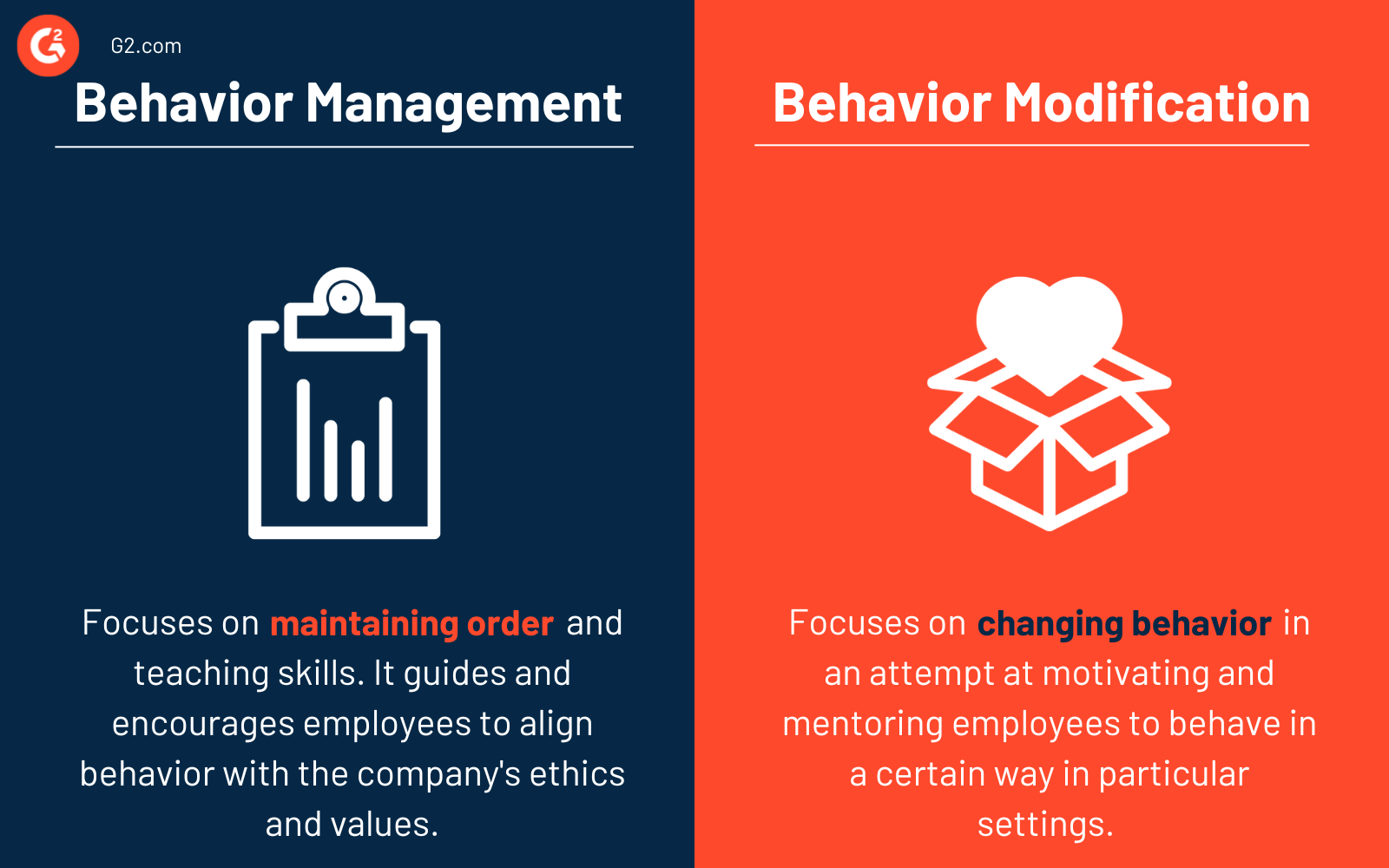
Behavior management focuses on maintaining order and teaching skills. Behavior modification, on the other hand, focuses on changing behavior. It’s an attempt at motivating and mentoring people to behave in a certain way in particular settings.
Behavior management guides and encourages employees to align their behavior with the company's ethics and values. Behavior modification is a process that changes patterns of human behavior using motivational strategies like positive and negative reinforcements, extinction, fading, etc. It follows the theory that people can change how they act or react by attaching consequences and learning from them.
Learn more merit pay and how it can reward team members for top-notch performance.


