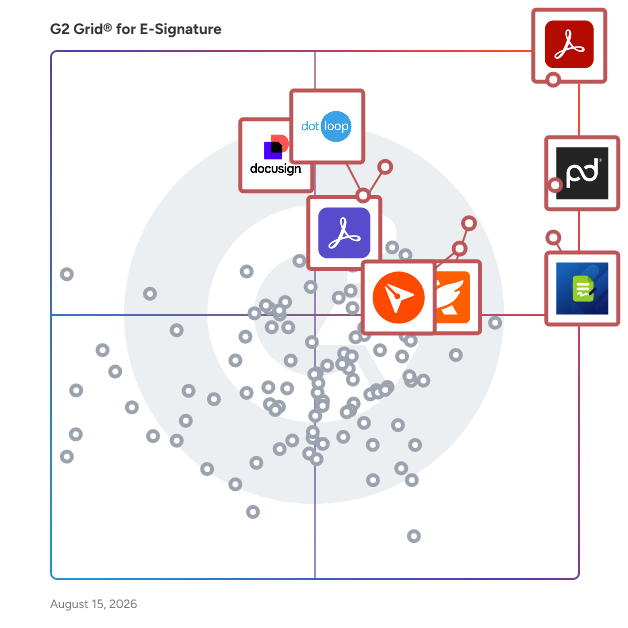
E-signature software allows organizations to gather legally valid signatures on electronically shared documents, encrypting and distributing contracts, employment paperwork, and other sensitive agreements for signature while meeting local and federal legal requirements to guarantee legitimacy.
Core Capabilities of E-Signature Software
To qualify for inclusion in the E-Signature category, a product must:
- Allow both sender and recipient users to sign documents on a variety of devices and operating systems
- Encrypt and secure communications and shared documents between users
- Track document status and notify users when actions are required such as signing or approving
- Enable users to define user roles and permission rights for both internal and external users such as contractors, partners, and customers
- Offer built-in document creation and storage capabilities or integrate with third-party solutions that provide these features
Common Use Cases for E-Signature Software
Sales, HR, legal, and procurement teams use e-signature software to eliminate paper-based document workflows and accelerate agreement cycles. Common use cases include:
- Collecting client signatures on sales contracts and proposals
- Managing employment offer letters, NDAs, and onboarding paperwork digitally
- Streamlining supplier and partner agreement processes with role-based signing workflows
How E-Signature Software Differs from Other Tools
E-signature software is purpose-built for legally compliant electronic signature collection, distinguishing it from general document management tools. It frequently integrates with CRM software, ERP systems, HR management suites, and accounting software to facilitate quote, contract, and supplier management workflows end to end.
Insights from G2 on E-Signature Software
Based on category trends on G2, ease of document setup and cross-device signing stand out as standout features. Faster contract turnaround times and improved compliance stand out as primary outcomes of adoption.