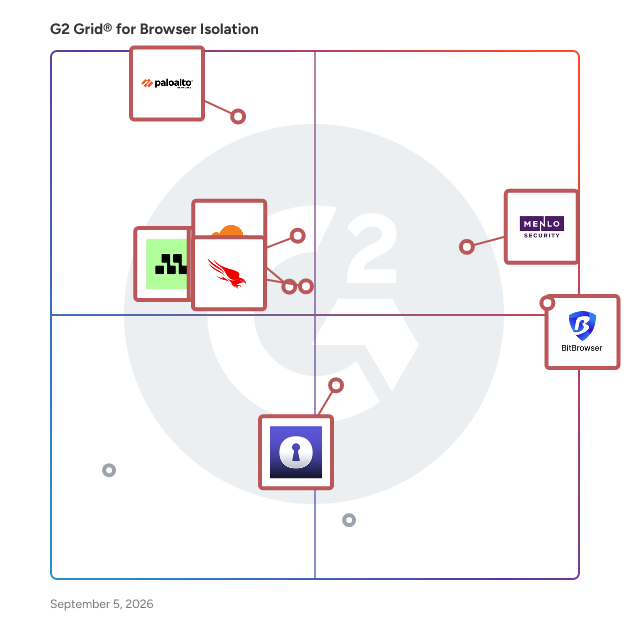
Browser isolation software allows companies to secure endpoints by providing end-users with virtual, abstracted web browsers. The isolated browser detaches web browsers from the endpoint so in the case of intrusion or malware injection, only browsers, not devices, are infected. Companies use these tools to enforce security policies across multiple remote endpoints. Enforcing browser isolation policies gives administrators greater control over endpoint accessibility and increased threat visibility over end-user networks and devices.
With these products, the browser is delivered seamlessly, making it easier for end-users to access web applications and potentially risky sites, and secure their endpoint devices. Some of these tools may function similarly to secure web gateway tools, but those typically only facilitate control over site accessibility and URL filtering. Browser isolation solutions, instead, provide completely isolated web execution environments.
To qualify for inclusion in the Browser Isolation category, a product must:
- Provide a browser as an isolated cloud service or virtual appliance
- Allow administrators to enforce browsing policies
- Monitor browsers for malware and network penetrations