
Alyssa Towns
Alyssa Towns works in communications and change management and is a freelance writer for G2. She mainly writes SaaS, productivity, and career-adjacent content. In her spare time, Alyssa is either enjoying a new restaurant with her husband, playing with her Bengal cats Yeti and Yowie, adventuring outdoors, or reading a book from her TBR list.
What is synchronous learning?
Synchronous learning occurs when instructors and students come together simultaneously in the same virtual or physical place and learn in real time. In synchronous learning, instructors walk students through the learning material, provide support, answer questions as they arise, and provide instant feedback. The learning method varies from asynchronous learning, in which students explore course material at leisure under an instructor’s guidance.
Instructors and students rely on virtual classroom software to host classes and learning opportunities remotely in real time. These tools offer similar functionality to a physical classroom environment, such as video capabilities to see classmates, online whiteboard features, and streaming abilities for rich media.


Types of synchronous learning
Individuals in specific industries and professions may benefit from the synchronous learning method. The most popular types of synchronous learning include the following:
- In-person classes: Traditional learning in a classroom is one of the most widely used methods of synchronous learning. Students attend a class or school day at a specific time and follow instructions and assignments as directed by the instructor.
- Live online classes: Like traditional classroom learning, live online courses allow students to come together and learn from their teacher in real time. However, with live online classes, students can join the virtual classroom from wherever they are located.
- Live webinars: To educate learners in an ad hoc manner, some organizations may leverage live webinars in which the audience learns from a presenter or group of presenters in real time. Webinars are interactive and allow audience members to ask questions on the spot for immediate answers and feedback.
- Conferences and seminars: In-person and virtual conferences and seminars are another type of synchronous learning in which an audience gathers to learn from a presenter or group of presenters, typically over a multi-day period. This format is generally reserved to discuss and learn about specific topics in depth.
Benefits of synchronous learning
Many schooling programs, universities, and organizations leverage synchronous learning to provide consistent learning experiences. Some of the key benefits of synchronous learning include the following:
- An opportunity to participate in group activities: Since learners are together virtually or in person during synchronous learning, teachers can facilitate group activities as part of the material. These activities allow students to work together in teams, interact with one another, and apply their new knowledge as they learn.
- The ability to receive instantaneous answers to questions: In synchronous learning environments, students can ask questions as they arise and get answers to their questions right away. In asynchronous learning, a student may ask a question, and there may be a significant response time gap. Getting questions answered right away can help speed up the learning process.
- An immediate feedback loop: Instructors can follow up with students and provide feedback during a synchronous learning experience. A quick feedback loop helps learners ensure they are on the right track and allows teachers to course correct inaccurate understanding of the material.
- Lessons occur on a fixed schedule: Synchronous courses provide structure and consistency for students because all classes occur on a set schedule rather than students reviewing materials at their own pace.
Synchronous learning best practices
To do synchronous learning correctly, follow these best practices.
- Prepare an agenda in advance: Since synchronous learning requires people to come together at a specific time, it’s essential to make the most of the time together. Teachers and presenters should prepare a thorough agenda ahead of time to ensure time is spent wisely and productively. Sharing the agenda with students before the meeting or class can also be beneficial so they know what to expect.
- Set expectations upfront: Speakers and teachers must set expectations upfront to meet desired outcomes. For example, a lecturer might ask all audience members to save their questions until the end of the presentation to avoid interruptions and may indicate at the beginning of the session that they will not pause for questions, even if a hand is raised.
- Consider time zones when coordinating opportunities: Planning synchronous learning experiences can become challenging when learners are spread across different time zones. When planning synchronous learning classes or events with participants in multiple locations, finding a time that works well for the group is crucial to create fair and equal opportunities for all attendees.
- Make each lesson as engaging as possible: Teachers can capitalize on the benefits of having students together simultaneously by making synchronous sessions engaging and interactive. Ideas include facilitating small breakout sessions, assigning group activities to complete during class, and inviting guest speakers to present.
- Record sessions to share: Recordings help make content accessible to all students, particularly when students can’t attend a class or session for any given reason. Additionally, students may want to rewatch course materials after class.
Synchronous learning vs. asynchronous learning
Synchronous and asynchronous learning each have benefits worth considering.
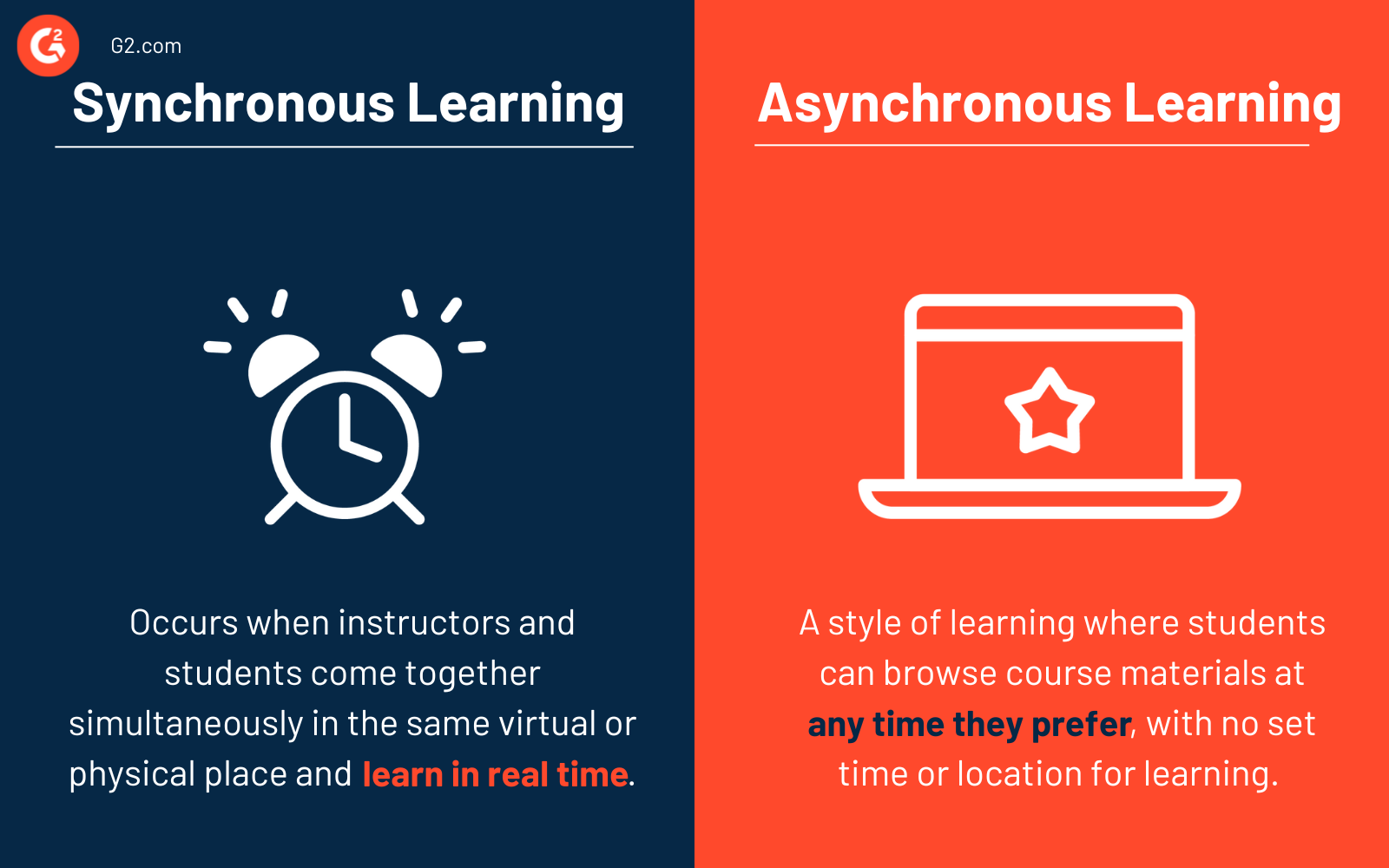
Synchronous learning happens when students come together simultaneously in person or virtually to learn together.
Asynchronous learning is a style of learning in which students can browse course materials at any time they prefer, as there is no set time or physical location for learning.
Learn how to effectively manage virtual classrooms to ensure virtual synchronous learning sessions benefit everyone involved.


