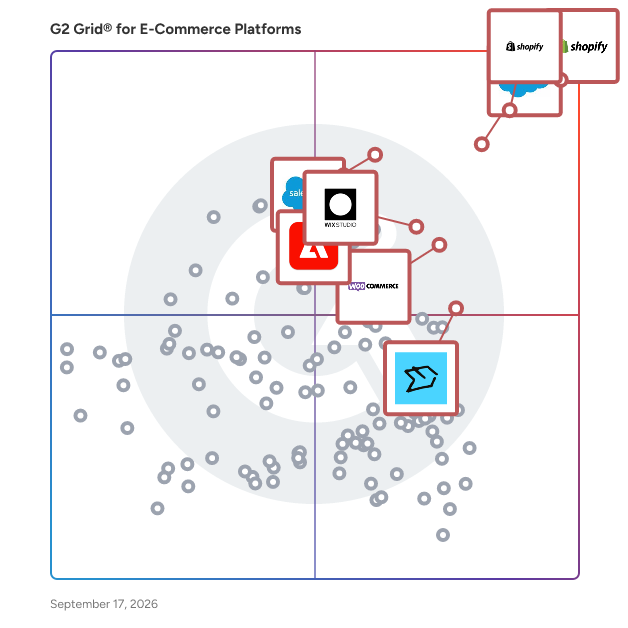
An e-commerce platform is comprehensive software that allows companies to manage all operations related to online sales of products or services. E-commerce platforms create a centralized, digital hub for product and customer data, allowing e-commerce businesses to manage product information, personalize store content and layout, and process online transactions and payments.
Core Capabilities of E-Commerce Platforms
To qualify for inclusion in the E-commerce Platforms category, a product must:
- Help companies run their e-commerce business on a single, unified platform
- Manage e-commerce products and services, as well as product information
- Deliver standard options to create online stores that can be customized
- Include functionality for personalization to improve the customer experience
- Provide features for or integrate with drop shipping and inventory management software
- Track and manage customers, their order history, and online behavior
- Allow companies to choose between multiple payment options and gateways
- Support the headless commerce architecture and provide native mobile apps
- Offer security, or encryption of data and information, or both and comply with regulations
- Include features for e-commerce data management, integration, and search
Common use cases for E-Commerce Platforms
While most e-commerce platforms are designed for B2C sales, some vendors provide versions for B2B. Traditional e-commerce platforms focus on managing sales of physical products, but more and more solutions are providing features for digital products that are sold as a subscription model. This type of software can be used by all employees of an online commerce company but is most beneficial for sales, product management, and marketing.
How E-Commerce Platforms Differs from Other Tools
The best e-commerce platforms unify, scale, and maintain core business processes like the front-facing selling of products and services and the back-end functions of managing inventory and shipping. This type of software should not be confused with shopping cart software, which can only be used to create and manage online stores. E-commerce platforms generally integrate with inventory management software and drop shipping software. B2B e-commerce platforms integrate with CRM software, ERP systems, and supply chain & logistics software.
Related categories include e-commerce personalization, e-commerce analytics, and order management.
Insights from G2 on E-Commerce Platforms
Based on category trends on G2, managing product and customer data on one unified platform and flexible store customization stand out as primary strengths. Support for multiple payment options and integrations with inventory and drop shipping tools also drive adoption.