

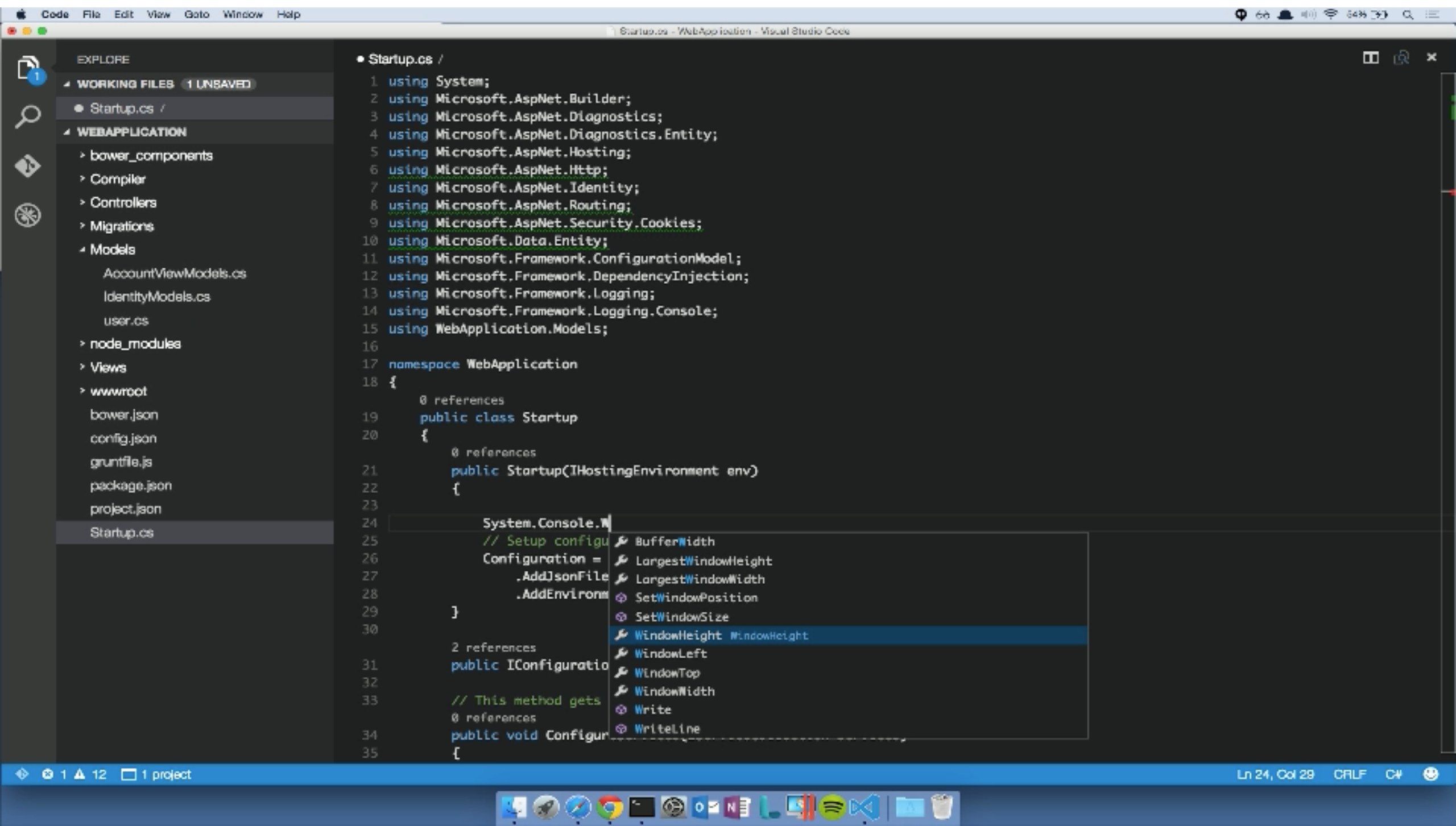


What I like best about Visual Studio Code is its balance of performance, flexibility, and extensibility. It’s lightweight yet incredibly powerful, making it suitable for everything from quick edits to full-scale development.
The extension ecosystem is a major strength. Whether it’s language support, debugging tools, Git integration, or productivity enhancements, VS Code can be customized to fit almost any workflow. The IntelliSense features, built-in terminal, and debugging capabilities significantly improve development efficiency.
I also appreciate the clean, intuitive interface and fast startup time. Despite being feature-rich, it remains responsive and easy to navigate.
Overall, VS Code provides a highly productive and adaptable development environment without feeling bloated. Review collected by and hosted on G2.com.
One drawback of Visual Studio Code is that performance can sometimes degrade with a large number of extensions installed. While the extension ecosystem is a major strength, excessive reliance on plugins can occasionally lead to slower startup times or increased memory usage.
Another challenge is that configuring certain workflows may require additional setup. Compared to more opinionated IDEs, VS Code’s flexibility can mean spending extra time selecting and managing extensions.
Additionally, some advanced IDE-like features depend heavily on third-party plugins rather than being fully native.
Overall, these are relatively minor trade-offs given the tool’s versatility, but they can impact heavy or highly customized setups. Review collected by and hosted on G2.com.