


Compare this with other toolsSave it to your board and evaluate your options side by side.
Save to board

ScaleOps Reviews & Product Details

Value at a Glance

Averages based on real user reviews.

Time to Implement

2 months

ScaleOps Media

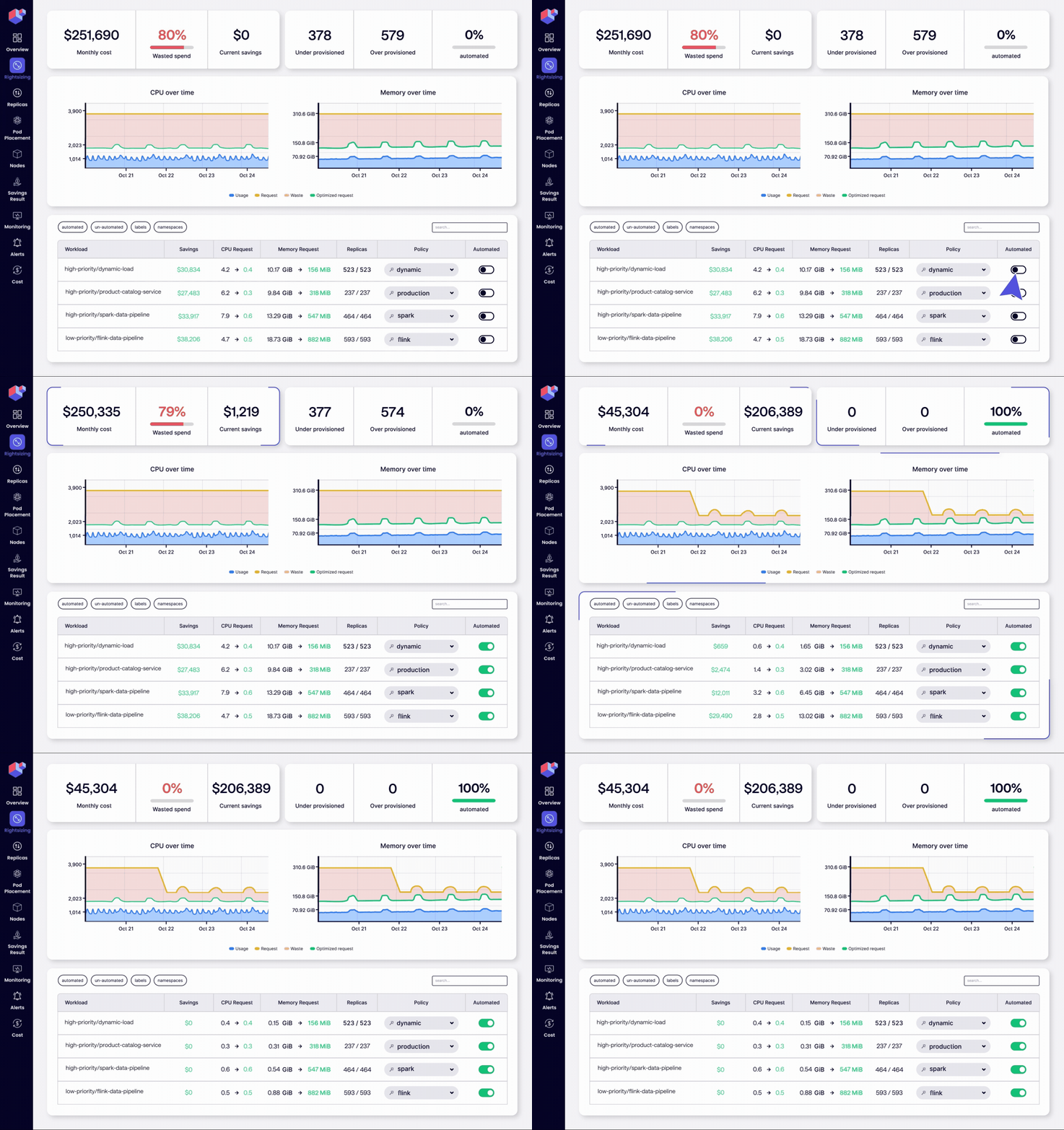
ScaleOps Demo - Real-Time Pod Rightsizing
Continuously rightsize CPU and memory resources in real-time, based on workload behavior and live cluster conditions.
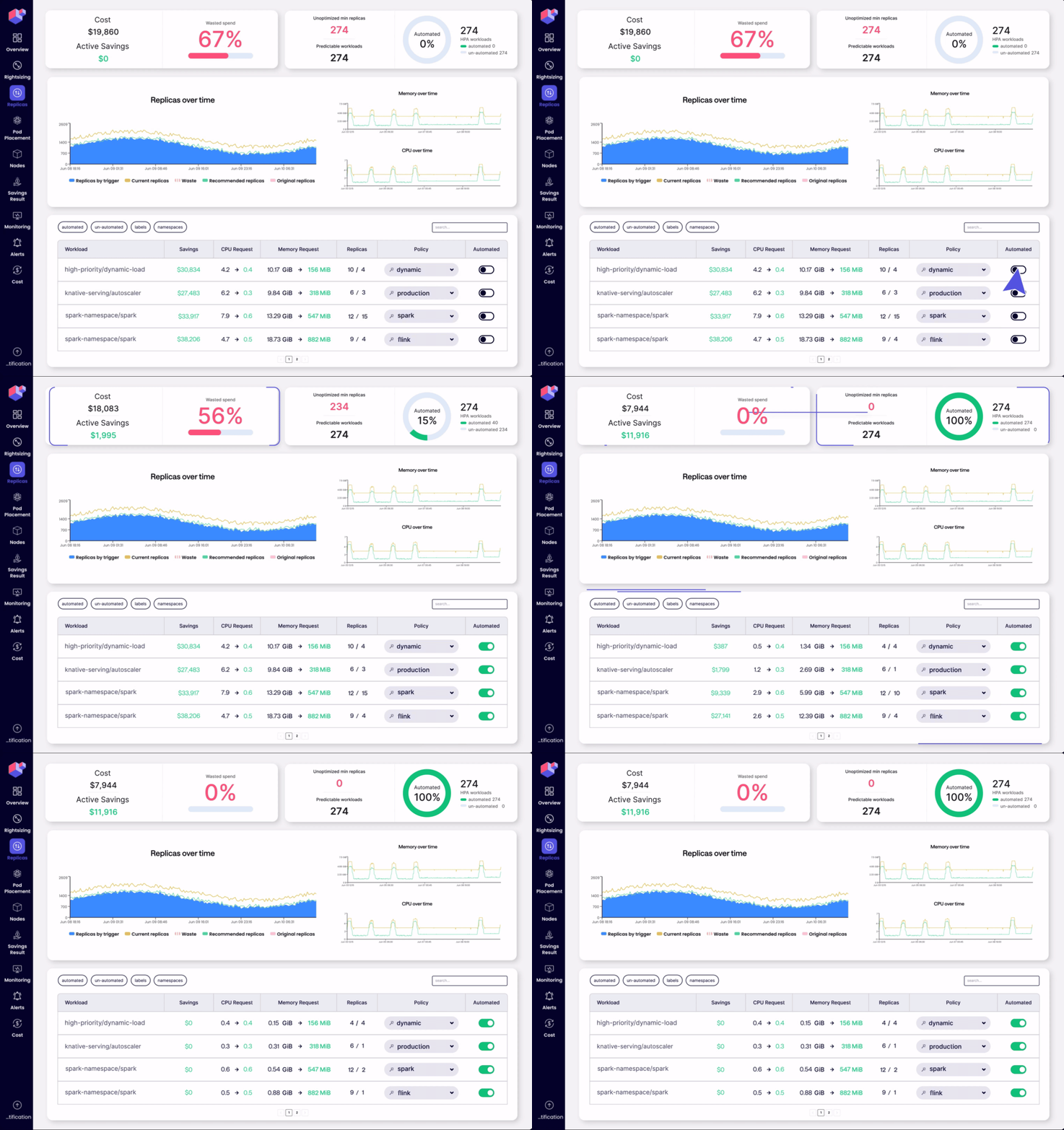
ScaleOps Demo - Replica Optimization
Dynamically manage min and max replica counts and triggers to cut costs and proactively scale ahead of demand.
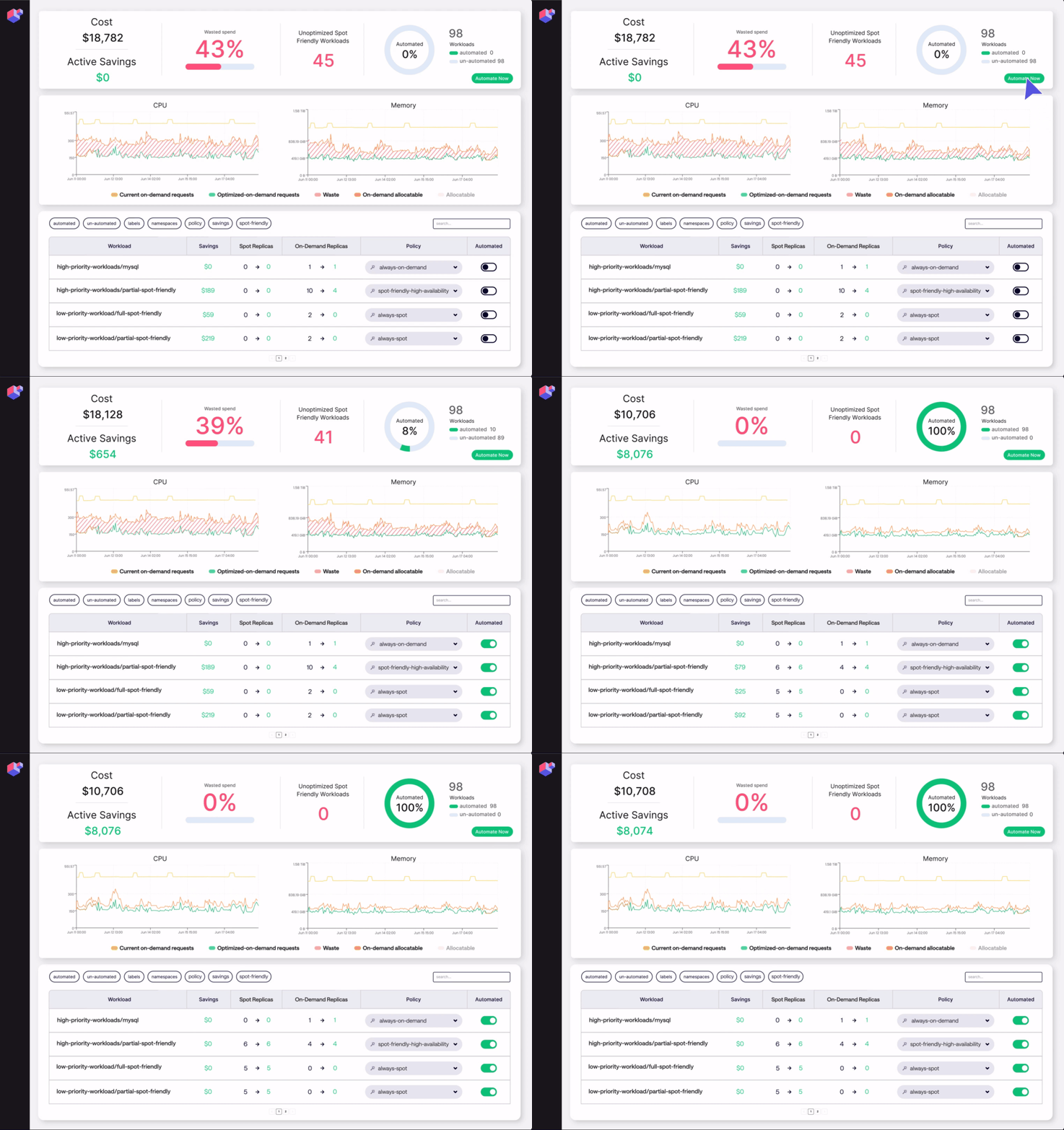
ScaleOps Demo - Spot Optimization
Increase Spot adoption and cut cloud costs by up to 70% more by intelligently shifting more workloads to Spot instances without any downtime or disruptions.
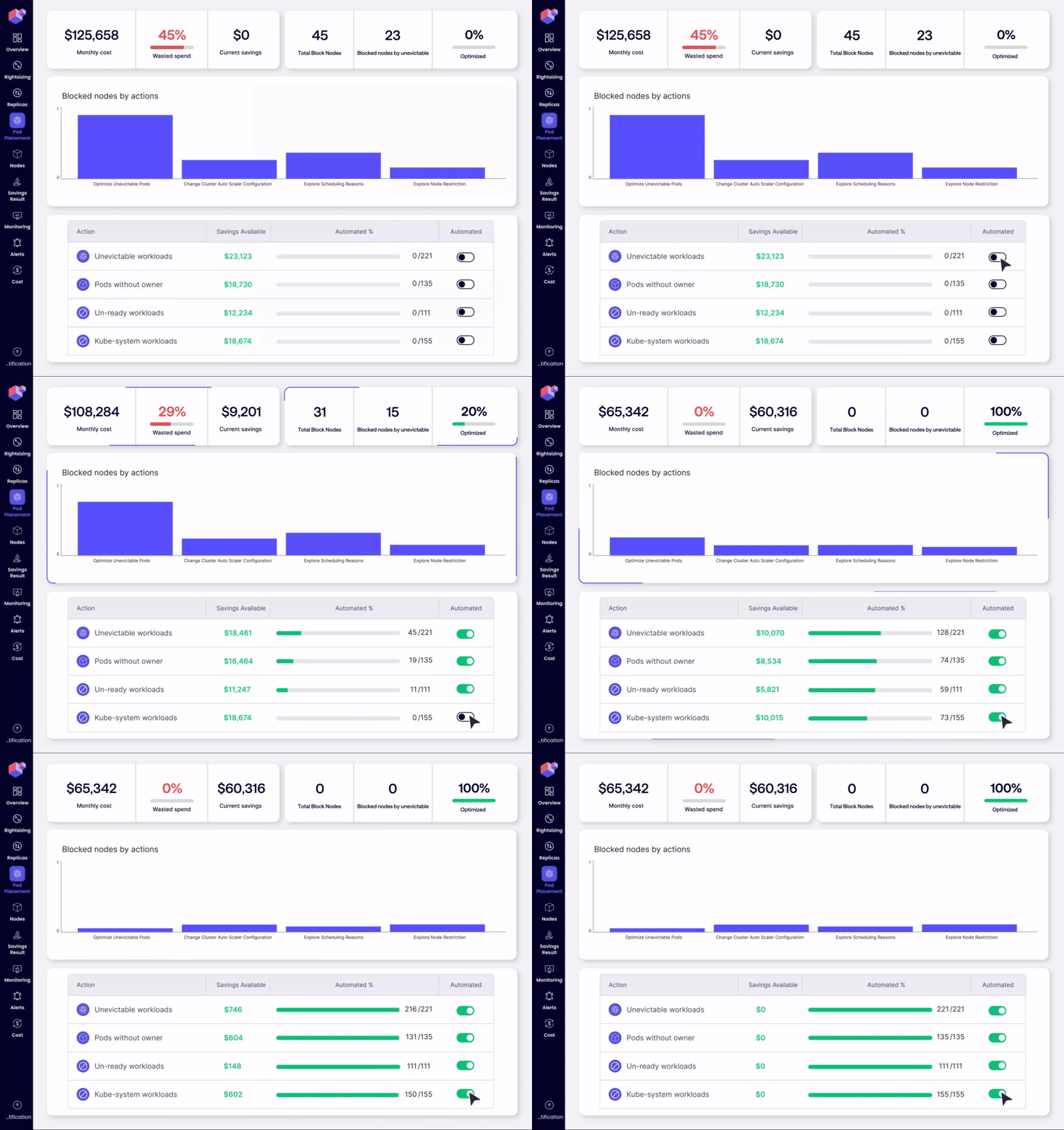
ScaleOps Demo - Pod Placement
Eliminate waste from unevictable pods that block efficient bin packing and leave nodes underutilized.
Play ScaleOps Video
Product Avatar Image

Have you used ScaleOps before?

Answer a few questions to help the ScaleOps community

ScaleOps Reviews (95)

Reviews

ScaleOps Reviews (95)

4.6
95 reviews

Review Summary

Generated using AI from real user reviews
Users consistently praise the ease of use and responsive support provided by ScaleOps, highlighting its ability to automate resource management and significantly reduce cloud costs. The intuitive interface and quick onboarding process allow teams to optimize workloads effortlessly, although some users note that performance can lag with larger clusters.

Pros & Cons

Generated from real user reviews
View All Pros and Cons
Search reviews
Filter Reviews
Clear Results
G2 reviews are authentic and verified.
Ashish Y.
AY
Software Engineer Platform
Enterprise (> 1000 emp.)
"ScaleOps Makes Kubernetes Cost Optimization Effortless with Smart Right-Sizing"
What do you like best about ScaleOps?

What I like most about ScaleOps is how it simplifies Kubernetes cost optimization without requiring constant manual tuning. It automatically right-sizes workloads, reduces waste, and improves resource efficiency while maintaining performance and reliability.

The UI/UX is clean and intuitive, making it easy to understand recommendations, track changes, and monitor impact without a steep learning curve. On top of that, the pricing feels justified given the ROI—it quickly pays for itself through the cost savings it drives, especially in larger clusters where unused resources can add up significantly. Review collected by and hosted on G2.com.

What do you dislike about ScaleOps?

One thing I find challenging about ScaleOps is that the automation can sometimes feel a bit opaque—you don’t always get deep visibility into why certain rightsizing decisions were made, which can make debugging or building trust harder initially.

There’s also a bit of a learning curve when it comes to fine-tuning exclusions and policies, especially for stateful or sensitive workloads where you want tighter control. And while the UI is generally clean, it could offer more granular insights or historical comparisons to better understand long-term impact. Review collected by and hosted on G2.com.


Murugan U.
MU
Senior platform engineer
Enterprise (> 1000 emp.)
"Dynamic Resource Optimization That Cuts Costs and Keeps Workloads Stable"
What do you like best about ScaleOps?

The best part of ScaleOps is its dynamic resource optimization. It automatically adjusts workloads based on real usage, which significantly reduces over-provisioning and cuts costs without risking stability. Review collected by and hosted on G2.com.

What do you dislike about ScaleOps?

“In some scenarios with sudden traffic spikes, we’ve noticed that adjustments can take a little time to fully catch up. It would be great to see even faster responsiveness in those edge cases. Additionally, we’re still exploring the full feature set, so there may be opportunities for us to leverage more of its capabilities to maximize the benefits. Review collected by and hosted on G2.com.

Matt W.
MW
Staff SRE
Mid-Market (51-1000 emp.)
"Big Savings and Better Performance with Workload Rightsizing"
What do you like best about ScaleOps?

We’re saving a fortune with workload rightsizing alone, and we’re also seeing better performance when compute demand spikes. The web interface is genuinely intuitive, and the built-in dashboards make it easy to understand every aspect of our workload performance. Review collected by and hosted on G2.com.

What do you dislike about ScaleOps?

I would like to see more details in their documentation as to how things work under the hood. It's a bit of a black box as is. Review collected by and hosted on G2.com.

Udi-Yehuda T.
UT
VP of Platform Engineering and Global CISO
Enterprise (> 1000 emp.)
"ScaleOps Keeps Kubernetes Costs in Check with Real-Time Optimization"
What do you like best about ScaleOps?

We use ScaleOps to continuously optimize our Kubernetes infrastructure and keep cloud costs under control without slowing down our engineering teams. It provides automated, real-time visibility into resource utilization and rightsizing opportunities across clusters, helping us eliminate waste while still maintaining performance and stability.

Rather than relying on manual tuning or periodic cost reviews, ScaleOps supports dynamic optimization by adjusting requests and limits based on actual workload behavior. This has noticeably improved our cost efficiency and reduced the operational overhead that typically comes with ongoing infrastructure optimization.

Overall, it’s especially valuable for maintaining the right balance between performance, reliability, and financial accountability at scale. Review collected by and hosted on G2.com.

What do you dislike about ScaleOps?

Nothing to add—it's a great product, and we’re really getting the best out of it. Review collected by and hosted on G2.com.

JL
Software Engineer
Enterprise (> 1000 emp.)
"Easy EKS Setup, Real Savings, and Responsive ScaleOps Support"
What do you like best about ScaleOps?

ScaleOps was easy and simple to install on our EKS clusters. We saw real savings and results without impact to workloads. The ScaleOps support team was there are well to answer any questions along the way. Review collected by and hosted on G2.com.

What do you dislike about ScaleOps?

I would like it if ScaleOps documentation was versioned so I could see changes made to docs. At times documentation has changed or been unclear, this could be improved but is still good. Review collected by and hosted on G2.com.

Marva E.
ME
Server Team Lead
"Effortless Cloud Cost Management with ScaleOps"
What do you like best about ScaleOps?

I really enjoyed how the integration with ScaleOps was super easy and fast. It only required minimal manual changes and custom configurations, and getting started was as simple as two clicks. We have many clusters and different workloads running, and we assumed the rollout would take us months, but we were able to deploy ScaleOps in a month and a half. This made the setup process incredibly smooth and efficient. Review collected by and hosted on G2.com.

What do you dislike about ScaleOps?

Some undocumented behaviors can be surprising when encountered for the first time, like the behavior after changing the CPU requests after automation was enabled on the HPA behavior. There's a lot of documentation on installation and monitoring processes, but not so much on things to expect or known issues and behaviors that the customer needs to take into account. Review collected by and hosted on G2.com.

"Efficient Automation with Stellar Support"
What do you like best about ScaleOps?

I use ScaleOps to automate my Kubernetes resources, which helps decrease my cloud costs. I really appreciate that I don't need to keep reviewing my resource allocations every time because ScaleOps does it for me, and it does it in a better way by understanding the current resource usage and making decisions based on that. I like how the tool does what it needs to do perfectly, and I find the support team to be pretty helpful. Every issue I have, I get a response with a solution really fast. The initial setup was pretty easy too. Review collected by and hosted on G2.com.

What do you dislike about ScaleOps?

I would like to be able to consider a window time longer than 30 days while being able to select a custom period of time in the UI to have a better view. I wish I were able to have a look at the values.yaml of the chart in a better way. Review collected by and hosted on G2.com.

Kamalakannan H.
KH
Cloud Architect
Enterprise (> 1000 emp.)
"Scaleops the resource optimizer"
What do you like best about ScaleOps?

The ScaleOps installation process is impressively simple and seamless. The Parent Dashboard feature is particularly valuable, allowing effortless management of multiple ScaleOps instances across the enterprise — a great advantage for organizations with numerous Kubernetes clusters.

The ScaleOps team deserves special mention for their responsiveness and support; they are always available to address queries and proactively assist in resolving issues.

One of the biggest benefits is that you no longer need to manually monitor and resize applications in each cluster. This automation translates to significant time and cost savings, making ScaleOps a highly efficient solution for enterprise-scale Kubernetes management. Review collected by and hosted on G2.com.

What do you dislike about ScaleOps?

The cost savings projected on the dashboard should more accurately reflect the actual savings achieved through node reduction. At times, the displayed figures can be somewhat misleading.

Frequent product updates require regular upgrades, which can be challenging to manage in environments with a tedious or highly controlled change management process. Review collected by and hosted on G2.com.

AB
DevOps Engineer
Mid-Market (51-1000 emp.)
"Effortless Kubernetes Optimization with ScaleOps"
What do you like best about ScaleOps?

I've been thoroughly impressed with ScaleOps. Setting it up was incredibly straightforward—a simple Helm chart installation had everything running in no time. What stands out to me is how it handles all the tedious Kubernetes optimization tasks automatically. It determines the optimal settings for our workloads, which has significantly improved our efficiency and reduced costs, all without the need to constantly adjust resource requests by hand.

The dashboard is also excellent. It provides a clear overview of activity across our clusters, offering insights that are genuinely useful for troubleshooting issues quickly. Using ScaleOps feels like having a smart assistant quietly ensuring everything stays optimized. In short, it just works, which is exactly what I want from a tool like this. I highly recommend it. Review collected by and hosted on G2.com.

What do you dislike about ScaleOps?

No real downsides; everything runs smoothly. Review collected by and hosted on G2.com.

Lior R.
LR
Senior Infrastructure Engineer
Mid-Market (51-1000 emp.)
"Impressive Scaling capabilities and intuitive UI"
What do you like best about ScaleOps?

The user interface is extremely intuitive, and the scaling works just as I hoped it would. Setting everything up is incredibly quick, with most configurations already handled out of the box, so only minimal adjustments are needed during onboarding. I also appreciate how quickly new features are released in response to customer feedback.

We are using ScaleOps in all of our clusters, and we can see a great cost reduction right from the start.

Except me as an administrator of the system, even the software engineers are using the system for investigate issues with workloads, kind of all in one place for kubernetes.

A must-use service for any organization that mind their scaling while keeping their costs clean tide. Review collected by and hosted on G2.com.

What do you dislike about ScaleOps?

While managing per cluster is perfect, still missing cross-cluster operations support, which is kind of must when dealing with multi clusters infrastructure.

Karpenter optimization suggestions can be improved to rely on customer constrains like max pods set by the kubelet. Review collected by and hosted on G2.com.

Pricing Insights

Averages based on real user reviews.

Time to Implement

2 months

Return on Investment

4 months

Average Discount

20%

ScaleOps Features
Scheduling
Automation
Multi-Cloud Management
Spend Forecasting and Optimization
Recommendations
Spend Tracking
Reporting
Dashboards and Visualizations
Compliance
Automatic resource discovery
Smart scaling
Product Avatar Image
ScaleOps