Conversational Intelligence Software Resources
Glossary Terms and Discussions to expand your knowledge on Conversational Intelligence Software
Resource pages are designed to give you a cross-section of information we have on specific categories. You'll find feature definitions and discussions from users like you.
Conversational Intelligence Software Glossary Terms
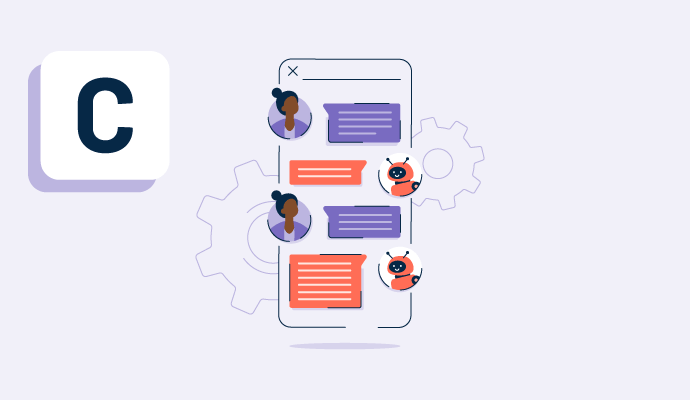
Conversational AI is a branch of artificial intelligence using machine learning and natural language processing to engage with users in human language.
Explore our Technology Glossary
Browse through dozens of terms to better understand the products you purchase and use everyday.
Conversational Intelligence Software Discussions
Curious how other G2 reviewers handle this, since most chatbot vendors optimize for open-ended conversation. A chatbot that makes someone scroll through a conversation for one fact is worse than no chatbot at all.
What are the top-rated chatbots for websites where most visitors want one specific answer quickly, not a back-and-forth chat session.
A few products on G2's chatbots list are built around fast, single-answer resolution rather than extended dialogue:
- Octocom (5.0/5, 15+ reviews): built for e-commerce stores specifically to automate routine support questions, aiming to resolve the common ones without escalating to a longer conversation.
- Ada (4.6/5, 165+ reviews): deployed across 550+ AI agents globally for customer service, with reviewers citing fast, direct resolution on repeat questions.
- Document360 (4.7/5, 495+ reviews): pairs an AI assistant with a structured knowledge base, so answers come from a specific article rather than an open-ended generated reply.
For anyone running one of these: does the specific-answer approach actually reduce support tickets, or just shift where the friction shows up?
Chatbot reviews on G2 for single-answer resolution split by review volume in a way worth noting before picking a favorite. Octocom's perfect rating comes from a review base too small to draw much confidence from yet, while Ada and Document360 have enough volume behind their scores to treat the pattern as more than early enthusiasm. Document360's approach of pairing the assistant with a structured knowledge base is a meaningfully different design than Ada's broader AI-agent deployment, since pulling an answer from one specific article is a more constrained, more predictable behavior than a general AI agent trying to resolve a question its own way.
That distinction probably matters most for the exact failure mode this post is worried about, a chatbot making someone scroll through a conversation for one fact, since a knowledge-base-grounded answer is structurally less likely to wander than an open-ended generated response. Whether specific-answer bots actually reduce tickets or just shift friction elsewhere is a fair question, since a visitor who gets a fast wrong answer might contact support anyway, just angrier and further into their day.
Mapping out the Drift vs Tidio question for a piece on startup-friendly bot platforms, since the two pull in different directions: one leans B2B sales, the other leans affordable all-in-one support. I pulled what reviewers say about each, plus two alternatives startups tend to weigh. Quick takeaways:
- Drift is what reviewers lean on for inbound lead qualification and meeting booking, strong on the sales side but more of a B2B spend than a scrappy startup budget.
- Tidio gets described as an easy all-in-one of live chat, no-code Flows and the Lyro AI agent, with cart recovery and a free tier to start, though advanced features sit behind higher plans.
- Gallabox is a WhatsApp-first option reviewers use for both support automation and lead capture, handy if your customers mostly live on WhatsApp.
- CloseBot gets picked for instant lead qualification and booking without feeling robotic, a lighter lead-focused alternative.
If you started on Tidio and later needed real sales routing, did you outgrow it, or did it stretch further than expected? And for anyone who went with Drift as a startup, was the price worth it over a cheaper all-in-one?
Trying to find a chatbot in the bot platforms space that connects cleanly with Salesforce, HubSpot or Zendesk so nothing falls through the cracks between the bot and the CRM. Going off what reviewers mention about those integrations, here are a few with their ratings.
- Drift : gets used for its Salesforce and HubSpot connections to push leads through, though some reviewers note attributes only map to native Salesforce objects, not custom ones.
- Qualified: is built for Salesforce-based teams as an AppExchange app, with reviewers using it to qualify site visitors in real time and route them straight to sales.
- Gupshup: gets highlighted for a stable WhatsApp-plus-HubSpot setup for pushing conversations and campaigns at scale.
- LivePerson: connects into CRMs to unify conversation history, though reviewers say the integration work takes longer than with lighter tools.
For anyone syncing a bot to Salesforce or HubSpot, did the data actually land where you expected, or did you end up cleaning up fields and custom-object mapping afterward?