CRM Honeypots is a CRM data breach detection tool that helps businesses discover when their contact database has been stolen or leaked.
CRM data theft is a widespread but difficult-to-detect problem - stolen contact lists are often used for competitor outreach, spam campaigns, or resold on the black market, and most businesses only discover the breach long after the damage is done.
It works by generating realistic-looking decoy contacts ("honeypots") that you plant directly inside your CRM - whether that's Salesforce, HubSpot, Pipedrive, or any other platform. Because these decoy records are indistinguishable from legitimate ones, any unauthorized party who obtains and attempts to use the stolen data will inevitably interact with them.
Business value:
- Provides early, concrete detection of CRM data theft before it escalates
- Delivers actionable evidence, including details about who used the stolen data rather than vague indicators of compromise
- Reduces the window between a breach occurring and a team becoming aware of it
- Requires minimal technical setup, making it accessible without dedicated security tooling
What alerts include:
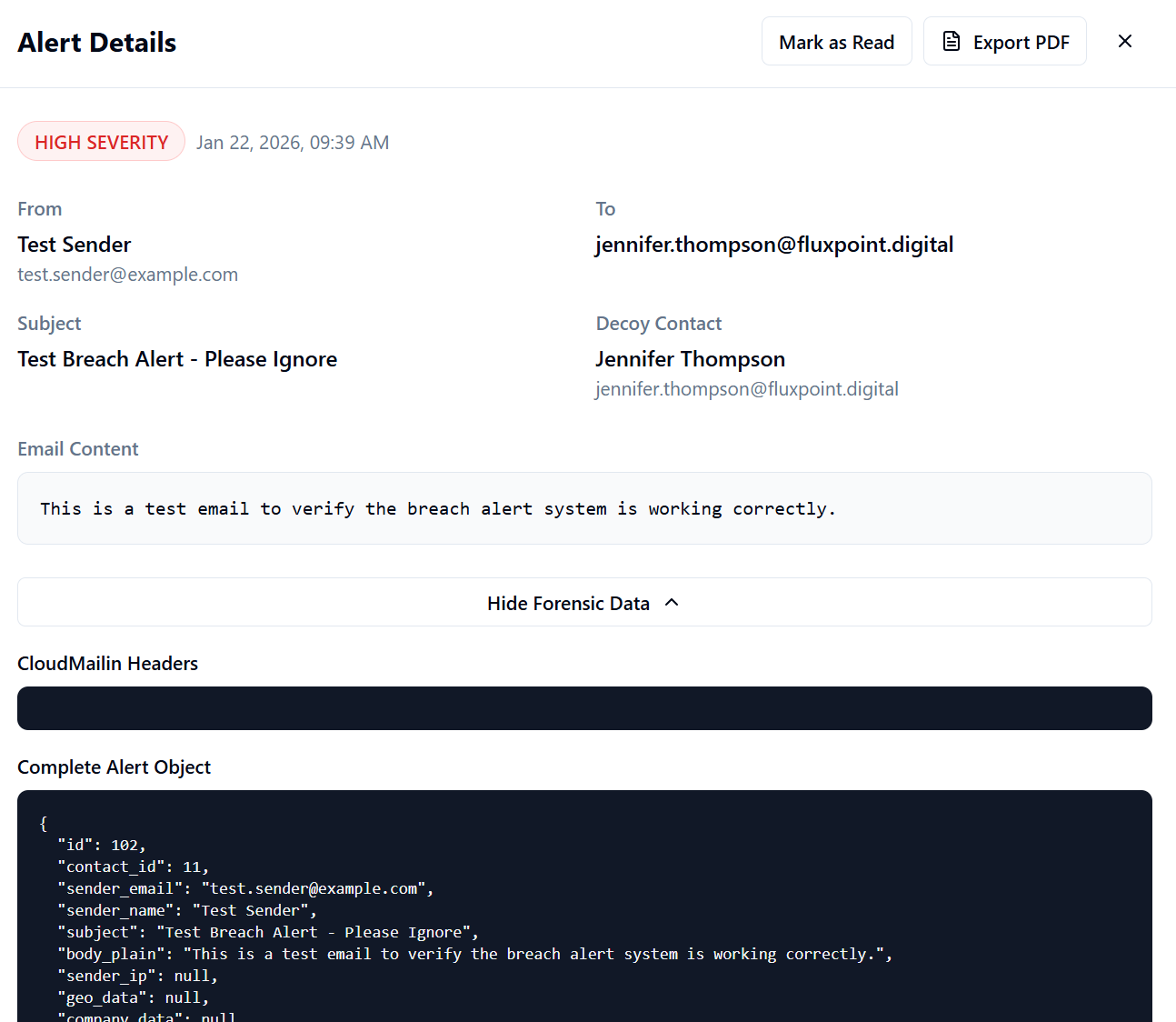
- Sender's email address and company name
- IP address and geographic location
- Full message content and timestamp
Typical users:
- Sales operations and revenue operations teams
- IT and security staff managing CRM access
- Organizations that work with third-party vendors, contractors, or external sales representatives who have access to CRM records
How it works:
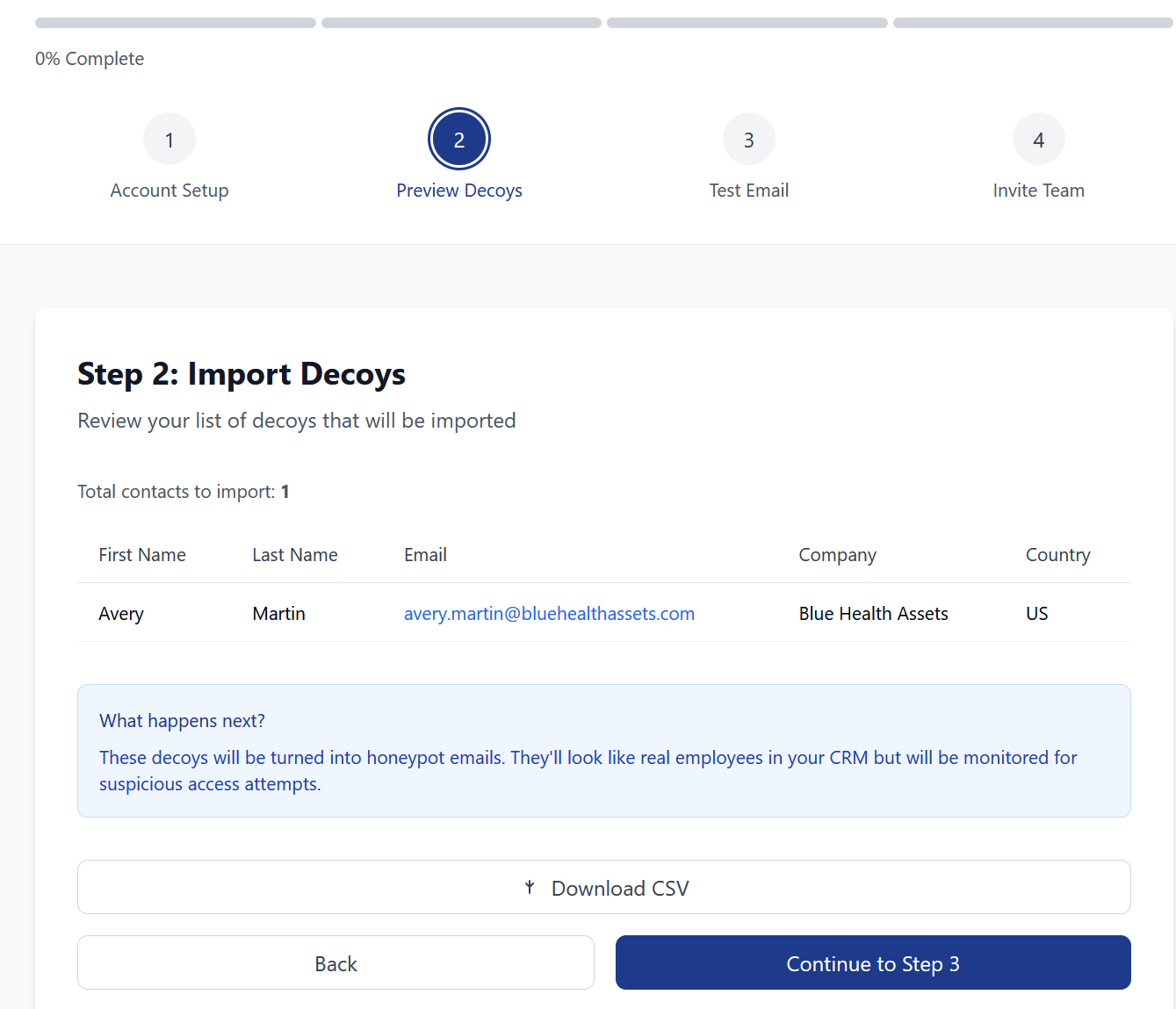
- Decoy contacts are generated in batches and exported as a CSV file
- The CSV is imported into any CRM that supports CSV upload, including Salesforce, HubSpot, and most CRM
- Once in place, the honeypots require no ongoing maintenance or configuration
- When a decoy contact is emailed, an automated alert is triggered immediately
Seller
CRM HoneypotsDiscussions
CRM Honeypots CommunityLanguages Supported
English
Overview by
Tom De La Marre