Data Science and Machine Learning Platforms Resources
Articles, Glossary Terms, Discussions, and Reports to expand your knowledge on Data Science and Machine Learning Platforms
Resource pages are designed to give you a cross-section of information we have on specific categories. You'll find articles from our experts, feature definitions, discussions from users like you, and reports from industry data.
Data Science and Machine Learning Platforms Articles
Seq2Seq Models: How They Work and Why They Matter in AI


10 Best Data Labeling Software With G2 User Reviews

What Is Artificial Intelligence (AI)? Types, Definition And Examples

What Is Artificial General Intelligence (AGI)? The Future Is Here
2023 Trends in AI: Cheaper, Easier-to-Use AI to the Rescue

Barriers Toward Adopting AI and Analytics in the Supply Chain

The Importance of Data Quality and Commoditization of Algorithms

How to Choose a Data Science and Machine Learning Platform That’s Right For Your Business

Data Trends in 2022

How to Make Algorithms Which Explain Themselves

Artificial Intelligence in Healthcare: Benefits, Myths, and Limitations

The Role of Artificial Intelligence in Accounting

Tech Companies Bridging the Gap Between AI and Automation

How COVID-19 Is Impacting Data Professionals

True Data Protection Demands More Than Just Regulation

What Is the Future of Machine Learning? We Asked 5 Experts
Data Science and Machine Learning Platforms Glossary Terms

Algorithmic bias is a systematic AI error that generates unfair outcomes based on race, age, or gender. Learn its types, examples, and prevention.

Machine learning operationalization is a process or methodology, not a particular type of software. It applies tools and resources to ensure that machine learning projects are run properly and efficiently, including data governance, model management, and model deployment.
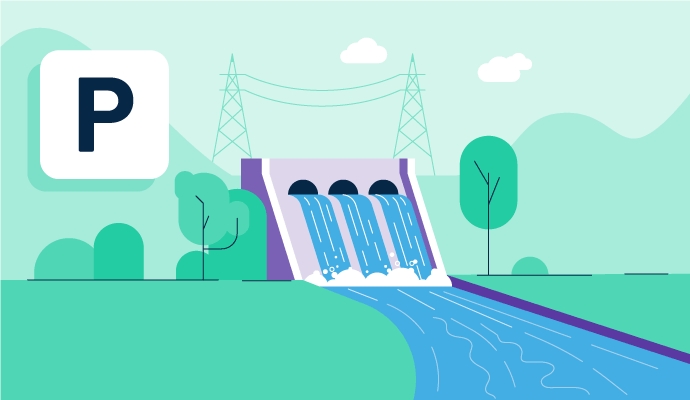
Parallel processing is a type of computer architecture where tasks are broken down into smaller parts and processed separately to ensure faster processing speeds and increase convenience.
Data Science and Machine Learning Platforms Discussions
What is Google AI platform?
What are the features of Databricks?
A question for data engineers who are responsible for building and maintaining production ETL pipelines, managing data quality across large datasets, and keeping infrastructure costs in check — is Databricks actually worth the commitment, or do the cluster management complexity and DBU cost unpredictability offset the platform integration benefits?
Feature: Databricks unifies Spark-based processing, collaborative notebooks (Python, SQL, Scala), Delta Lake for ACID-compliant table management, Workflows for job scheduling, and Unity Catalog for governance — in one platform. Delta Lake improves pipeline reliability through schema enforcement and time travel for debugging, the notebook environment makes step-by-step transformation testing immediately visible without deploying separately.
Integration: The platform connects to cloud storage, data warehouses, Git, and third-party tools as part of the ETL workflow. SnapLogic lands data in Bronze and Databricks handling Silver and Gold transformation, with serverless compute and Unity Catalog managing governance without separate tooling.
Some big data processing and distributions software alternatives worth comparing:
- Snowflake: Data engineers on SQL-first teams credit elastic virtual warehouse scaling and compute-storage separation for handling demanding workloads without one job affecting another. No native notebook environment, but strong SQL Worksheet and partner integrations.
- Google Cloud BigQuery: Serverless model with no cluster management overhead is the most consistently cited data engineer benefit. Free tier for up to 1TB of queries per month.
- Amazon EMR: For data engineers already deep in the AWS ecosystem, EMR runs Spark, Hadoop, and Hive workloads on managed clusters with tight IAM, S3, and Glue integration..
- Azure Synapse Analytics: For Azure-native data engineering teams, Synapse combines SQL-based data warehouse, Spark pools, and Data Factory pipeline orchestration in one workspace.
The honest read: Databricks earns its place for data engineers managing complex, multi-stage Spark pipelines where the Delta Lake reliability, notebook collaboration, and ML-to-engineering workflow continuity justify the learning curve on cluster and compute configuration.
Would value input from data engineers who have used Databricks in production for more than six months. What was the first cluster configuration mistake that taught you the most about cost management, and at what pipeline complexity did the Delta Lake + Unity Catalog combination start delivering a noticeable reliability improvement over your previous stack?
The "worth it" answer probably hinges on something not mentioned yet: whether the same team spans both exploratory ML work and production ETL, or whether those are two separate teams in your org. Databricks' pitch is largely about continuity between notebook exploration and production pipelines. If data engineering and ML rarely touch each other's work, that continuity benefit goes mostly unused, and you're left paying the DBU premium and cluster overhead for a unification story that doesn't match how your org is actually structured.