
Dominick Duda
Dominick is a Senior Research Analyst at G2 specializing in nonprofit software, with other vertical industry coverage including healthcare, government, and hospitality. Prior to joining G2, he spent years in the nonprofit sector as a fundraiser and grant writer, and he is deeply invested in understanding how nonprofits can make better use of the technology available to them. In his free time, he enjoys video games, museums, and reading and writing poetry.
This post is part of G2's 2023 digital trends series. Read more about G2’s perspective on digital transformation trends in an introduction from Emily Malis Greathouse, director, market research, and additional coverage on trends identified by G2’s analysts.
As healthcare leans into digital transformation, investment in patient engagement will take priority
Prediction
Comprehensive patient engagement software will be the next important investment for healthcare providers seeking to improve care delivery and reduce administrative burden.While telemedicine solutions kept healthcare accessible at the height of COVID-19, the next big investment for healthcare businesses will be extensive patient engagement software. When the COVID-19 pandemic erupted into the global news cycle in March 2020, G2’s Telemedicine Software category saw an astounding 594% growth in traffic that month. It’s understandable; as healthcare providers began canceling non-essential appointments, they needed telemedicine software to stay connected with patients.
Three years later, in-person appointments have largely resumed, and some would argue that the telehealth trend has fizzled out. Well, yes and no. Telemedicine, or the remote delivery of medical services via video conferencing, may not be a priority for healthcare providers anymore, but digital tools that support patient monitoring and patient engagement are trending upward in popularity.
G2 data shows that buyer interest in patient engagement software is overtaking telemedicine software
While G2’s patient engagement category didn’t receive the same spike in traffic as telemedicine during the initial months of the COVID-19 pandemic, buyer interest in patient engagement has risen in the last two years. In contrast, telemedicine traffic saw a volatile dip later in 2020 before falling more in line with patient engagement.
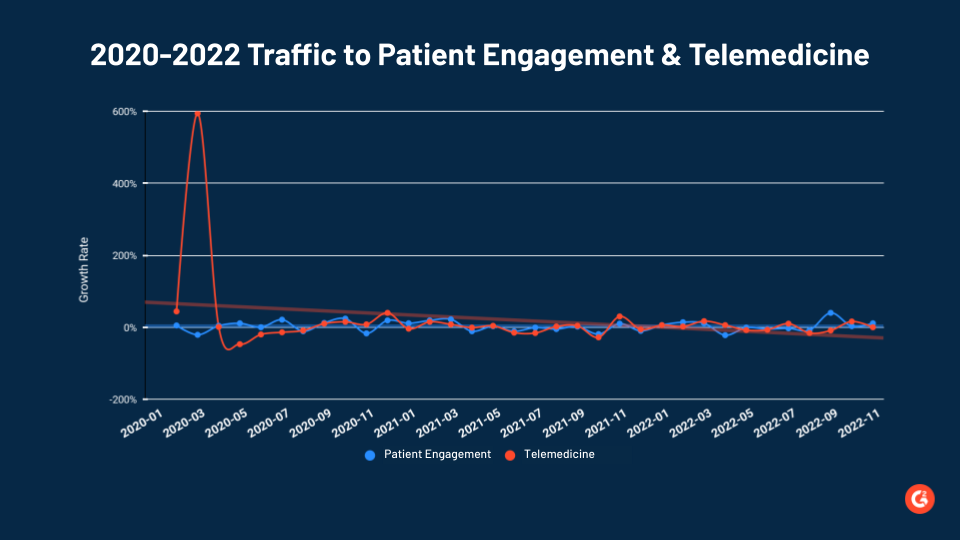
Since May 2022, patient engagement software has seen an upward trend in monthly traffic growth rate, while telemedicine has begun to trend downwards. This trend is more perceptible in the figure below.
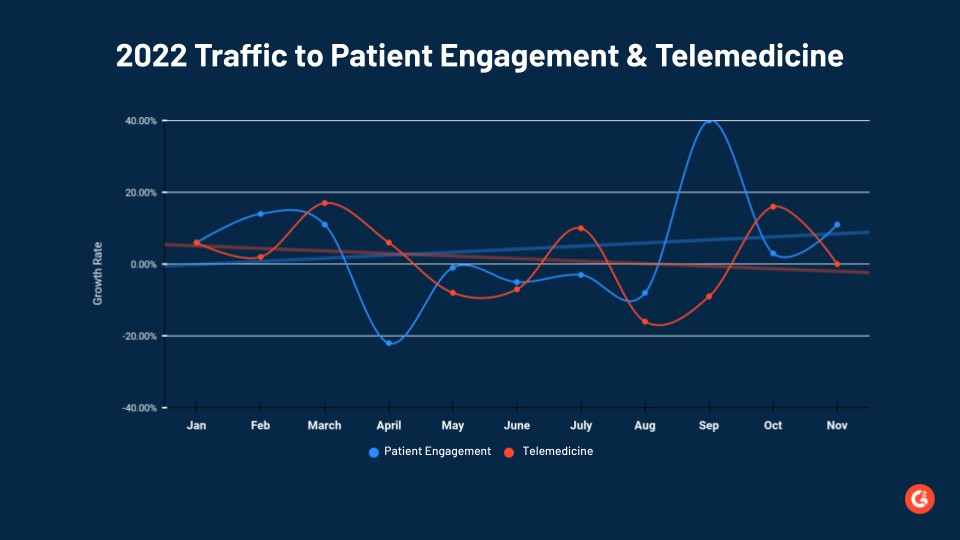
September marked the highest 2022 growth rate for patient engagement, at 40%, while telemedicine saw a 9% drop. As 2023 approaches, patient engagement appears to continue pulling ahead in this tortoise and hare race.
One theory is that telemedicine was an afterthought for many providers until COVID-19. Meanwhile, patient engagement software had already been a common investment. As the pandemic continued, providers needed new patient engagement tools that offered more functionality or perhaps integrated with their telemedicine software. With telemedicine no longer mandatory, buyers are more focused on finding the right engagement tools to meet patients where they are and empower them to be active, informed participants in their care journey.
Shut the (digital) front door
Patient engagement is a core foundation of an emerging trend in the healthcare space: the digital front door. The digital front door is the use of technology to optimize digital touchpoints, including functions like patient intake, patient scheduling, patient relationship management (PRM), and medical billing. A strong digital front door strategy promotes accessibility and drives engagement, which leads to improved health outcomes. Similar to traditional consumers in this digital era, patients crave better digital healthcare experiences.
Patient engagement software has evolved over time, with mobile apps now allowing patients to manage their appointments, prescriptions, and post-visit care; message their doctors; access educational resources; view claims and billing; and access medical records. By improving the flow of healthcare information, patients can make better decisions and feel greater trust in their healthcare providers. While some patients may not embrace these digital touchpoints, healthcare providers will be at a disadvantage if they neglect to invest in them.
Patient engagement is more than a trend
The software that supports patient engagement may be trending, but the actual work of patient engagement was, is, and will continue to be vital for healthcare providers. As digital front door strategies gain traction in the coming years, patient engagement tools will continue to evolve in their capabilities. Buyers need to assess their current software regularly to ensure it supports their digital front door strategy.
Edited by Jigmee Bhutia