Email Marketing Software Resources
Articles, Glossary Terms, Discussions, and Reports to expand your knowledge on Email Marketing Software
Resource pages are designed to give you a cross-section of information we have on specific categories. You'll find articles from our experts, feature definitions, discussions from users like you, and reports from industry data.
Email Marketing Software Articles
What Is Marketing Attribution? How to Measure It
Permission Marketing: How to Earn Customer Trust With Ease
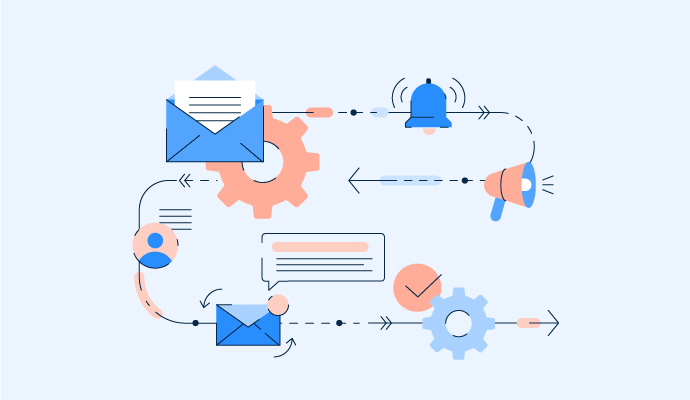
How to Use Email Automation to Simplify Business Processes
Make Your Customers Feel Special with Drip Campaigns
Direct Marketing Examples: Utilizing Effective Campaigns
11 Expert Email Newsletter Strategies to Boost Engagement
What Is an Email Newsletter? 4 Key Components & 3 Effective Templates
7 Common Professional Email Mistakes and How to Avoid Them
Email Marketing Software Glossary Terms

Email Marketing Software Discussions
I've been mapping out what's the best email marketing software for ecommerce brands running frequent promotional campaigns for a brand sending multiple campaigns a week and struggling with a platform that wasn't built for that pace. At high send frequency, the priorities shift toward fast campaign building, solid deliverability at volume, and segmentation that doesn't require rebuilding lists every time. Here's what stood out in the Email Marketing category on G2.
- Intuit Mailchimp Email Marketing. Wide template library and automation built for frequent sends without a steep learning curve. Best for teams wanting fast campaign turnaround.
- Constant Contact. Straightforward campaign builder aimed at teams that need to ship promotions quickly and repeatedly. Best for lean teams sending often without a lot of design overhead.
- Brevo Marketing Platform. Combines email with SMS and automation, useful for ecommerce brands running promotions across more than one channel at once. Best for multi-channel promotional campaigns.
- GMass. Built for high-volume sending directly through Gmail infrastructure, which some ecommerce senders prefer for deliverability reasons. Best for teams prioritizing deliverability at volume.
- MailerLite. Lightweight and fast to build campaigns in, with automation that scales without a lot of setup overhead. Best for smaller ecommerce teams wanting speed over complexity.
Worth being honest that at high send frequency, list fatigue becomes the real enemy before the platform does. A lot of "our open rates dropped" problems trace back to sending too often to the same segment rather than anything wrong with the tool.
For ecommerce teams sending frequent promotions, which platform's deliverability actually held up at volume, and which one you had to work around with manual warmup or throttling?
I’d watch list fatigue before assuming deliverability is a platform problem. For a brand sending several promotions a week, I’d want dynamic engagement and purchase-based segments that automatically adjust who receives each campaign. If the same subscribers keep getting every promotion, even strong sending infrastructure won’t protect engagement indefinitely.
I didn’t find anything useful here and it felt overpriced for what it offers. The policies also came across as shady and unfair, and I haven’t seen any real benefits or changes from using it. If you’ve used Constant Contact, what made it feel worth it (or not), and how did you handle the policy issues?
The best email marketing platform for ecommerce business tends to become more about timing, personalization, and revenue impact rather than just sending campaigns. Looking at tools in the email marketing software category, I find that the ecommerce-focused platforms seem to differ based on how well they connect with customer behavior and purchase data.
What I’ve been trying to understand:
- How well tools handle abandoned cart and lifecycle flows
- Whether segmentation actually improves conversion rates
- How easily platforms integrate with ecommerce systems
- What level of personalization is realistically achievable
Some that stood out for me:
- Mailchimp is widely used with ecommerce integrations and basic automation like cart recovery and product recommendations.
- Brevo (formerly Sendinblue) supports transactional emails and automation, which can be useful for order updates and lifecycle campaigns.
- GetResponse offers automation workflows and landing pages, which can help manage campaigns and conversions together.
- Constant Contact is simple to use with ecommerce integrations, though more suited for straightforward campaigns.
- Zoho Campaigns provides segmentation and automation, especially useful if you’re already using Zoho tools alongside ecommerce.
For ecommerce teams, what actually made the biggest difference in results, better automation or better segmentation?
Could you also share your thoughts on which platform handled lifecycle flows like abandoned carts most effectively?