




Its reliability and performance. Low latency and consistent uptime make it something you can depend on.
The UI/UX is clean and straightforward. Integrations are seamless. It works well with existing tools and supports a wide range of networks, so scaling across ecosystems doesn’t require rework. From a pricing/ROI perspective, it’s a practical choice. It removes the time and cost of running your own infrastructure and lets you focus on building.
Overall, it’s a dependable, no-friction infrastructure layer that just works. Review collected by and hosted on G2.com.
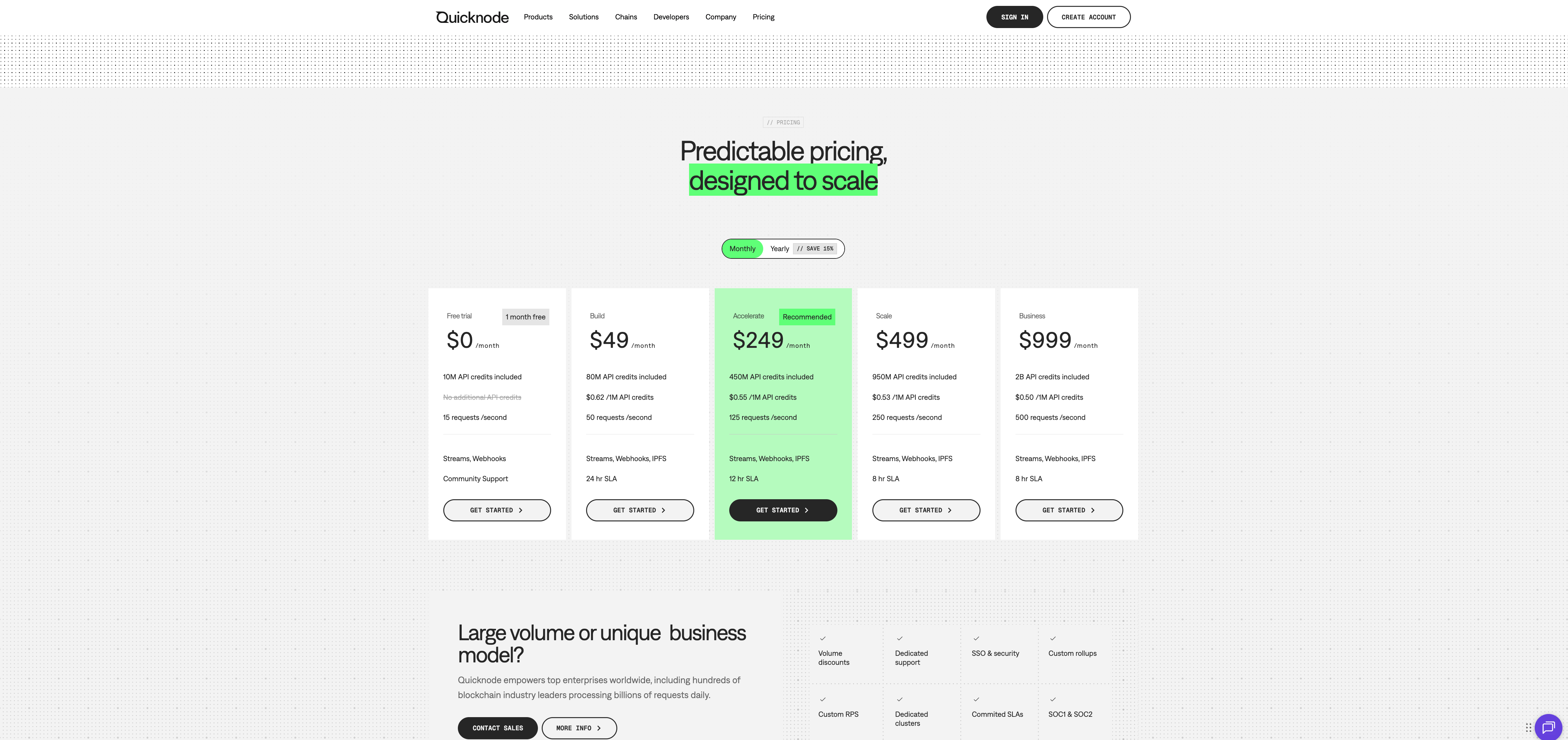
Pricing can become less predictable as usage scales, especially across multiple chains, which makes planning a bit harder at higher volumes.
Monitoring and observability could also be more robust. Having more granular insights into request-level performance, failures, and usage breakdowns would be helpful for debugging and optimization.
On the UI/UX side, while generally clean, some advanced features and configurations aren’t as intuitive and require a bit of trial and error.
Overall, it works well, but more transparency around costs and deeper tooling for monitoring would make it stronger. Review collected by and hosted on G2.com.