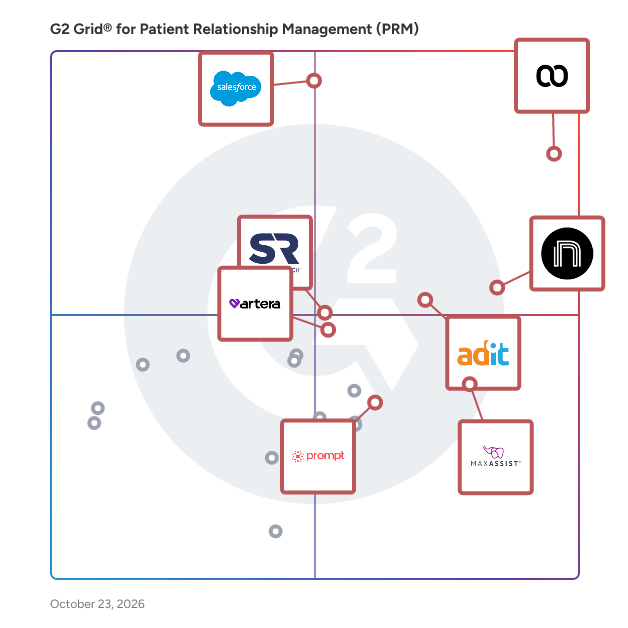
Patient relationship management (PRM) software, also known as healthcare customer relationship management (CRM) software, optimizes and supports the entire patient care journey, enables the effective flow of information within healthcare systems, and increases and nurtures patient engagement. In general terms, PRM is CRM for healthcare; in actuality, PRM is more closely related to a healthcare version of customer journey analytics software, orchestrating and managing the patient experience from referral to advocate. PRM software enables patient-centric care by improving access and communication that ultimately improves patient outcomes, provider-patient relationships, and greater staff efficiency.
PRM software enhances and centralizes the data and functionality of electronic health records (EHRs) software and patient engagement software. Significant benefits of PRM software include the aggregating of all medical records and the encouragement and emphasis of active patient participation towards their health. By leveraging PRM software, health systems and organizations can better enforce value-based care, performance, and reimbursement efforts, without compromising their delivery of quality care.
To qualify for inclusion in the Patient Relationship Management (PRM) category, a product must:
- Capture, update, consolidate, and share or provide access to patient health information from a variety of patient information systems
- Facilitate the patient information management, synchronization, and flow within a healthcare system
- Enable meaningful patient-provider interactions, including the capture of patient feedback and sentiment regarding delivery of care
- Track patient journeys through clinical documentation, records management, and case updates
- Extend beyond the traditional offerings of a healthcare organization to support patients in between care episodes