Multi-Factor Authentication (MFA) Software Resources
Articles, Glossary Terms, Discussions, and Reports to expand your knowledge on Multi-Factor Authentication (MFA) Software
Resource pages are designed to give you a cross-section of information we have on specific categories. You'll find articles from our experts, feature definitions, discussions from users like you, and reports from industry data.
Multi-Factor Authentication (MFA) Software Articles
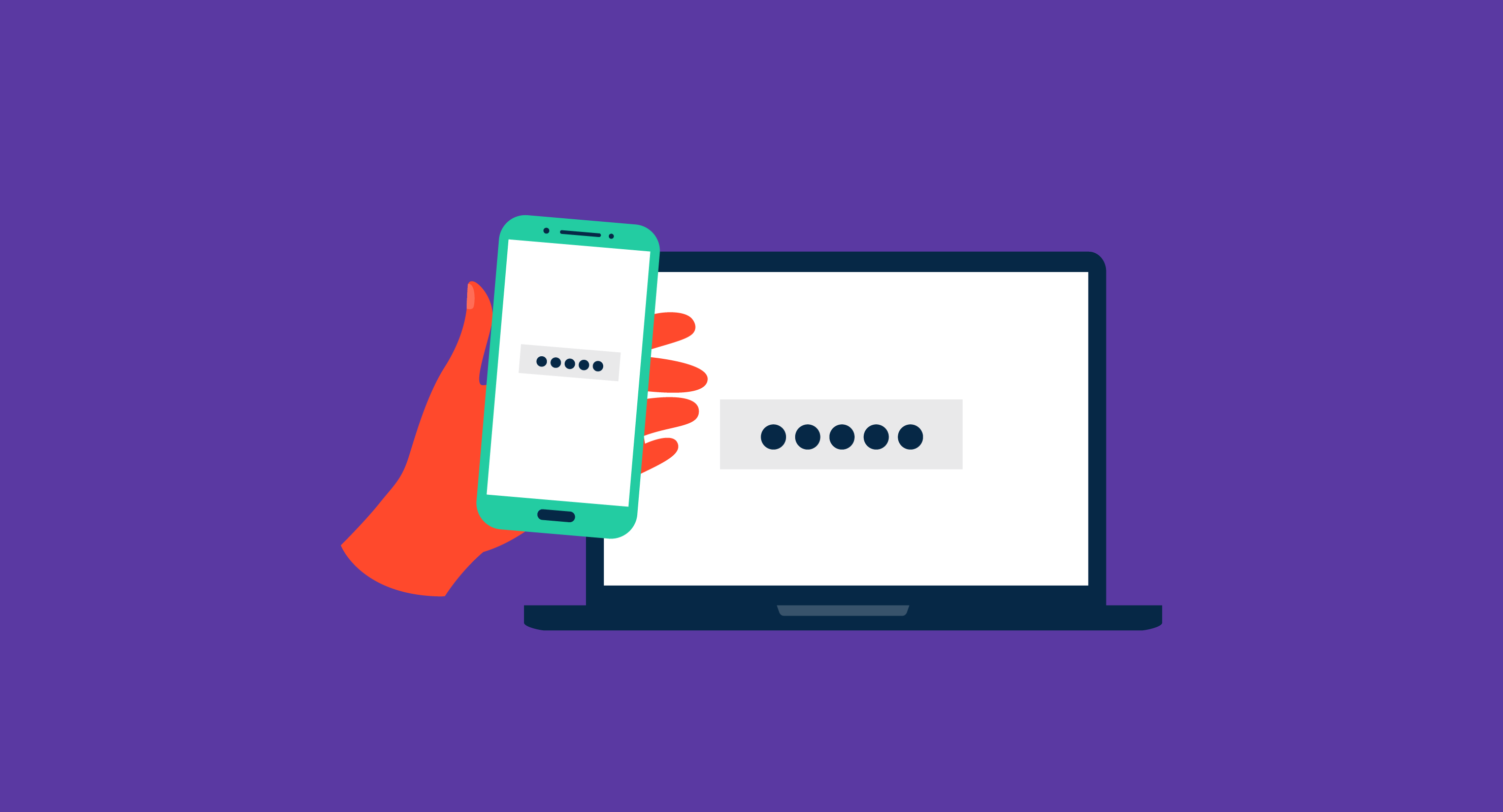
What is Multi-Factor Authentication (MFA)? Types and Benefits
Consider how much of your life takes place on a computer or a mobile device.
by Alexa Drake
What Multi-Factor Authentication (MFA) Software Users Told Us: Summer 2022
The users of multi-factor authentication (MFA) software products have spoken. They’ve told us in MFA product reviews what they like, what they dislike, information about their implementations, the price, and more. I’ve analyzed the latest user review data that G2 has for the Multi-Factor Authentication category, which is based on MFA software user reviews through May 31, 2022. I picked the data points that would be of most interest to current MFA users and potential MFA buyers.

by Merry Marwig, CIPP/US
Ranking Multi-Factor Authentication (MFA) Software Based on G2 Reviews
Single-factor authentication, such as inputting a username and password to sign in to an account, is an outdated and insecure method of authenticating a user. Passwords can be and often are hacked and misused. Most modern companies require multi-factor authentication (MFA) to access user or business accounts for increased security. MFA software requires end users to authenticate their identity in two or more ways before granting access.

by Merry Marwig, CIPP/US
Two-Factor Authentication: A Valuable Addition to Account Security
Humans are predictable. Sometimes, so are their passwords.
by Sagar Joshi
What Is Single Sign-on? How It Makes Authentication Simple
Time is a precious commodity.
by Sagar Joshi
How FIDO Standards Make Authentication Simple and Secure
Fast identity online (FIDO) standards are authentication protocols where security and user experience meet.
by Sagar Joshi
2021 Trends in Cybersecurity
This post is part of G2's 2021 digital trends series. Read more about G2’s perspective on digital transformation trends in an introduction from Michael Fauscette, G2's chief research officer and Tom Pringle, VP, market research, and additional coverage on trends identified by G2’s analysts.
by Aaron Walker
User Adoption is the Key to Calculating ROI for Security Solutions
The return on investment (ROI) is impossible to calculate for cybersecurity solutions. For such solutions, value isn’t found through dollars saved or deals closed; value is found in unobstructed disaster avoidance and a sense of trust for employees, partners, and customers.
by Aaron Walker
Infographic: How to Secure a Remote Workforce
The COVID-19 pandemic has wreaked havoc across the world, impacting nearly every individual and business. As a result, many companies have shifted their operations to adapt to working remotely, in order to align with social distancing requirements.
by Aaron Walker
COVID-19 Spawns Security Concerns For Rapidly Expanding, Under-Protected Workforce
Worldwide, social distancing has affected the day-to-day activities of nearly every person. In many cases, that means working from home.
by Aaron Walker
The Ultimate Guide to Passwordless Authentication
You have business accounts, therefore you have usernames and passwords...for now.
by Merry Marwig, CIPP/US
Analyzing API Security in the Multicloud World
Modern applications send and receive an unfathomable amount of data at any given time. This flow of data is powered through application programming interfaces (APIs).
by Aaron Walker
Challenges of Multicloud Solution Management and Security
Not all clouds are created equal, at least not in terms of security.
by Aaron Walker
Multi-Factor Authentication (MFA) Software Glossary Terms
Multi-Factor Authentication (MFA) Software Discussions
0
Question on: OpenText NetIQ Advanced Authentication
Where is NetIQ Advanced Authentication used the most? By a wide margin, security bodies and rule makers, as well as the organizations themselves, focus on protecting their remote access points such as VPNs, firewalls, and intelligent routers with multi-factor authentication (MFA). One significant change in the market today is that MFA for remote access is only the starting point for most corporations who once they start using NetIQ Advanced Authentication see opportunities across the organization. Its standards-based open architecture allows diverse types of strong authentication implementations coupled with a central point of administration for far less money than legacy solutions.
Securing authentication at endpoints – Windows PC, Linux PAM, Mac OS X: unlike other popular multi-factor authentication products, NetIQ Advanced Authentication has an optional client that provides offers support for more user scenarios and authentication options. The Client gives organizations the ability to support platform-centric methods like Windows Hello for Business and other types of biometric readers, provides offline authentication, and secures single sign-on access to virtualized environments.
For Microsoft customers NetIQ Advanced Authentication allows them to extend strong authentication to the last mile of their business. It provides authentication types not available in Azure or the Windows platform as well as a central point of administration for users and applications that extend beyond the Azure platform. Beyond Microsoft’s platforms, organizations without Advanced Authentication are limited to Microsoft’s identity validation factors. In addition to expanding an organizations authentication options, Advanced Authentication can leverage Windows Hello for Business to verify identities for access to applications and resource regardless of their location or platform.
Standards-based application integration: enterprises use NetIQ Advanced Authentication to protect access to their applications and services across all of their business units. They’re able to do this by leveraging Advanced Authentication’s support for OAuth, OATH, FIPS 140, PKI12, RADIUS, HSPD11, NFC ISO/IEC and others.
Show More
Show Less
0
Question on: OpenText NetIQ Advanced Authentication
What industries are the most common implementers of NetIQ Advanced Authentication?Although the use of Advanced Authentication (AA) in highly regulated industries like financial services and healthcare receives the most attention, the reality is that it’s commonly used throughout a wide range of industries.
Retail: from small outlets to very large multi-national retail operators, these businesses appreciate NetIQ Advanced Authentication’s high level of security, speed, and authentication method flexibility. Its design allows retailers to configure Advanced Authentication to be as simple as a redundant cloud instance all the way to a complex distributed infrastructure capable of delivering fast and reliable authentication to any size and shape of organization.
Manufacturing - aircraft, auto, parts, and packaging companies: in addition to meeting their security requirements, corporations in the manufacturing segment are using Advanced Authentication to match their speed and simplicity requirements. These types of organizations often seek identity verification technologies that don’t impede their business. Likewise, as they require their partners to verify their identities with multi-factor authentication, it needs to be simple so as not to disrupt their interactions.
Media – telecom, cable, and other media providers: as much as any industry, the media sector takes an aggressive approach to security with attention to a compliance of various working groups and committees as well as government mandates. Confidentiality, data integrity, and of course availability are fundamental requirements demanded by media partners and customers who are concerned about the threats to data or data handling devices. NetIQ Advanced Authentication allows a wide range of strong authentication types that can be used for just about any situation. In that the media market has less tolerance for authentication silos, Advanced Authentication’s framework enables central point of administration for all identities.
Transportation: because of the extraordinarily high cost and ensuing customer fallout posed by unauthorized access potentially tampering with transportation systems or their machinery, vendors commonly come across scenarios where multi-factor authentication is needed to control risk. Mass transit agencies like freightliners, airlines, and light rail use NetIQ Advanced Authentication to implement a multi-factor authentication to protect their data and controls. As risks from transporting a wide rand of hazardous materials as well as people continue to grow, these organizations appreciate Advanced Authentication’s support of a wide range of readers that fits their budget and security needs.
Education - private and public institutions: With so much sensitive and private information at stake, education institutions are adding another layer of access security to protect it by expanding their adoption of multi-factor authentication. These institutions have all sorts of personal information about their students as well as medical data of those who may need extra attention or monitoring. Beyond the student’s private information, they also hold personal information of their parents, which often includes credit card and bank numbers for financial transactions that occur each semester. With so much trust and liability at stake, Education centers are raising their level of security and user verification. Increasingly, some of these institutions offering convenient FIDO U2F devices for secure access. Micro Focus was one of the first vendors to join the FIDO Alliance and NetIQ Advanced Authentication was one of the first products to support U2F devices.
Government: as government agencies around the world mature their security policies and formalize their multi-factor authenticating practices, NetIQ® Advanced Authentication has proven to be a great fit for them. Its open architecture and standards-based framework gives them assurance that they are not being subjected to vendor lock-in nor are they limited to authentication type supported by exclusive partnership agreements. As they extend strong authentication across their agencies, government organizations have noted how well the framework offers a solid foundation for both application and authentication integrations.
Finance - local, regional and international banks and insurance companies: Government agencies around the world responsible for establishing guidelines, policies, rules, as well as audit procedures against them do so to ensure that these regulated organizations aggressively manage their risk. As such, multi-factor authentication has become a core component of keeping financial transactions and access to private information secure. NetIQ Advanced Authentication’s mobile SDK and rich set of supported methods have made it a popular solution for financial institutions.
Healthcare: from doctor offices to clinics to hospitals, worldwide maturing privacy rules have imposed a significant change in how providers protect access to patient information. Each year these rules become more encompassing and detailed, and generally, there is a greater liability for those who fail to comply. It's with this pressure that health providers around the world take advantage of NetIQ Advanced Authentication's ability to integrate across all their systems. It's also allowing clinics to choose from a wide range of active and passive authentication types so clinicians can focus on patient outcome uninhibited. Advanced Authentication also integrates with various single sign-on solutions used to simplify secure access clinicians on the move or share access at a kiosk.
Show More
Show Less
0
Question on: WatchGuard AuthPoint
How easy it is to implement the solution?Depends, everything except office 365 is currently easy to integrate....
To integrate with 365 you have to have an existing and working ADFS setup since Microsoft won’t add anymore vendors to their “trusted MFA list” until they come out with a “real” third party solution.
Show More
Show Less
Very easy! The service can be acquired immediately, users can be automatically synchronized with Active Directory or an LDAP database, and mobile authenticators can be automatically associated with users. Dozens of integration guides are provided, for a quick MFA setup with a 3rd party product.
Show More
Show Less
Multi-Factor Authentication (MFA) Software Reports
Mid-Market Grid® Report for Multi-Factor Authentication (MFA)
Spring 2026
G2 Report: Grid® Report
Grid® Report for Multi-Factor Authentication (MFA)
Spring 2026
G2 Report: Grid® Report
Enterprise Grid® Report for Multi-Factor Authentication (MFA)
Spring 2026
G2 Report: Grid® Report
Momentum Grid® Report for Multi-Factor Authentication (MFA)
Spring 2026
G2 Report: Momentum Grid® Report
Small-Business Grid® Report for Multi-Factor Authentication (MFA)
Spring 2026
G2 Report: Grid® Report
Enterprise Grid® Report for Multi-Factor Authentication (MFA)
Winter 2026
G2 Report: Grid® Report
Small-Business Grid® Report for Multi-Factor Authentication (MFA)
Winter 2026
G2 Report: Grid® Report
Mid-Market Grid® Report for Multi-Factor Authentication (MFA)
Winter 2026
G2 Report: Grid® Report
Grid® Report for Multi-Factor Authentication (MFA)
Winter 2026
G2 Report: Grid® Report
Momentum Grid® Report for Multi-Factor Authentication (MFA)
Winter 2026
G2 Report: Momentum Grid® Report