Multi-Factor Authentication (MFA) Software Resources
Articles, Glossary Terms, Discussions, and Reports to expand your knowledge on Multi-Factor Authentication (MFA) Software
Resource pages are designed to give you a cross-section of information we have on specific categories. You'll find articles from our experts, feature definitions, discussions from users like you, and reports from industry data.
Multi-Factor Authentication (MFA) Software Articles
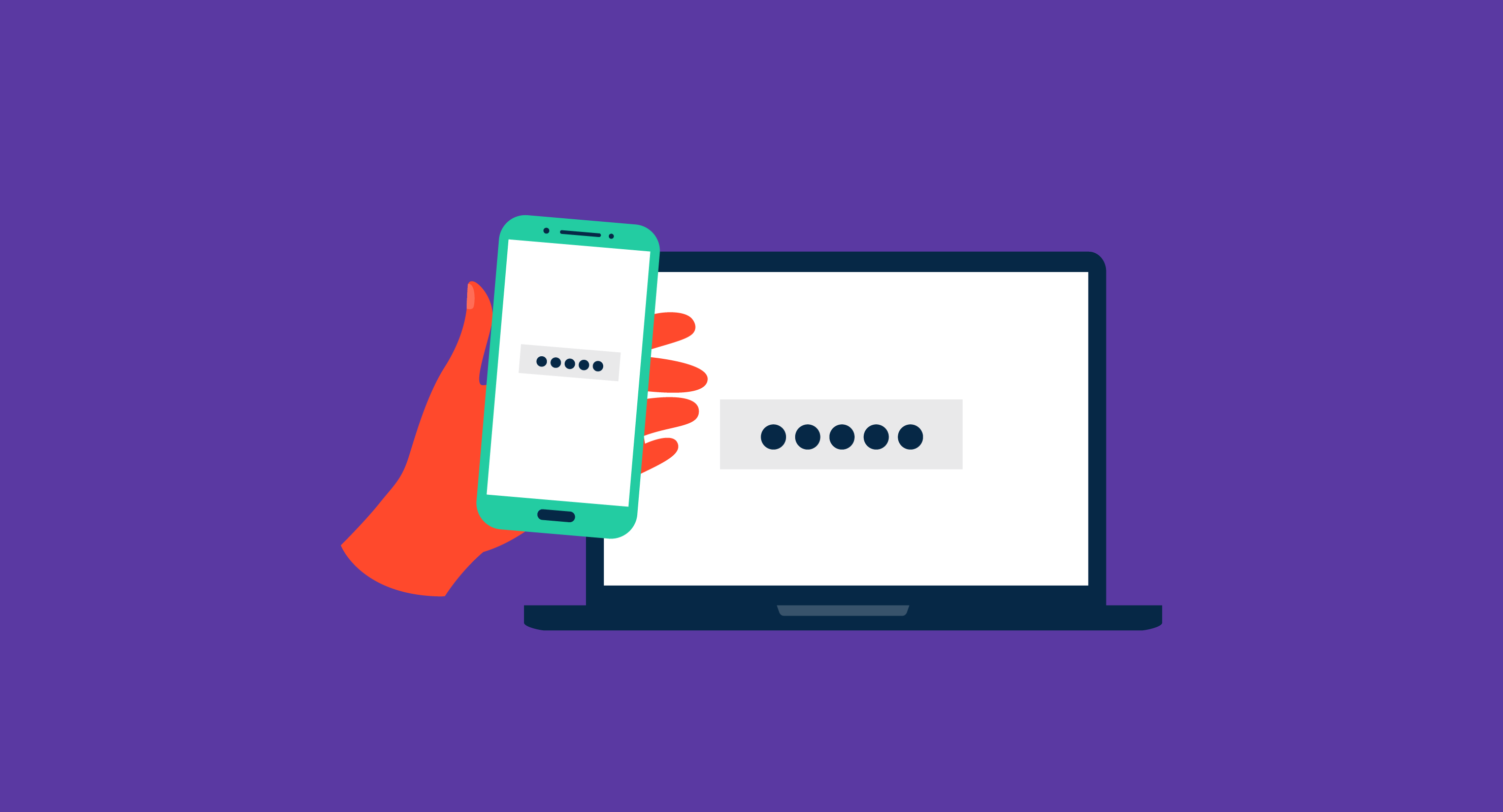
What is Multi-Factor Authentication (MFA)? Types and Benefits
Consider how much of your life takes place on a computer or a mobile device.
by Alexa Drake
What Multi-Factor Authentication (MFA) Software Users Told Us: Summer 2022
The users of multi-factor authentication (MFA) software products have spoken. They’ve told us in MFA product reviews what they like, what they dislike, information about their implementations, the price, and more. I’ve analyzed the latest user review data that G2 has for the Multi-Factor Authentication category, which is based on MFA software user reviews through May 31, 2022. I picked the data points that would be of most interest to current MFA users and potential MFA buyers.
by Merry Marwig, CIPP/US
Ranking Multi-Factor Authentication (MFA) Software Based on G2 Reviews
Single-factor authentication, such as inputting a username and password to sign in to an account, is an outdated and insecure method of authenticating a user. Passwords can be and often are hacked and misused. Most modern companies require multi-factor authentication (MFA) to access user or business accounts for increased security. MFA software requires end users to authenticate their identity in two or more ways before granting access.

by Merry Marwig, CIPP/US
Two-Factor Authentication: A Valuable Addition to Account Security
Humans are predictable. Sometimes, so are their passwords.
by Sagar Joshi
What Is Single Sign-on? How It Makes Authentication Simple
Time is a precious commodity.
by Sagar Joshi
How FIDO Standards Make Authentication Simple and Secure
Fast identity online (FIDO) standards are authentication protocols where security and user experience meet.
by Sagar Joshi
2021 Trends in Cybersecurity
This post is part of G2's 2021 digital trends series. Read more about G2’s perspective on digital transformation trends in an introduction from Michael Fauscette, G2's chief research officer and Tom Pringle, VP, market research, and additional coverage on trends identified by G2’s analysts.
by Aaron Walker
User Adoption is the Key to Calculating ROI for Security Solutions
The return on investment (ROI) is impossible to calculate for cybersecurity solutions. For such solutions, value isn’t found through dollars saved or deals closed; value is found in unobstructed disaster avoidance and a sense of trust for employees, partners, and customers.
by Aaron Walker
Infographic: How to Secure a Remote Workforce
The COVID-19 pandemic has wreaked havoc across the world, impacting nearly every individual and business. As a result, many companies have shifted their operations to adapt to working remotely, in order to align with social distancing requirements.
by Aaron Walker
COVID-19 Spawns Security Concerns For Rapidly Expanding, Under-Protected Workforce
Worldwide, social distancing has affected the day-to-day activities of nearly every person. In many cases, that means working from home.
by Aaron Walker
The Ultimate Guide to Passwordless Authentication
You have business accounts, therefore you have usernames and passwords...for now.
by Merry Marwig, CIPP/US
Analyzing API Security in the Multicloud World
Modern applications send and receive an unfathomable amount of data at any given time. This flow of data is powered through application programming interfaces (APIs).
by Aaron Walker
Challenges of Multicloud Solution Management and Security
Not all clouds are created equal, at least not in terms of security.
by Aaron Walker
Multi-Factor Authentication (MFA) Software Glossary Terms
Multi-Factor Authentication (MFA) Software Discussions
0
What independent testing have Daon's facial biometric capabilities gone through?
Show More
Show Less
Daon's facial biometric capabilities have been evaluated across multiple independent testing programs. NIST FRVT testing validated 1:1 verification and 1:N identification accuracy. NIST FATE testing in August 2025 ranked Daon's face quality assessment algorithm first of 56 products in one of the two scored scenarios. iBeta PAD testing at both Level 1 and Level 2 produced 100% success rates. The algorithms have also been evaluated specifically for 3D artifact detection and injection attack detection as separate testing criteria. All NIST programs use sequestered datasets with no vendor access in advance, making them the most credible independent benchmarks available.
Show More
Show Less
0
Question on: Daon
Where are biometric templates stored, and who controls them?Where are biometric templates stored, and who controls them?
Show More
Show Less
That depends on which product is deployed and how the platform is implemented. For passkey-based authentication through xAuth, the credential is stored on the user's device. For xFace server-side biometric authentication, templates are stored server-side in encrypted, irreversible format that cannot be reconstructed into an original image. They are also stored separately from the users personal information as an extra security layer to prevent connecting a template with a user. Where those server-side templates are physically hosted depends on platform and deployment. TrustX stores templates on an AWS cloud server usually regionally located to the client. IdentityX can store the templates on a Daon-managed cloud server, client-managed cloud infrastructure, or client-managed on-premises server. In all server-side deployments, the organization controls the templates, matching thresholds, and security policies, with optional BYOK for full cryptographic ownership of encryption keys.
Show More
Show Less
0
Question on: Daon
Passkeys already use facial biometrics. What does xFace add?Passkeys already use facial biometrics. What does xFace add?
Show More
Show Less
Passkeys authenticate using the device's local biometric sensor to unlock a cryptographic key stored on that device. The match happens on the device, which means the relying party receives confirmation that someone who can unlock the device was present, not that a specific verified individual was present. xFace matches a selfie against an encrypted biometric template stored on a secure server, which can be captured during IDV enrollment or at a later point in the customer lifecycle. By matching the live user to a central template, it proves that the person is requesting access, not just their known device. That distinction matters for high-risk transactions, account recovery, and regulated use cases where identity assurance is required, not just device access confirmation. It also makes authentication channel-agnostic, so a user can access services from any device in any location.
Show More
Show Less
Multi-Factor Authentication (MFA) Software Reports
Mid-Market Grid® Report for Multi-Factor Authentication (MFA)
Spring 2026
G2 Report: Grid® Report
Grid® Report for Multi-Factor Authentication (MFA)
Spring 2026
G2 Report: Grid® Report
Enterprise Grid® Report for Multi-Factor Authentication (MFA)
Spring 2026
G2 Report: Grid® Report
Momentum Grid® Report for Multi-Factor Authentication (MFA)
Spring 2026
G2 Report: Momentum Grid® Report
Small-Business Grid® Report for Multi-Factor Authentication (MFA)
Spring 2026
G2 Report: Grid® Report
Enterprise Grid® Report for Multi-Factor Authentication (MFA)
Winter 2026
G2 Report: Grid® Report
Small-Business Grid® Report for Multi-Factor Authentication (MFA)
Winter 2026
G2 Report: Grid® Report
Mid-Market Grid® Report for Multi-Factor Authentication (MFA)
Winter 2026
G2 Report: Grid® Report
Grid® Report for Multi-Factor Authentication (MFA)
Winter 2026
G2 Report: Grid® Report
Momentum Grid® Report for Multi-Factor Authentication (MFA)
Winter 2026
G2 Report: Momentum Grid® Report