Data Governance Tools Resources
Articles, Glossary Terms, Discussions, and Reports to expand your knowledge on Data Governance Tools
Resource pages are designed to give you a cross-section of information we have on specific categories. You'll find articles from our experts, feature definitions, discussions from users like you, and reports from industry data.
Data Governance Tools Articles
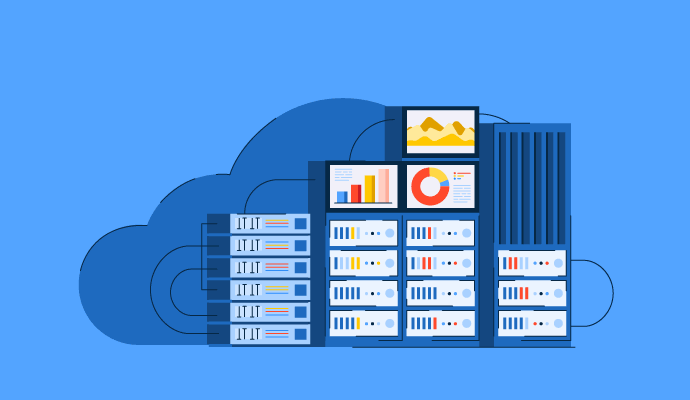
Leveraging Data Governance Across Big Data Environments


The Case for Multicloud Infrastructure Adoption
Data Governance Tools Glossary Terms

Data orchestration connects scattered data sources into automated pipelines ready for analysis. Learn how it works, its benefits, and best practices.
Data governance refers to actions companies take to ensure data is reliable, accurate, and accessible. Learn more about its benefits and best practices.
Data Governance Tools Discussions
I've been on the lookout for the top tools for ensuring data quality and compliance is the theme and it’s more nuanced than it sounds. After reading G2’s Data Governance Tools category, I think while looking for such tools, teams seem to split into two camps: some need profiling, lineage, and business rules first, while others need audit posture, privacy workflows, and proof of compliance across many systems. Based on this, here's my list of the top tools for ensuring data quality and compliance:
- Collibra: This is compelling when data quality and compliance need to live in one governance layer. G2 lists data quality and cleansing, compliance monitoring, policy enforcement, sensitive data compliance, lineage, and data unification, so it feels strong for teams that want fewer handoffs between governance and quality work.
- Informatica Cloud Data Governance and Catalog: I’d look here when quality controls need to scale across a cloud data estate. Role-based access, masking, lineage, and unified governance/catalog capabilities make it feel better suited to organizations that need both trust and enforcement, not just better metadata visibility.
- Alation: Alation looks especially useful when compliance depends on governed discovery and shared business context, not just technical controls. Its G2 pages highlight data quality and cleansing, policy management, compliance monitoring, glossary, lineage, and natural-language access for non-technical users.
- OneTrust Privacy Automation: This is the one I’d shortlist when the compliance problem is operational and cross-functional. Its G2 page emphasizes compliance posture, data/activity mapping, DSR automation, and privacy and AI risk workflows, which makes it feel stronger for teams that need repeatable privacy processes rather than only catalog or lineage depth.
- BigID: BigID feels relevant when compliance starts with finding and protecting regulated, sensitive, and personal data across a large estate. G2 describes it as a machine-learning-driven data intelligence platform for discovering and protecting sensitive data across cloud and on-prem environments, though G2 review summaries also suggest cost can be a meaningful trade-off.
- SAP Master Data Governance (MDG): I’d include this when compliance failures are really rooted in inconsistent master data rather than weak cataloging. The G2 page points to centralized governance of customer, vendor, and product data, plus quality standards aligned with regulatory requirements, which is a different but very real flavor of compliance work.
For teams that have been through real audits, which tool held up best once people started asking for evidence rather than dashboards: stronger profiling, clearer lineage, tighter policy enforcement, or better privacy workflow automation?
One more thing I’m still trying to get a clearer picture on is how these tools perform under actual audit pressure. When auditors start asking for historical records, changes, and traceability, do these platforms make it easy to pull that evidence quickly, or does it still turn into a manual effort pulling from multiple places?
I'm trying to find the best tools for multi-department data governance collaboration. After looking at G2’s Data Governance Tools, Collibra and Informatica stand out as strong collaboration-oriented options, and their feature pages show why: shared glossaries, comments, lineage, workflow, and policy controls matter as much as raw catalog depth when legal, compliance, business, and data teams all need to work from the same source of truth. Here's my complete list:
- Collibra (G2 rating: 4.2 out of 5 stars, 102 reviews): I’d lean here when collaboration needs structure, not just visibility. Commenting, glossary, workflow management, roles, lineage, and policy enforcement make it feel better suited to formal stewardship models where multiple departments need clear handoffs and approvals.
- Alation (G2 rating: 4.4 out of 5 stars, 92 reviews): Alation looks especially strong when adoption across business users matters as much as governance control. Its G2 pages emphasize comments, glossary, metadata, lineage, workflow, policy management, and even natural-language query, which makes it easier to imagine analysts, data teams, and business owners actually using the same context layer.
- Informatica Cloud Data Governance and Catalog (G2 rating: 4.3 out of 5 stars, 14 reviews): This seems strongest when multi-department collaboration is tied closely to cloud governance execution. The G2 product pages emphasize business-and-technical collaboration, role-based access, masking, lineage, and centralized governance controls, so it feels like a good fit when cross-functional alignment has to translate directly into enforceable controls.
- DataGalaxy (G2 rating: 4.8 out of 5 stars, 62 reviews): This stands out when the collaboration problem is partly cultural. Between collaborative governance, visual mapping, glossary, metadata repository, automated cataloging, and even value/ROI tracking, it looks well suited to teams trying to bring executives, business stakeholders, and data teams into the same governance conversation.
- OneTrust Privacy Automation (G2 rating: 4.3 out of 5 stars, 152 reviews): I’d include this when the “multi-department” piece really means privacy, risk, legal, and data teams working together. Its G2 page highlights a real-time compliance posture view, data/activity mapping, DSR automation, privacy and AI risk workflows, and explicit collaboration between data teams and risk teams.
For teams that have rolled this out across departments, where did collaboration usually stall first: ownership handoffs, glossary adoption, policy exceptions, or just keeping non-data teams engaged after launch?
I’m also curious how these tools handle disagreements across teams. When different departments interpret definitions, ownership, or policies differently, does the platform actually help resolve that, or do those conflicts still get pushed outside the system into meetings and back-and-forth?
I'm trying to find the best tools for multi-department data governance collaboration. After looking at G2’s Data Governance Tools, Collibra and Informatica stand out as strong collaboration-oriented options, and their feature pages show why: shared glossaries, comments, lineage, workflow, and policy controls matter as much as raw catalog depth when legal, compliance, business, and data teams all need to work from the same source of truth. Here's my complete list:
- Collibra (G2 rating: 4.2 out of 5 stars, 102 reviews): I’d lean here when collaboration needs structure, not just visibility. Commenting, glossary, workflow management, roles, lineage, and policy enforcement make it feel better suited to formal stewardship models where multiple departments need clear handoffs and approvals.
- Alation (G2 rating: 4.4 out of 5 stars, 92 reviews): Alation looks especially strong when adoption across business users matters as much as governance control. Its G2 pages emphasize comments, glossary, metadata, lineage, workflow, policy management, and even natural-language query, which makes it easier to imagine analysts, data teams, and business owners actually using the same context layer.
- Informatica Cloud Data Governance and Catalog (G2 rating: 4.3 out of 5 stars, 14 reviews): This seems strongest when multi-department collaboration is tied closely to cloud governance execution. The G2 product pages emphasize business-and-technical collaboration, role-based access, masking, lineage, and centralized governance controls, so it feels like a good fit when cross-functional alignment has to translate directly into enforceable controls.
- DataGalaxy (G2 rating: 4.8 out of 5 stars, 62 reviews): This stands out when the collaboration problem is partly cultural. Between collaborative governance, visual mapping, glossary, metadata repository, automated cataloging, and even value/ROI tracking, it looks well suited to teams trying to bring executives, business stakeholders, and data teams into the same governance conversation.
- OneTrust Privacy Automation (G2 rating: 4.3 out of 5 stars, 152 reviews): I’d include this when the “multi-department” piece really means privacy, risk, legal, and data teams working together. Its G2 page highlights a real-time compliance posture view, data/activity mapping, DSR automation, privacy and AI risk workflows, and explicit collaboration between data teams and risk teams.
For teams that have rolled this out across departments, where did collaboration usually stall first: ownership handoffs, glossary adoption, policy exceptions, or just keeping non-data teams engaged after launch?
I’m also curious how these tools handle disagreements across teams. When different departments interpret definitions, ownership, or policies differently, does the platform actually help resolve that, or do those conflicts still get pushed outside the system into meetings and back-and-forth?