Data Governance Tools Resources
Articles, Glossary Terms, Discussions, and Reports to expand your knowledge on Data Governance Tools
Resource pages are designed to give you a cross-section of information we have on specific categories. You'll find articles from our experts, feature definitions, discussions from users like you, and reports from industry data.
Data Governance Tools Articles
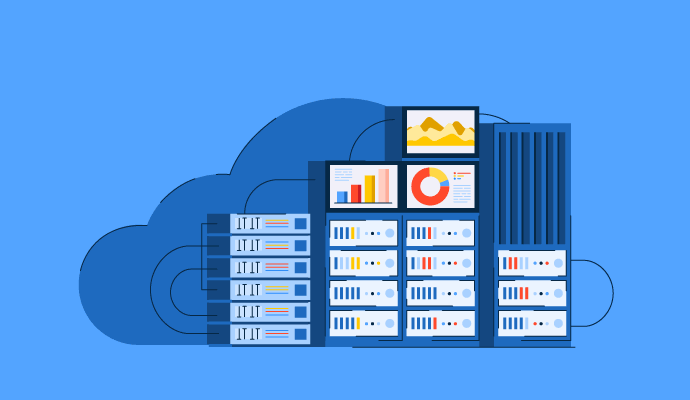
Leveraging Data Governance Across Big Data Environments


The Case for Multicloud Infrastructure Adoption
Data Governance Tools Glossary Terms

Data orchestration connects scattered data sources into automated pipelines ready for analysis. Learn how it works, its benefits, and best practices.
Data governance refers to actions companies take to ensure data is reliable, accurate, and accessible. Learn more about its benefits and best practices.
Data Governance Tools Discussions
I am trying to find the best software for tracking data lineage and ownership. After my initial research using G2’s Data Governance Tools category page, I'm framing my decision around three things: how clearly a platform surfaces lineage and ownership, how well policies fit existing infrastructure, and whether business users can actually understand governed data. According to this, the here's my list of the best softwares for tracking data lineage and ownership:
- DataGalaxy: I’d shortlist this when lineage has to be legible beyond engineering. G2’s research highlights it for visual lineage and knowledge-graph relationships, and its feature set adds roles management, business glossary, metadata management, policy management, and embedded collaboration, which makes ownership easier to communicate across teams.
- Collibra: This looks stronger when lineage needs to tie directly into stewardship, glossary definitions, and compliance processes rather than living as a standalone map. The G2 product pages also show both detailed technical lineage and summary lineage views, which is useful when different audiences need different levels of visibility.
- erwin Data Intelligence: This feels strongest when the real requirement is automated metadata harvesting plus impact analysis before schema or ETL changes. Recent G2 reviews call out column-level lineage, automated lineage mapping, and centralized visibility into lineage, definitions, and datasets, but they also mention a steeper learning curve and less polished UI than newer tools.
- Atlan: Atlan stands out when lineage and ownership need to stay close to day-to-day analytics work. Its G2 page emphasizes automated lineage across columns, queries, metrics, and dashboards, along with glossary, metadata, collaboration, and two-way metadata movement into existing tools, which feels well suited to modern data stack teams that want context inside workflows instead of in a separate portal.
- Microsoft Purview Data Lifecycle Management: I’d look here when the lineage conversation is tightly bound to Microsoft data estates and compliance evidence. G2 reviews specifically mention clear lineage across files, SQL Server, Azure data lakes, and Power BI, but they also point out that the experience is still fairly Microsoft-centric when teams want equivalent visibility across non-Microsoft tools.
When your team says ownership, what matters more in practice: named stewards in a glossary, downstream impact visibility before changes, or giving analysts enough lineage context that they stop opening tickets?
I’m also curious how dynamic the lineage actually stays after implementation. When pipelines, dashboards, or schemas change frequently, do these tools keep lineage and ownership up to date automatically, or does it start drifting unless someone actively maintains it?
I am trying to find the best software for tracking data lineage and ownership. After my initial research using G2’s Data Governance Tools category page, I'm framing my decision around three things: how clearly a platform surfaces lineage and ownership, how well policies fit existing infrastructure, and whether business users can actually understand governed data. According to this, the here's my list of the best softwares for tracking data lineage and ownership:
- DataGalaxy: I’d shortlist this when lineage has to be legible beyond engineering. G2’s research highlights it for visual lineage and knowledge-graph relationships, and its feature set adds roles management, business glossary, metadata management, policy management, and embedded collaboration, which makes ownership easier to communicate across teams.
- Collibra: This looks stronger when lineage needs to tie directly into stewardship, glossary definitions, and compliance processes rather than living as a standalone map. The G2 product pages also show both detailed technical lineage and summary lineage views, which is useful when different audiences need different levels of visibility.
- erwin Data Intelligence: This feels strongest when the real requirement is automated metadata harvesting plus impact analysis before schema or ETL changes. Recent G2 reviews call out column-level lineage, automated lineage mapping, and centralized visibility into lineage, definitions, and datasets, but they also mention a steeper learning curve and less polished UI than newer tools.
- Atlan: Atlan stands out when lineage and ownership need to stay close to day-to-day analytics work. Its G2 page emphasizes automated lineage across columns, queries, metrics, and dashboards, along with glossary, metadata, collaboration, and two-way metadata movement into existing tools, which feels well suited to modern data stack teams that want context inside workflows instead of in a separate portal.
- Microsoft Purview Data Lifecycle Management: I’d look here when the lineage conversation is tightly bound to Microsoft data estates and compliance evidence. G2 reviews specifically mention clear lineage across files, SQL Server, Azure data lakes, and Power BI, but they also point out that the experience is still fairly Microsoft-centric when teams want equivalent visibility across non-Microsoft tools.
When your team says ownership, what matters more in practice: named stewards in a glossary, downstream impact visibility before changes, or giving analysts enough lineage context that they stop opening tickets?
I’m also curious how dynamic the lineage actually stays after implementation. When pipelines, dashboards, or schemas change frequently, do these tools keep lineage and ownership up to date automatically, or does it start drifting unless someone actively maintains it?
I review how teams try to standardize governance rules across warehouses, lakes, BI layers, and operational systems which is why I am trying to find the best platforms for centralized data governance policies. Looking at G2’s current Data Governance Tools category, Collibra and IBM watsonx gove are specifically called out for centralized governance use cases. Across all the tools I picked, what seems to vary most is whether a team needs a classic stewardship-and-policy control plane, deeper metadata automation, or AI governance wrapped into the same program. Here's my complete list:
- Collibra (G2 rating: 4.2 out of 5 stars, 102 reviews): I’d shortlist this when centralized policy management has to connect directly to stewardship workflows, lineage, shared definitions, and ongoing compliance monitoring. Its G2 profile also suggests a heavier lift than lighter-weight tools, with an average implementation window of about six months, so it feels best suited to programs that are building a formal governance operating model rather than just a catalog.
- Informatica Cloud Data Governance and Catalog (G2 rating: 4.3 out of 5 stars, 14 reviews): This looks strongest when centralized policies also need role-based access, masking, lineage, and collaboration between business and technical teams from one cloud-native layer. It feels especially relevant if the challenge is not just writing policy, but operationalizing ownership and controls across distributed cloud data assets.
- IBM watsonx.governance (G2 rating: 4.3 out of 5 stars, 65 reviews): This is the one I’d look at more closely when centralized governance now includes AI models and agents in addition to data. The G2 page emphasizes platform-agnostic governance, built-in compliance planning, policy enforcement, and auditability, which makes it interesting for teams trying to avoid splitting data governance and AI governance into separate tracks.
- SAP Master Data Governance (MDG) (G2 rating: 4.4 out of 5 stars, 274 reviews): This feels like the better fit when “centralized governance” really means central control over customer, vendor, and product master data inside a large SAP-heavy environment. The trade-off is that it is more master-data-centric than catalog-first tools, but that can be exactly what regulated or ERP-led organizations need.
- Microsoft Purview Data Governance (G2 rating: 4.7 out of 5 stars, 18 reviews): Worth a hard look for Microsoft-heavy estates that want a central view across on-prem and cloud data plus built-in policy templates. The flip side, based on G2 reviews, is that connecting to non-Microsoft APIs can still be a limitation, so breadth outside the Microsoft ecosystem is a real trade-off to ask about.
For teams that have actually centralized governance successfully, what ended up mattering more in practice: stewardship workflows, connector breadth, policy enforcement, or how easy it was to get business owners involved?
Another thing I’m still trying to figure out is how centralized these platforms actually stay over time. Do teams manage to keep governance truly unified in one place, or do exceptions and edge cases slowly push policies back into individual tools and teams?