Cloud Security Software Resources
Articles, Glossary Terms, Discussions, and Reports to expand your knowledge on Cloud Security Software
Resource pages are designed to give you a cross-section of information we have on specific categories. You'll find articles from our experts, feature definitions, discussions from users like you, and reports from industry data.
Cloud Security Software Articles
CASB vs. SSE: Which Cloud Security Solution is Right for You?
Cloud Storage Security: How to Keep Your Cloud Data Safe?
AWS re:Invent 2021 Roundup: A G2 Perspective
An Amazonian Challenge: The Year of Cloud Partnerships
Cloud Computing in Health Care
Analyzing API Security in the Multicloud World
Challenges of Multicloud Solution Management and Security
G2 on Cloud Security: Investigating the Risks of Cloud Computing
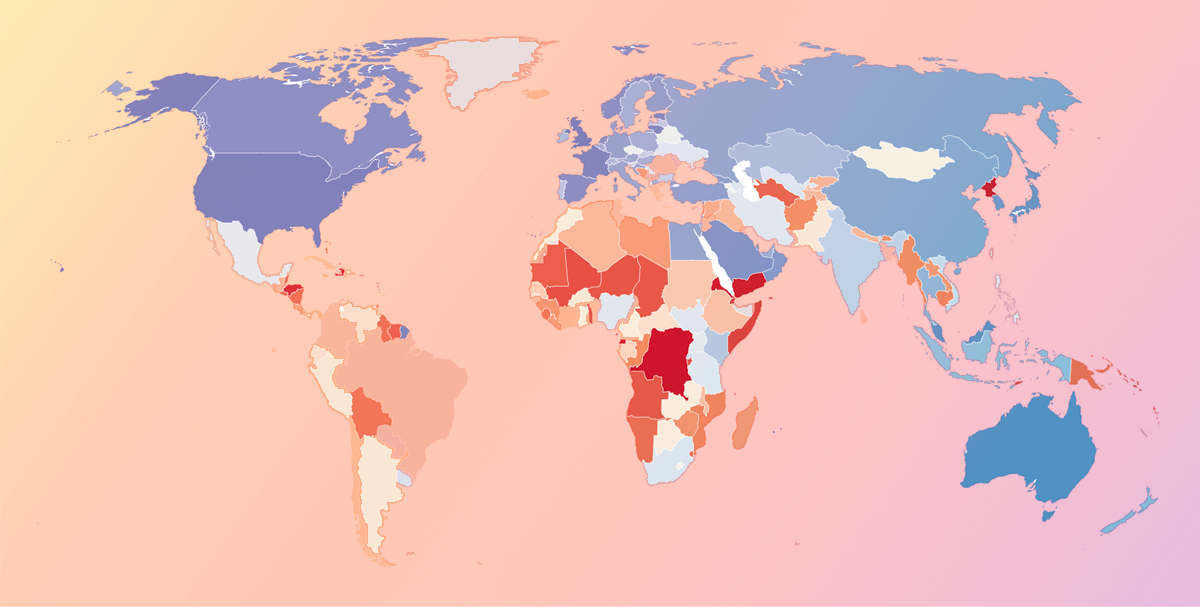
National Cybersecurity and Popular Products Across the World
Cloud Security Software Glossary Terms
Cloud Security Software Discussions
Enterprise CWPP needs often include scale, complex IAM, global monitoring, integrations, and mature governance. CWPPs are foundational for large organizations running diverse workloads (VMs, containers, serverless). We’re currently exploring:
- Wiz – for large-scale visibility and risk prioritization.
- Sysdig Secure – for enterprise-grade runtime protection in cloud-native stacks.
- CrowdStrike Falcon Cloud Security – for enterprise detection/response pedigree extended to cloud workloads.
- Microsoft Defender for Cloud – for scale in Azure-heavy enterprise environments.
- Which CWPPs handle high-volume enterprise workloads best?
- Any challenges with deployment, governance, or cross-team workflows?
Which of these tools would you best recommend?
What enterprise features stand out most (automation, integrations, RBAC depth, global tenancy)?
Multi-cloud adds complexity fast — CWPPs need consistent controls, unified visibility, and cross-cloud threat detection. CWPPs are explicitly designed to secure workloads across hybrid and multi-cloud setups.We’re currently exploring:
- Microsoft Defender for Cloud – for multi-cloud workload management tied into the Azure Stack.
- Check Point CloudGuard CNAPP – for consistent policy control across clouds.
- Lacework FortiCNAPP – for multi-cloud behavioral insights.
- Google Cloud Platform Security Overview – as a baseline for native GCP workload protections.
- Any friction around policy parity across AWS/Azure/GCP?
- What’s most valuable: unified dashboards, centralized policy, or cross-cloud detections?
With Kubernetes and containerized apps, runtime visibility and container posture management are must-haves. CWPPs commonly secure containers with deep runtime monitoring, vulnerability scanning, and threat correlation.
We’re currently exploring:
- Sysdig Secure – for strong container/K8s runtime monitoring and prioritization based on live risk.
- Orca Security – for Kubernetes/container risk discovery without deploying agents.
- SentinelOne Singularity Cloud Security – for container runtime defense.
We’d love feedback on:
- Which platforms give the clearest runtime visibility in K8s?
- What matters more in practice: vuln scanning, drift detection, or runtime threat defense?
Which of these tools would you best recommend?
Any issues you’ve faced with these tools? Specifically related to alert overload or limited telemetry?