AI-Generated Results
Finding matches…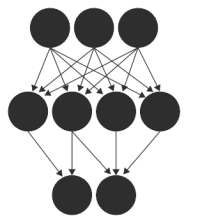
ConvNetJS is a Javascript library for training Deep Learning models (Neural Networks) entirely in a browser.
Not seeing what you're looking for?
Dive deeper into "Libraire" on G2 AI
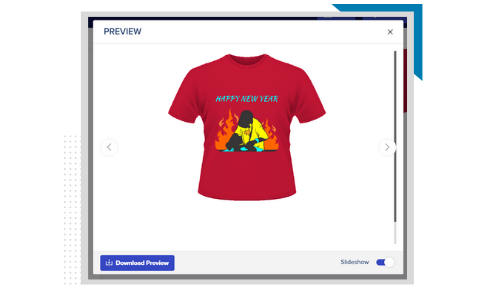
"Want apparel design software that can design T-Shirt as per customers' like? T-shirt design software by Design'N'Buy is the solution which is a clean and smooth user interface used by many leading personlized t-shirt design companies.
Features:
-Complete web-to-print e-Commerce storefront integrated t-shirt design tool
-Pre-loaded clipart and font libraries
-Tool can be customize as per business need
- Design studio built on HTML5/JavaScript and for all devices and platforms
- No Revenue Sharing, No Commission
- Detailed user manual and training videos with live training
To take personalised demo, visit our site today!"

Altair Radioss is a leading explicit finite element analysis (FEA solver designed to evaluate and optimize product performance under highly nonlinear dynamic loadings. Widely adopted across industries such as automotive, aerospace, electronics, and defense, Radioss excels in simulating complex scenarios like crashes, impacts, blasts, and manufacturing processes. Its robust multiphysics capabilities enable accurate modeling of structural responses, enhancing product safety, durability, and manufacturability. With seamless integration into Altair's software ecosystem and compatibility with third-party solvers, Radioss offers a scalable and efficient solution for engineers tackling challenging dynamic analyses.
Key Features and Functionality:
- Explicit Finite Element Solver: Efficiently handles highly nonlinear problems under dynamic loadings, providing accurate simulations of complex events such as crashes and impacts.
- Multiphysics Capabilities: Supports simulations involving fluid-structure interactions, thermal effects, and electromagnetic phenomena, enabling comprehensive analysis of product behavior under various conditions.
- Material and Rupture Libraries: Offers an extensive collection of material models and failure criteria, including definitions for concrete, foam, rubber, steel, composites, and biomaterials, facilitating precise modeling of diverse materials.
- Advanced Element Formulations: Provides innovative composite shell elements with delamination tracking and fast parabolic tetra elements, ensuring high accuracy and efficiency in simulations.
- Solver Compatibility: Allows direct execution of input decks from trusted industry solvers like LS-DYNA without the need for conversions, streamlining workflows and reducing adoption barriers.
- Scalability and AI Integration: Delivers unmatched scalability across diverse computing architectures and integrates seamlessly with AI workflows, enabling rapid training of AI models and predictive insights.
Primary Value and Problem Solving:
Altair Radioss empowers engineers to accurately predict and enhance product performance under dynamic conditions, reducing reliance on physical prototyping and accelerating the design process. By providing detailed insights into structural behavior during events like crashes, impacts, and blasts, Radioss helps improve product safety, durability, and compliance with industry standards. Its multiphysics capabilities and extensive material libraries enable comprehensive analysis of complex systems, facilitating innovation and optimization across various industries. The solver's compatibility with third-party tools and scalability ensures efficient integration into existing workflows, enhancing productivity and reducing time-to-market for new products.

SuperLearner is a package that implements the super learner prediction method and contains a library of prediction algorithms to be used in the super learner.

Cabal is a system for building and packaging Haskell libraries and programs. It defines a common interface for package authors and distributors to easily build their applications in a portable way. Cabal is part of a larger infrastructure for distributing, organizing, and cataloging Haskell libraries and programs.
Abyssale streamlines marketing design to publish faster and increase ROI
It's the end of repetitive design work, endless back-and-forth, and inevitable human errors. Don't choose between creativity, personalization, and scaling production. You now have them all in one platform.
Abyssale helps you generate thousands of banners, from a single template, in multiple formats at a time. All that in just a few minutes!
Save hours of your time on banner creation. Simply choose or create a template, pick the formats you want to export in, connect your data, generate your banner, and you're done! Multiply your AB tests, customize every visual, save time and convert more by taking your visual marketing to the next level!
Here are all the features you'll get access to:
- Industry-leading editor: Every component you need text, shapes, images, emojis, Unsplash library, and much more...
- One-click banner resizing: Customize one format of your template and let Abyssale do the rest. All your layers will be automatically adjusted to all the formats added to your template.
- Integrations: Connect Abyssale to 1000+ tools through Zapier or Integromat. Your creative automation workflow will know no limits.
- Dynamic image: Discover ultra personalisation ! Generate personalized images on the fly by editing an image's URL
- Robust Rest API: Leverage Abyssale's powerful features through our full-fledged API.
- Collaboration: Collaborate within your team or with your clients. Get feedback or approval on templates through comments and statuses.

Blocs is a fast, intuitive, and powerful visual web design software that enables users to create responsive websites without writing code. Designed for Mac, iPad, and iPhone, Blocs offers a seamless experience for building professional websites through a user-friendly interface. It leverages the Bootstrap 5 framework, ensuring that websites are fully responsive and look great on any screen size. With a range of modern, stylish pre-built site templates and customizable Bloc sections, users can quickly bring their website designs to life. Blocs also provides an extensive library of Bric components, such as carousels, modals, tabbed content, and media players, allowing for enhanced functionality and interactivity. Once the website is complete, publishing is straightforward, with options to export sites to code and publish them to your hosting.
Key Features and Functionality:
- No Coding Required: Design stunning websites visually without the need for programming knowledge.
- Intuitive Visual Interface: Navigate and utilize powerful features with a user-friendly, drag-and-drop interface.
- Pre-Built Templates: Kickstart the design process with a variety of modern, stylish templates suitable for portfolios, blogs, or business sites.
- Fully Responsive Design: Ensure websites look fantastic on any device, automatically adjusting layouts and content for a seamless user experience.
- Bootstrap 5 Framework: Leverage the robustness and flexibility of one of the most popular front-end frameworks for creating modern and responsive websites.
- Customizable Bloc Sections: Adapt designs quickly with pre-made Bloc sections or create entire pages from scratch by stacking sections seamlessly.
- Extensive Library of Bric Components: Enhance website functionality with components like carousels, modals, tabbed content, and media players.
- Built-in E-commerce Capabilities: Transform websites into powerful online stores with integrated e-commerce features.
- Simple Publishing Tools: Publish websites with just a few clicks, simplifying the entire process.
- Robust Developer Ecosystem: Extend app capabilities and connect with other developers through a robust developer ecosystem.
Primary Value and Solutions:
Blocs empowers users to create professional, responsive websites efficiently and without the need for coding skills. Its intuitive design and comprehensive feature set address common challenges in web development, such as ensuring responsiveness across devices, integrating interactive elements, and simplifying the publishing process. By providing a visual interface and leveraging the Bootstrap 5 framework, Blocs streamlines the web design process, making it accessible to designers, small business owners, and anyone looking to establish an online presence without the complexities of traditional coding.
Photo Mechanic is a powerful photo management software designed to streamline the workflow of professional photographers. It enables rapid ingestion, culling, tagging, and organization of large volumes of images, significantly reducing the time spent on post-processing tasks. By facilitating quick selection and metadata addition, Photo Mechanic allows photographers to focus more on capturing images and less on managing them.
Key Features and Functionality:
- Fast Ingestion and Culling: Quickly import photos from memory cards and efficiently review them to select the best shots without delay.
- Metadata Management: Easily add, edit, and manage metadata such as captions, keywords, and copyright information to individual or batches of images.
- Advanced Organization: Rename files, create folders, and move images seamlessly to keep your photo library organized.
- Integration with Editing Software: Directly transfer selected images to external editing applications for further processing.
- Cross-Platform Compatibility: Available for both macOS and Windows, supporting a wide range of operating systems.
Primary Value and Solutions Provided:
Photo Mechanic addresses the common challenges faced by photographers in managing extensive photo collections. By offering rapid ingestion and culling capabilities, it minimizes the time required to sort through images. Its robust metadata management tools ensure that photos are accurately labeled and easily searchable. The software's seamless integration with various editing platforms and its cross-platform compatibility make it a versatile tool for photographers aiming to enhance their productivity and maintain an organized workflow.

We are business technologists of robotic process automation business. We built high performing robotic libraries, re-engineer business processes and scalable robot farms that reduce costs, increase speed and accuracy. We help companies gain corporate memory through our robotic process libraries.

The "Caffe Python 3.6 NVidia GPU Production" is a pre-configured and fully integrated software stack designed for high-performance deep learning tasks. It combines the Caffe deep learning framework with Python 3.6, optimized to leverage NVIDIA GPUs for accelerated computation. This environment is tailored for both training and inference, providing a stable and production-ready platform for deploying deep learning models.
Key Features and Functionality:
- Caffe Framework Integration: Incorporates the Caffe deep learning framework, known for its speed and modularity, facilitating the development and deployment of deep learning models.
- Python 3.6 Support: Utilizes Python 3.6, offering compatibility with a wide range of libraries and tools essential for machine learning and data analysis.
- NVIDIA GPU Optimization: Configured to harness the computational power of NVIDIA GPUs, significantly accelerating deep learning computations and reducing training times.
- Pre-Configured Environment: Provides a ready-to-use setup with all necessary dependencies installed, minimizing setup time and potential configuration issues.
- Production-Ready Stability: Designed for stability and long-term support, ensuring reliability for production deployments.
Primary Value and Problem Solved:
This product addresses the challenge of setting up a robust and efficient deep learning environment by offering a pre-configured stack that integrates Caffe with Python 3.6, optimized for NVIDIA GPUs. It eliminates the complexities associated with manual configuration and dependency management, enabling users to focus on developing and deploying deep learning models efficiently. By providing a stable and production-ready platform, it ensures that deep learning applications can be deployed with confidence, reducing time-to-market and operational overhead.

Data Theorem's Cloud Secure is an automated, continuous security service that integrates Cloud-Native Application Protection Platform (CNAPP) and Application Security (AppSec) capabilities across multi-cloud environments, encompassing both public and private assets. It offers a comprehensive, application-centric approach to cloud security, ensuring robust protection for cloud-native applications and infrastructure.
Key Features and Functionality:
- Monitoring: Implements Cloud Security Posture Management (CSPM) for continuous asset discovery, vulnerability assessments—including Static Application Security Testing (SAST), Dynamic Application Security Testing (DAST), Software Composition Analysis (SCA), and Infrastructure as Code (IaC) analysis—and Cloud Identity and Entitlement Management (CIEM).
- Hacking: Utilizes innovative Hacker Toolkits that provide daily updates on security vulnerabilities and exploits, identifying potential external attack vectors and data breach risks within cloud environments.
- Protection: Offers runtime protections designed to prevent data breaches across cloud-native APIs and applications, leveraging Data Theorem's Software Development Kit (SDK) libraries for real-time telemetry collection and policy-based blocking.
Primary Value and Problem Solved:
Cloud Secure addresses the critical need for comprehensive security in cloud-native applications by providing continuous monitoring, proactive vulnerability identification, and real-time protection mechanisms. By integrating CNAPP and AppSec functionalities, it enables organizations to effectively manage and secure their multi-cloud assets, thereby reducing the risk of data breaches and ensuring compliance with security standards. This holistic approach empowers businesses to maintain a strong security posture in the dynamic landscape of cloud computing.

Retroscribed is lessons learned management software that helps teams capture, organize, and share insights from project retrospectives. The platform transforms project outcomes into searchable knowledge, enabling organizations to avoid repeating mistakes and replicate successful strategies. A global library of lessons learned from projects around the world is available to browse and add to tenant libraries. Customizable templates provide structured documentation for different project types. Advanced search and filtering capabilities offer quick access to relevant insights when needed. AI-powered analytics uncover patterns and connections across multiple projects. Collaboration tools facilitate cross-departmental sharing of lessons learned. The software supports unlimited documentation to accommodate organizations of various sizes. Integration options connect the platform with existing workflows. Advanced reporting highlights learning trends over time. Dedicated support is available.

ArcGIS API for Python is a Python library for working with maps and geospatial data, powered by web GIS. It provides simple and efficient tools for sophisticated vector and raster analysis, geocoding, map making, routing and directions, as well as for organizing and managing a GIS with users, groups and information items.

Koha.org offers a functionally advanced version of Koha and ready access to the most experienced Koha software support company in the industry, LibLime.
Chromatic is a visual testing and UI review platform that helps frontend teams catch visual bugs, automate UI validation, and streamline collaboration from design to development. Chromatic scans every possible UI state across browsers to catch visual and functional bugs before they reach users. Made by the Storybook team, Chromatic integrates with Storybook and CI/CD pipelines to ensure every UI change is tested, reviewed, and approved before it ships. By automating testing and speeding up cross-team signoffs, Chromatic helps teams move faster without breaking things. Catch visual changes before they reach production by generating pixel-level snapshots to easily spot any unexpected changes. Chromatic runs visual regression tests across real browsers and viewports to validate that your UI looks and functions as expected. Test UI components in every state in isolation before integrating them into larger workflows. Using the native Storybook integration, Chromatic gives developers granular control over visual and functional testing of each state of every UI component. This ensures consistency across design systems, component libraries, and web applications. Simulate clicks, typing, drag-and-drop, and hovers on dropdowns, forms, and nav menus automatically, so nothing goes unnoticed before production. Keep UI reviews async, transparent, and moving forward with an approval workflow that lets developers, designers, and stakeholders inspect and approve UI changes. Assign designers, product managers, and other stakeholders to review visual changes as needed on each pull request. Teams can validate expected changes and address unexpected changes without blocking development, or future regressions. Automatically runs tests on every push, commit, or pull request, surfacing results directly in GitHub, GitLab, and other CI tools. Speed up testing without adding infrastructure overhead, and catch every bug early in the development cycle. Scale UI testing effortlessly without managing infrastructure. Chromatic runs tests concurrently in the cloud, parallelizing work to speed up feedback while eliminating flaky tests, and the need for complex local setups. Not using Storybook? Chromatic integrates with Playwright and Cypress to provide comprehensive visual coverage for your E2E tests. Frontend teams of all sizes rely on Chromatic to prevent visual regressions, maintain UI consistency, and reduce bottlenecks from mockup to production. Whether you're building a design system, a component library, or a large-scale web application, Chromatic helps you ship polished, bug-free interfaces with confidence in faster, collaborative workflow.

HCL RTist is an Eclipse-based modeling and development environment designed for creating complex, event-driven, real-time applications in C++. It supports the Unified Modeling Language (UML and its real-time profile (UML-RT, enabling developers to design applications at a higher abstraction level than traditional coding. This approach facilitates the development of embedded systems and Internet of Things (IoT applications by providing a comprehensive suite of tools for design, analysis, building, debugging, and deployment.
Key Features and Functionality:
- Graphical UML Diagrams: Utilize state charts and composite structure diagrams for intuitive application design.
- Integrated Code Editor: Incorporates a code view and editor based on Eclipse CDT for writing C++ code associated with model elements.
- Model Compiler: Generates optimized C++ code from models and supports customizable build processes for creating executables or libraries.
- Efficient Run-Time Library (TargetRTS: Provides essential services such as message-based communication, state machines, timers, and logging, delivered as source code for platform customization.
- Code-to-Model Synchronization: Allows changes in generated C++ code to be automatically synchronized back to the model.
- Model Debugger: Enables debugging at the model level, both locally and remotely, with integration into traditional code debugging using Eclipse CDT.
- Team Development Support: Facilitates collaboration with any SCM system, offering enhanced support for Git through EGit integration.
- Web-Based Model Publishing: Allows models to be published to a web server for access via web browsers, simplifying collaboration among project members.
- Traceability and Reporting: Establishes traceability between model elements and related items like requirements and test cases, supporting comprehensive report generation.
- Migration Support: Assists in migrating UML-RT models created in IBM Rational Rose RealTime and IBM Rational Software Architect RealTime Edition.
Primary Value and User Solutions:
HCL RTist streamlines the development of real-time, embedded, and IoT applications by offering a unified environment that integrates modeling and coding. By supporting UML-RT, it allows developers to work at a higher abstraction level, reducing manual coding efforts and enhancing productivity. The tool's comprehensive features, including advanced debugging, code synchronization, and team collaboration support, address common challenges in real-time application development, leading to faster development cycles, improved code quality, and easier maintenance of complex systems.

Canonical LXC by Linuxcontainers.org is a set of tools, templates, library and language bindings. It's pretty low level, very flexible and covers just about every containment feature supported by the upstream kernel.

Apache PDFBox library is an open source Java tool for working with PDF documents.

Blockly is a client-side JavaScript library for creating visual block programming languages and editors.