Version Control Software Resources
Articles, Glossary Terms, Discussions, and Reports to expand your knowledge on Version Control Software
Resource pages are designed to give you a cross-section of information we have on specific categories. You'll find articles from our experts, feature definitions, discussions from users like you, and reports from industry data.
Version Control Software Articles
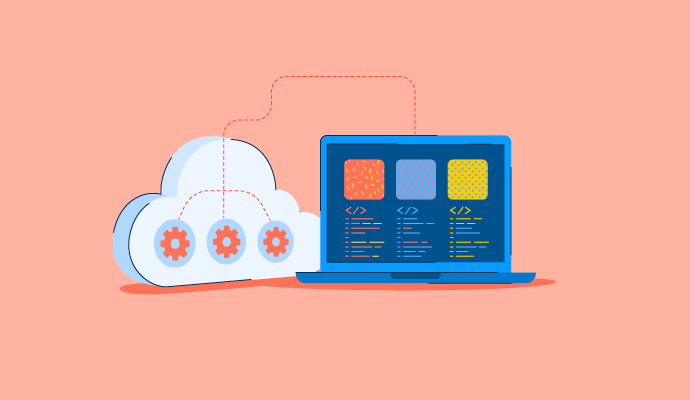
Serverless Architecture: What It Is, Benefits, and Limitations
Shipping faster, building momentum, and growing market share is the dream of any enterprise leader.
by Sudipto Paul
Version Control Software Glossary Terms
Explore our Technology Glossary
Browse through dozens of terms to better understand the products you purchase and use everyday.
Version Control Software Discussions
0
Question on: Plastic SCM
Task-Driven DevelopmentThe branch-per-task approach is not about DVCS.
Show More
Show Less
DVCS (distributed version control system), is the buzzword on all programmers' forums these days. Git and Mercurial contributed majorly to get tons of developers interested in DVCS. What's even more important, they got people interested in branching and merging.
The branch-per-task approach is the core workflow used by most of the DVCS practitioners (including Plastic SCM). This has less to do with the fact that these systems can work in a distributed way and more to do with their actual ability to handle branching and (especially) merging correctly.
Many DVCSs handle branching and merging well, but the branch-per-task pattern is not restricted to distributed systems. Centralized systems are equally capable of using the same pattern, however, many of these, like Subversion, CVS, TFS, and Perforce, have inadequate branching and merging functionality that's questionable at best.
Show More
Show Less
0
Question on: Plastic SCM
What's Plastic SCM?Version control and Plastic SCM
Show More
Show Less
Plastic is a version control system: it versions files and directories and keeps track of branching and merging as you've never seen before. And even better? It does it in a graphical way.
Plastic is all about three key concepts:
Parallel development: Team members work on the same files, at the same time, making changes without interrupting each other. That's how modern teams work, and that's how you should be working. Plastic lets you work this way by isolating changes on branches and handling them in an agile way. Excellent branching coupled with better merging enables teams to work together and trust that their changes and code modifications are protected and preserved. You just make changes, Plastic takes care of the rest.
Distributed development: Plastic helps optimize the collaboration of distant teams. You can have Plastic SCM servers in different offices in different parts of the world, totally disconnected from each other during the major part of the day, and then exchanging branches back and forth in the off-hours to keep in sync. Teams don't have to depend on their internet connections (speed, reliability, and so on) since they can continue working independently. The same technology applies to individual developers working off-line. A small footprint Plastic server is installed on developers' computers. Only when they get online, or are back at the office, will they need to sync with the main server.
Making it visual: Plastic SCM is able to perform very complex operations, but we try to do everything visually, with graphical representations and diagrams. Everything is just one simple click away. Hard core command-line users can always find their way through our command line, but the rest of us prefer a strong GUI capable of turning complicated, multi-dimensional actions into simple affairs. That's Plastic.
Show More
Show Less
0
Question on: Plastic SCM
But aren't branches supposed to be evil incarnate?Task-Driven Development
Show More
Show Less
Who told you that? I bet you found that on some Subversion guide, forum, or manual, maybe even on some other SCM website, didn't you? Branches are excellent tools for developers, but they're not correctly handled by most of the version control systems out there, including CVS, Subversion, SourceSafe, Perforce, Team Foundation Server (TFS), and many others. That's why they say branching is not good. It's not true -- branching is great and you should use it on a daily basis, but you need the right tool for that.
Show More
Show Less
Version Control Software Reports
Mid-Market Grid® Report for Version Control Software
Winter 2026
G2 Report: Grid® Report
Grid® Report for Version Control Software
Winter 2026
G2 Report: Grid® Report
Enterprise Grid® Report for Version Control Software
Winter 2026
G2 Report: Grid® Report
Momentum Grid® Report for Version Control Software
Winter 2026
G2 Report: Momentum Grid® Report
Small-Business Grid® Report for Version Control Software
Winter 2026
G2 Report: Grid® Report
Enterprise Grid® Report for Version Control Software
Fall 2025
G2 Report: Grid® Report
Small-Business Grid® Report for Version Control Software
Fall 2025
G2 Report: Grid® Report
Mid-Market Grid® Report for Version Control Software
Fall 2025
G2 Report: Grid® Report
Grid® Report for Version Control Software
Fall 2025
G2 Report: Grid® Report
Momentum Grid® Report for Version Control Software
Fall 2025
G2 Report: Momentum Grid® Report


