Cloud Workload Protection Platforms Resources
Articles, Glossary Terms, Discussions, and Reports to expand your knowledge on Cloud Workload Protection Platforms
Resource pages are designed to give you a cross-section of information we have on specific categories. You'll find articles from our experts, feature definitions, discussions from users like you, and reports from industry data.
Cloud Workload Protection Platforms Articles
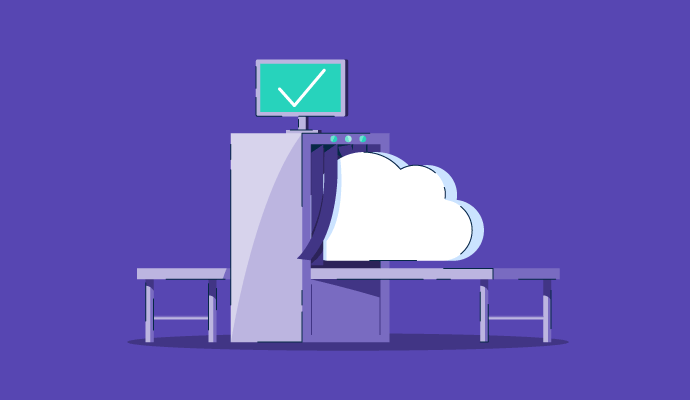
What Is CSPM? How It Ensures a Secure Cloud Environment
Securing the Cloud with Cloud Native-Application Protection Platform (CNAPP)
Computer Viruses Return As the Coronavirus Continues to Spread
Challenges of Multicloud Solution Management and Security
Cloud Workload Protection Platforms Glossary Terms
Cloud Workload Protection Platforms Discussions
Both Cloud Workload Protection Platforms are agentless-first and provide multi-cloud CNAPP coverage. The honest comparison matters because the differences are real but not always surfaced in vendor-led evaluations.
- Wiz: Wiz's agentless approach connects to every cloud environment in minutes with no agents required and no production impact, covering elements that traditionally require agents through its agentless architecture. The Security Graph is the core differentiation: instead of flat CVE lists, it maps actual attack paths showing how vulnerabilities, internet exposure, and permissions intersect to form true risks. CSPM, KSPM, CWPP, Vulnerability Management, IaC scanning, CIEM, and DSPM are all consolidated in a single platform. The AI-SPM capabilities discover shadow AI workloads and unmanaged models automatically.
- Orca Security: Orca's SideScanning™ is patented and provides deep workload visibility by reading encrypted storage snapshots without agents, without touching the workload, and without network traffic interception. Orca treats AI agents, AI services, and model endpoints as first-class attack surface components in its unified data model, not as retrofitted additions. The unified data model means code, cloud, AI services, and AI agents are all part of the same attack surface view. Third-party agents can be integrated for runtime visibility on critical workloads, providing a hybrid model when real-time detection is required.
For security teams that have evaluated both Wiz and Orca — what was the deciding factor? Was it the Security Graph depth, the AI-SPM capabilities, the satisfaction with the respective vendor relationships, the agentless technology approach, or the compliance framework coverage that tipped the decision?
Both Cloud Workload Protection Platforms are agentless-first and provide multi-cloud CNAPP coverage. The honest comparison matters because the differences are real but not always surfaced in vendor-led evaluations.
- Wiz: Wiz's agentless approach connects to every cloud environment in minutes with no agents required and no production impact, covering elements that traditionally require agents through its agentless architecture. The Security Graph is the core differentiation: instead of flat CVE lists, it maps actual attack paths showing how vulnerabilities, internet exposure, and permissions intersect to form true risks. CSPM, KSPM, CWPP, Vulnerability Management, IaC scanning, CIEM, and DSPM are all consolidated in a single platform. The AI-SPM capabilities discover shadow AI workloads and unmanaged models automatically.
- Orca Security: Orca's SideScanning™ is patented and provides deep workload visibility by reading encrypted storage snapshots without agents, without touching the workload, and without network traffic interception. Orca treats AI agents, AI services, and model endpoints as first-class attack surface components in its unified data model, not as retrofitted additions. The unified data model means code, cloud, AI services, and AI agents are all part of the same attack surface view. Third-party agents can be integrated for runtime visibility on critical workloads, providing a hybrid model when real-time detection is required.
For security teams that have evaluated both Wiz and Orca — what was the deciding factor? Was it the Security Graph depth, the AI-SPM capabilities, the satisfaction with the respective vendor relationships, the agentless technology approach, or the compliance framework coverage that tipped the decision?
Hi G2 community! I am researching Cloud Workload Protection Platforms that provide real-time attack detection and response at enterprise scale.
- Sysdig Secure: Built on eBPF, which captures kernel-level system calls without the overhead of traditional agents, Sysdig provides runtime threat detection with zero workload performance impact at the kernel layer. This architecture supports enterprise scale across EKS and AKS Kubernetes clusters simultaneously.
- Wiz: The agentless architecture operates out-of-band via cloud snapshots, providing zero performance impact on workload operations, scanning produces no degradation of production workloads regardless of scale. The Security Graph handles complex graphs and toxic combination analysis at speed, with the dashboard and most elements loading quickly even across large enterprise environments.
- Orca Security: SideScanning™ operates without touching the workload itself — reading encrypted storage snapshots without deploying agents or intercepting network traffic — which provides zero performance impact on production workloads at any scale. For runtime visibility and protection of critical workloads, Orca can integrate with third-party agents, providing a hybrid model where agentless coverage is the baseline and agent-based real-time detection is added selectively for high-risk workloads..
- SentinelOne Singularity Cloud Security: The cloud workload protection extends from the autonomous response model that the platform uses for endpoint security, where attacks are detected and responded to without requiring human-in-the-loop approval for routine response actions to cloud workloads. The real-time detection and response architecture is designed for enterprise scale.
- FortiCNAPP: Machine learning-based behavioral analytics detect deviations from established workload behavior patterns in real time, flagging anomalous activity that rule-based detection systems miss. The Fortinet Security Fabric integration means real-time cloud workload detections are correlated with network and endpoint signals simultaneously, enabling a more complete attack detection picture across the full environment.
For security architects evaluating real-time CWPP detection, what is the acceptable detection-to-response time window for your highest-risk workloads? And has the choice between agentless (scan-cycle-bound) and agent-based (real-time kernel) detection been the primary architectural decision point in your evaluation?
For the highest-risk workloads, I’d prioritize real-time kernel visibility over scan-cycle detection. Sysdig Secure’s eBPF approach stands out here because it provides runtime threat detection at the kernel layer while supporting Kubernetes environments across EKS and AKS.
Most of the evaluation energy in this category goes to detection, but the "shut down" half is where the harder internal decision sits. Automated response means something can isolate a workload without a human in the loop, and the argument teams end up having isn't whether it works, it's what the blast radius looks like when it fires on something benign in production. Has anyone gone through the exercise of deciding which workloads get autonomous response and which stay manual, and what actually settled it?
Beyond detection speed itself, I'm curious how teams weigh the operational side of agentless versus agent-based once you're running both in parallel. Does an agentless baseline plus agents on the highest-risk workloads end up simpler to maintain than picking one architecture across the board, or does running both models add its own overhead?