Cloud Workload Protection Platforms Resources
Articles, Glossary Terms, Discussions, and Reports to expand your knowledge on Cloud Workload Protection Platforms
Resource pages are designed to give you a cross-section of information we have on specific categories. You'll find articles from our experts, feature definitions, discussions from users like you, and reports from industry data.
Cloud Workload Protection Platforms Articles
What Is CSPM? How It Ensures a Secure Cloud Environment


Securing the Cloud with Cloud Native-Application Protection Platform (CNAPP)

Computer Viruses Return As the Coronavirus Continues to Spread
Challenges of Multicloud Solution Management and Security
Cloud Workload Protection Platforms Glossary Terms
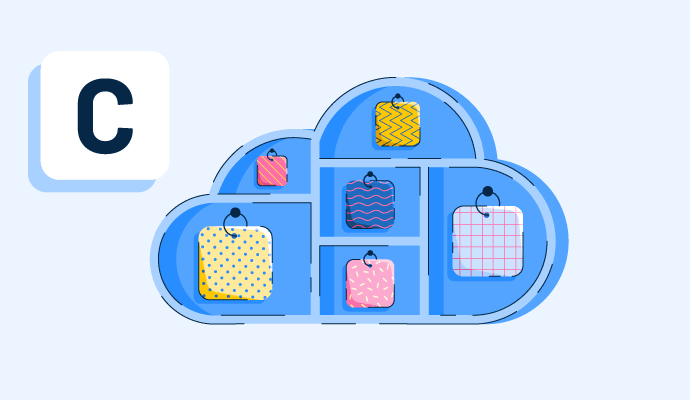
Cloud-native applications are built to reside on cloud platforms to offer more agility. Learn about their benefits, security measures, and key features.
Explore our Technology Glossary
Browse through dozens of terms to better understand the products you purchase and use everyday.
Cloud Workload Protection Platforms Discussions
I am looking for Cloud Workload Protection Platforms that flag drift from security baselines in real time rather than during periodic reviews, and that specifically catch the shadow IT configurations that emerge when developers, analysts, and product managers spin up cloud resources outside the formal provisioning process.
- Wiz: The Security Graph continuously maps cloud inventory including elements that normally require installing agents, providing an always-current view that catches shadow resources the moment they are created. The shift-left IaC scanning layer blocks misconfigurations from reaching production in the first place, reducing the shadow IT that enters production undetected.
- Orca Security: Orca surfaces agent workflows, AI services, and model endpoints alongside the rest of the cloud estate in real-time posture reviews, enabling governance of shadow resources at the speed they are being created. The unified data model treats AI agents, cloud workloads, and identities as first-class citizens of the attack surface, meaning shadow configurations in any of these layers are caught through the same continuous monitoring rather than requiring separate detection tools per resource type.
- TrendAI Vision One – Cloud Security: Continuous asset discovery and contextualized risk assessments catch newly provisioned workloads as they enter the environment, flagging misconfigurations against the established security baseline without requiring manual inventory updates. The centralized console provides the unified visibility that makes it possible to detect shadow IT configurations across multi-cloud and hybrid environments from a single policy view.
- AlgoSec Horizon: The automated risk analysis identifies redundant or shadowed rules that have quietly accumulated and no longer serve a documented business purpose and simulates the impact of changes before they are made, preventing routine cleanup from creating unexpected production exposures. For hybrid environments where shadow configurations can originate in either cloud or on-premises segments, the unified visibility across both layers catches shadow resources regardless of where they were created.
- FortiCNAPP: Machine learning-based behavioral analytics detect anomalous resource provisioning patterns that are characteristic of shadow IT. Resources created outside normal provisioning workflows typically show behavioral signatures different from centrally managed infrastructure. The Fortinet Security Fabric integration means misconfiguration signals from cloud resources can be correlated with network and endpoint signals to identify the device and identity that created the shadow configuration.
For cloud security teams dealing with shadow IT, which category of shadow resource creates the most security risk in your environment? Is it shadow cloud storage buckets with sensitive data, shadow AI workloads with excessive permissions, unmanaged container registries, or compute instances running outside approved configurations?
On the category question, I'd put shadow AI workloads at the top, and it's a permissions story more than a data story. A forgotten storage bucket exposes whatever is in that bucket. An AI service spun up quickly usually gets attached to a role someone picked for convenience, so its reach is whatever that role can read across the account, which is rarely one thing. Orca treating agent workflows and model endpoints as first-class parts of the attack surface makes a lot of sense in that light, since the resource itself is tiny and the identity wrapped around it is the actual surface.
Sysdig Secure is a strong one here, reviewers highlight continuous, real-time misconfiguration detection across cloud workloads rather than periodic scans, which is exactly what catches shadow IT drift early. Aqua Security is another solid, well-rated option for ongoing configuration and posture checks. Cortex Cloud also covers continuous posture monitoring as part of its broader cloud security suite. Catching shadow IT specifically also depends on discovery, finding resources nobody registered in the first place, so confirm each tool's asset discovery breadth, not just its misconfiguration rules.
The fix that sticks is requiring a tag at creation, because an untagged resource has no owner and an unowned resource never gets cleaned up. Most shadow AI workloads aren't hidden so much as unattributed.
I am looking for Cloud Workload Protection Platforms that flag drift from security baselines in real time rather than during periodic reviews, and that specifically catch the shadow IT configurations that emerge when developers, analysts, and product managers spin up cloud resources outside the formal provisioning process.
- Wiz: The Security Graph continuously maps cloud inventory including elements that normally require installing agents, providing an always-current view that catches shadow resources the moment they are created. The shift-left IaC scanning layer blocks misconfigurations from reaching production in the first place, reducing the shadow IT that enters production undetected.
- Orca Security: Orca surfaces agent workflows, AI services, and model endpoints alongside the rest of the cloud estate in real-time posture reviews, enabling governance of shadow resources at the speed they are being created. The unified data model treats AI agents, cloud workloads, and identities as first-class citizens of the attack surface, meaning shadow configurations in any of these layers are caught through the same continuous monitoring rather than requiring separate detection tools per resource type.
- TrendAI Vision One – Cloud Security: Continuous asset discovery and contextualized risk assessments catch newly provisioned workloads as they enter the environment, flagging misconfigurations against the established security baseline without requiring manual inventory updates. The centralized console provides the unified visibility that makes it possible to detect shadow IT configurations across multi-cloud and hybrid environments from a single policy view.
- AlgoSec Horizon: The automated risk analysis identifies redundant or shadowed rules that have quietly accumulated and no longer serve a documented business purpose and simulates the impact of changes before they are made, preventing routine cleanup from creating unexpected production exposures. For hybrid environments where shadow configurations can originate in either cloud or on-premises segments, the unified visibility across both layers catches shadow resources regardless of where they were created.
- FortiCNAPP: Machine learning-based behavioral analytics detect anomalous resource provisioning patterns that are characteristic of shadow IT. Resources created outside normal provisioning workflows typically show behavioral signatures different from centrally managed infrastructure. The Fortinet Security Fabric integration means misconfiguration signals from cloud resources can be correlated with network and endpoint signals to identify the device and identity that created the shadow configuration.
For cloud security teams dealing with shadow IT, which category of shadow resource creates the most security risk in your environment? Is it shadow cloud storage buckets with sensitive data, shadow AI workloads with excessive permissions, unmanaged container registries, or compute instances running outside approved configurations?
On the category question, I'd put shadow AI workloads at the top, and it's a permissions story more than a data story. A forgotten storage bucket exposes whatever is in that bucket. An AI service spun up quickly usually gets attached to a role someone picked for convenience, so its reach is whatever that role can read across the account, which is rarely one thing. Orca treating agent workflows and model endpoints as first-class parts of the attack surface makes a lot of sense in that light, since the resource itself is tiny and the identity wrapped around it is the actual surface.
Sysdig Secure is a strong one here, reviewers highlight continuous, real-time misconfiguration detection across cloud workloads rather than periodic scans, which is exactly what catches shadow IT drift early. Aqua Security is another solid, well-rated option for ongoing configuration and posture checks. Cortex Cloud also covers continuous posture monitoring as part of its broader cloud security suite. Catching shadow IT specifically also depends on discovery, finding resources nobody registered in the first place, so confirm each tool's asset discovery breadth, not just its misconfiguration rules.
The fix that sticks is requiring a tag at creation, because an untagged resource has no owner and an unowned resource never gets cleaned up. Most shadow AI workloads aren't hidden so much as unattributed.
The Cloud Workload Protection Platforms have a gap that does not get enough discussion: the platform evaluation from the perspective of a CISO running a small security team who cannot staff a 24/7 SOC but still needs real-time attack detection and breach prevention across a complex cloud environment. Looking for what actually works at that staffing level.
- Wiz: A small team can focus on the risks that actually matter rather than processing a long list of findings. The Security Graph surfaces the handful that represent real risk so a lean team can go straight to the high-impact remediations. The AI assistant Mika answers security questions in plain language and writes complex graph queries, reducing the analyst expertise required to investigate findings.
- Orca Security: Generative AI capabilities simplify investigations and accelerate remediation, reducing the required skill level for routine threat processing. The platform turns the CISO's job from tracking multiple tools to managing one unified attack surface view.
- Sysdig Secure: The eBPF-based runtime detection operates without human-in-the-loop triage for each event, providing automated real-time response that a small team cannot match with manual processes. The alerts that do reach the team are the ones worth acting on. The Sysdig Sage AI provides agentic assistance that reduces the SOC resource requirement for routine investigation and response steps.
- SentinelOne Singularity Cloud Security: For CISOs already running SentinelOne for endpoint protection, extending to cloud workload security from the same platform eliminates the dual-tool operational burden and provides correlated visibility across endpoint and cloud signals from a single interface. The unified detection and response model means a small team manages one platform rather than coordinating between separate cloud and endpoint security tools.
- Check Point CloudGuard Network Security: The automation of network security processes through IaC and CI/CD integration means enforcement happens without manual SOC intervention. Security policies are enforced at the infrastructure layer without requiring a human review step for every cloud resource change. Unified security management provides consistent visibility and control from a single console.
For CISOs running lean security teams, what was the capability that most compensated for the absence of a large dedicated SOC? Was it AI-assisted investigation and triage, automated policy enforcement that reduced the volume of manual decisions, or risk prioritization that focused the small team on the few findings that actually required human judgment?
Risk prioritization would matter most to me with a lean team. AI-assisted triage is useful, but the bigger win is narrowing hundreds of findings down to the few that actually need human judgment before they become incidents.
I agree that prioritization probably matters more than simply automating more triage. Following my earlier concern about tuning overhead, I’d also look at how much human work it takes to keep that prioritization accurate. A lean team doesn’t gain much if reducing alert review creates another ongoing rules-maintenance job.
Would extending from endpoint into cloud through the same SentinelOne console actually save a lean team meaningful time, or does correlating two data types in one place just move the complexity around instead of removing it? It's the kind of question that's hard to answer from a demo alone and probably only shows up after a few months of actually running it day to day.