

Lauren Fram
Lauren is a former market research analyst focusing on the e-commerce and retail industries. Since joining G2 in July 2017, she has focused her energy on consumer-driven spaces after spending time in the vertical, design, and CAD software spheres. She graduated from the University of Chicago with a degree in English language and literature and her writing and research has been cited in publications such as Forbes, Eater, and Nasdaq.com, among others. She enjoys building and sharing her knowledge, and in her free time enjoys reading, knitting, and gaming. Her coverage areas include retail technology, e-commerce, and restaurant technology.
Summer is coming to an end, which means kids head back to school, pumpkin spice lattes reign supreme, and the build up to the holidays begins.
This year, retailers are contending with concerns about Trump’s tariffs on Chinese goods in the United States and the outcomes of Brexit in the United Kingdom as Q4 approaches. As a result, retailers are focusing less on the retail apocalypse and building out their omnichannel presence and more on navigating possible upheaval in the market.
This year, it’s been clear that certain sectors are not successful. The apparel industry is struggling to keep up with the e-commerce market; so far this year, apparel stores have accounted for 36% of store closings and footwear stores for 28%. As of July 31, 2019, over 7,500 retail stores have closed. Compare that to over 5,500 in all of 2018. This scary number isn't the only alarming trend. Through August 2019, 13 brands filed for bankruptcy, up from 17 brands in all of 2018.
There is hope. As of July 31, 2019, over 3,000 stores opened, compared to 3,300 in all of 2018. However, most of these stores are general goods retailers, not apparel and footwear. So while there are more closures this year compared to last, there are also more openings.This signals industry-level change.
Omnichannel: digital transformation in commerce
“Omnichannel” is what it says: an approach to business that utilizes all channels rather than just one or two. Its buzzword status peaked the last few years as retailers struggle to find footing in an e-commerce driven world. For many retailers, omnichannel means leveraging online and offline channels and integrating them into a seamless design for consumers. The classic example is click and collect: buying online and picking up at the nearest store.
Late last year, I listed omnichannel as a major 2019 retail trend. I don’t see that changing anytime soon. The beauty (and terror) of omnichannel is that there’s no one-size-fits-all. Each business has different approaches and strategies that work well for their business.
What’s all the fuss about if omnichannel is a nebulous concept that few have figured out? According to a report by Treasure Data, 73% of consumers use multiple channels in their shopping journey. In that same report, 87% of businesses said creating a seamless omnichannel customer experience is their most important goal. 67% reported their main goal was acquiring new customers and 65% reported their main goal was improving customer retention. Building an omnichannel strategy is first and foremost about the customer.
According to a study by the CMO Council, customers demand omnichannel experiences. 28% of customers feel it’s critical for retailers to be omnichannel and 59% think it’s important. 65% said companies are good at omnichannel while 17% don’t think any companies are getting it right. Again, omnichannel is about the customer, and customers are taking notice of who is doing it well and who is not. In an increasingly digital world, customers want to be able to find what they need on demand, including answers from brands.
If a customer cannot reach a brand easily, many will take their complaints to social media. Savvy brands have an active social media presence to respond to these issues, but these public complaints are not practical. Ideally, a customer can directly connect to customer support, where representatives have the tools they need to solve issues from any channel.
Many companies are already seeing the advantages of omnichannel. As mobile and social media channels gain traction, we’ll likely see new approaches and interpretations of the omnichannel model.
Omnichannel and G2
In the coming year, I plan to build out an omnichannel space on G2. While we have several commerce categories in various spaces, I want to help businesses find the best tools to build an omnichannel presence and bridge gaps between the brick-and-mortar and e-commerce spaces. The intent of this series is to discuss the evolution of omnichannel communication as it happens. To provide context, here’s the state of e-commerce and retail on G2 right now.
Retail on G2
Three years ago, G2 had one category in the retail software space. Today, there are 14 retail categories featuring a total of 623 products. (For some perspective, that’s double the number of products a year ago and triple the products two years ago.) More products means more reviews. Currently there are 704 reviews for products in the retail categories. That’s double the number of reviews a year ago. Until mid-2018, traffic in the retail categories was next to nothing. Today, traffic in those categories averages somewhere between 600 and 700 visits a month.
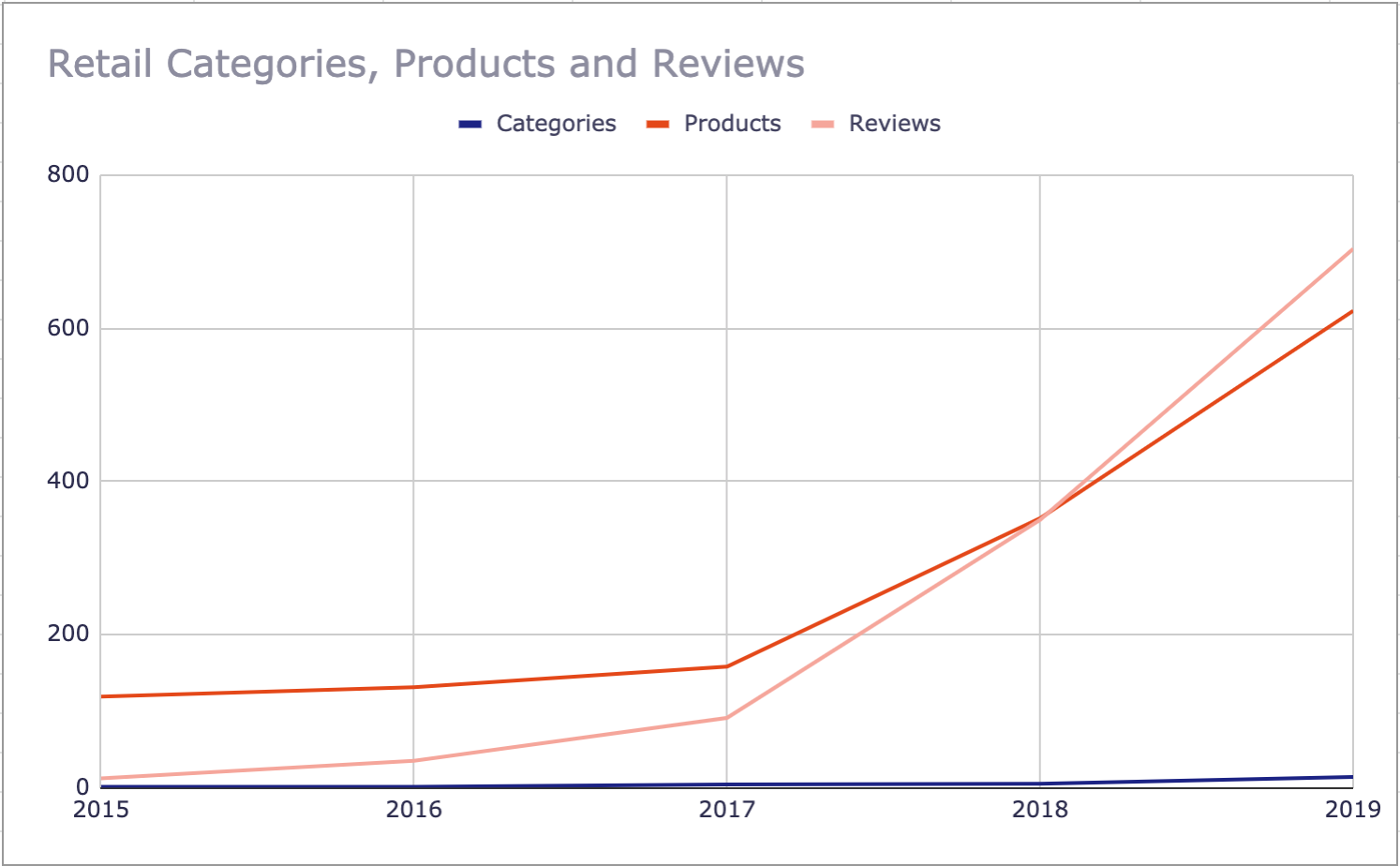
These sound like big numbers, but in the context of G2, they are relatively small.
E-commerce on G2
Currently G2 has 26 e-commerce software categories, up from 14 last year. Four years ago G2 had 11 e-commerce categories. Within those 26 categories we have about 2,500 products, a thousand more than last year. There are currently over 16,000 reviews for e-commerce products on G2. Last year there were only about 9,000. This is partly due to our company’s growth and how reliant e-commerce is on software; e-commerce retailers need software to inhabit a digital space.
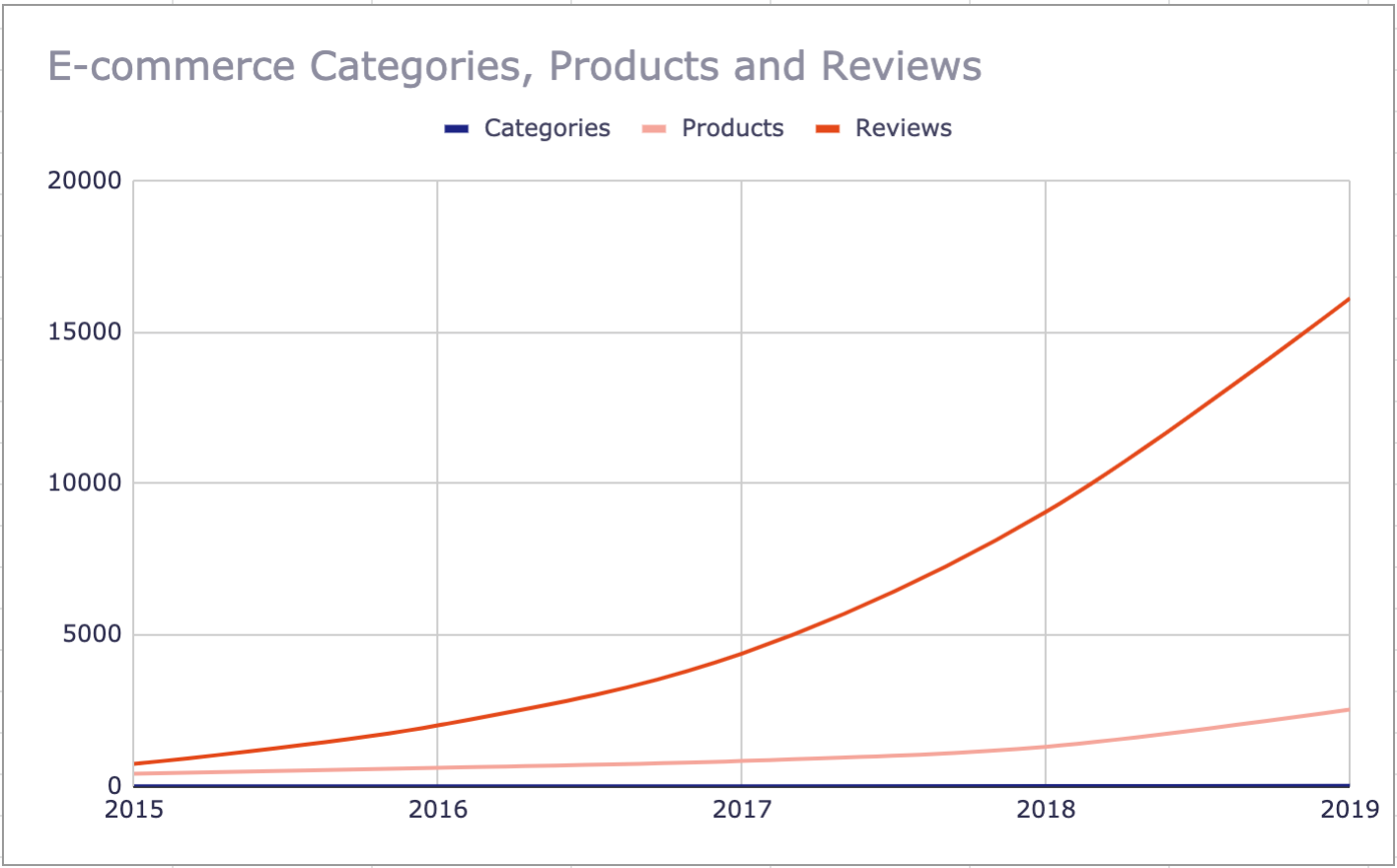
The most important numbers to look at are the traffic numbers. In early 2017, the retail categories’ traffic hovered near zero, and e-commerce categories routinely garnered around 2,500 page views each month. Those numbers steadily grew to peak at about 6,500 in April this year. That same month, retail categories only averaged about 350 visits.
Commerce on G2
We can attribute some numbers to G2’s overall growth. At G2, we work hard to build categories that reflect the space. We add as many products as possible to provide buyers an accurate view of the space, then make sure that products have verified reviews to help buyers make informed choices.
Where the “numbers got big” analysis breaks down is the large disparity between the page views numbers. Page views don’t necessarily correlate to the number of products or categories in a space. While there is a correlation, we’re looking at a large discrepancy. Yes, there are double the categories in our e-commerce space than the retail space, but the difference is not that simple.
Given the meteoric rise of e-commerce, it’s not surprising that there is more interest in e-commerce software than retail software. We would expect worried retailers to try to keep up, such as leveraging software, but the numbers don’t reflect that. Take internet searches, for instance. Per Ahrefs, on average, 1,200 people search for “ecommerce software” on Google each month. However, only 800 people search for “retail software” on average each month. While this is correlation, not causation, it does illustrate that retailers are not looking to software to solve their problems.
It’s more likely that retailers are looking to omnichannel, and finding ways to integrate their existing processes with digital channels like e-commerce and social media. I look forward to helping them on their journey.
To read more about the rise of mobile commerce, check out our guide on m-commerce.