
Anindita Sengupta
Anindita is a Senior Research Analyst at G2 specializing in cloud technologies, CAD & PLM software, and web hosting services. With over five years of experience in market research, Anindita has a proven track record of tracking, analyzing, sizing, and forecasting the industrial printer and B2B software markets. Her passion for technology and staying up-to-date with the latest software trends makes her an invaluable asset to B2B buyers and sellers of software. When she's not immersed in market research, Anindita loves to read and explore new destinations, constantly fueling her curiosity and creativity.
This post is part of G2's 2023 digital trends series. Read more about G2’s perspective on digital transformation trends in an introduction from Emily Malis Greathouse, director, market research, and additional coverage on trends identified by G2’s analysts.
Companies will adopt smart manufacturing methods in 2023
Prediction
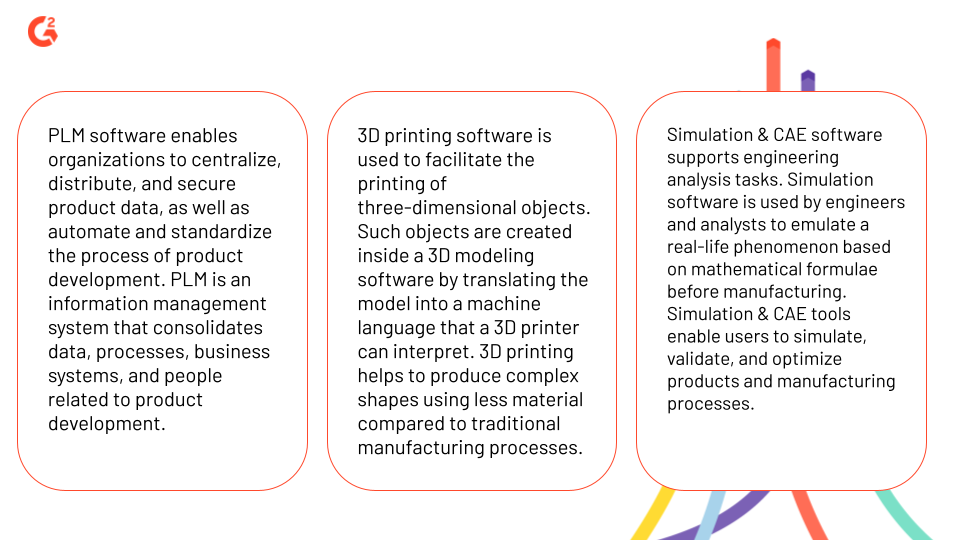
Manufacturing companies will increasingly adopt smart methods of manufacturing in 2023. They will leverage modern software solutions such as product lifecycle management (PLM) coupled with 3D printing and simulation tools to build digital resilience.Building resilience in the manufacturing sector
“Resiliency is the ability to spring back from and successfully adapt to adversity.”
Dr. Nan Henderson
Owner, Resiliency In Action Inc.
This is specifically true for the manufacturing sector, which must run its operations under dynamic and volatile business conditions. Regulatory restrictions imposed during the COVID-19 pandemic uncovered the frailties of this sector and its extreme dependency on manual operations. It unveiled how a lack of visibility into information silos and supply chains can impact production planning and productivity, reinforcing the need for smart manufacturing technologies.
G2 predicts that the application of smart manufacturing technology with the adoption of PLM software coupled with 3D printing and simulation and computer-aided engineering (CAE) tools will increase, enabling manufacturers to design and test their products before manufacturing. It will upgrade supply chain visibility, maintain a digital thread to improve stakeholder collaboration, and provide a holistic view of data across disparate business units. These tools will also shorten the time-to-market and promote innovation.
What do the unique page views for software tools on G2 indicate about the buying patterns of the B2B buyers?
The graph below shows the percentage growth in unique page views to the PLM, 3D Printing, and Simulation & CAE categories on G2 from January 2022 to November 2022.
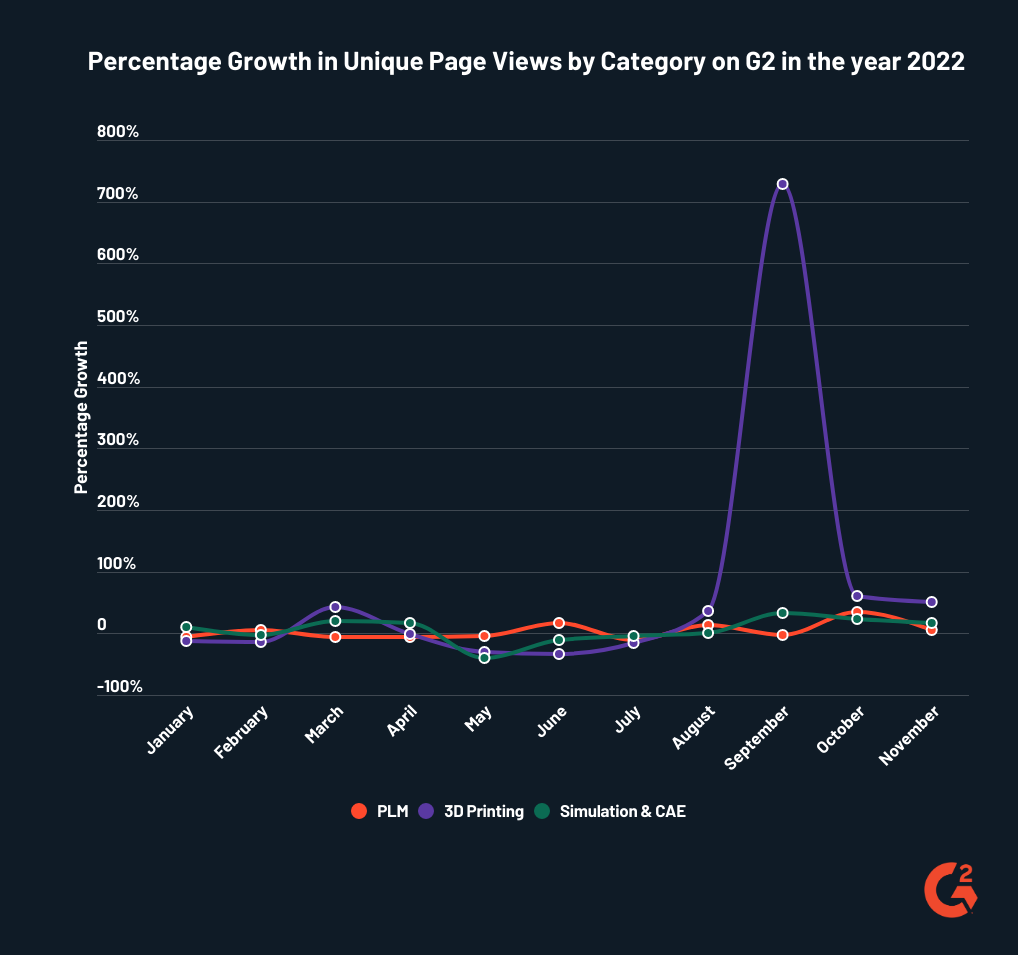
September has recorded a huge spike of 729% growth over August for G2’s 3D Printing Software category during the abovementioned period.
August is generally a slow month for sales as many customers and prospects go on vacation during the month, so software purchase decisions are usually deferred until September. The surge in page views can be attributed to a growing number of software buyers planning their spend during September. Amidst rising inflation and labor shortages, manufacturing companies have turned towards on-demand digital manufacturing using 3D printing technology. 3D printing is faster, more efficient, and ensures cost savings as companies can manufacture components in-house, eventually saving the cost of outsourcing this job and the labor and shipping charges for the products. It expedites the time to market for the products, making 3D printing software a go-to tool for companies.
| Related: 3D Printing Opens New Horizons in the Field of Education → |
Page views to the PLM and Simulation and CAE categories have seen a slow yet gradual growth in the year's second half. Software buyers today are looking for an efficient PLM solution that enables seamless stakeholder collaboration. PLM software can support the various aspects of product development by creating ‘’digital twins’’ which can be tested, verified, and optimized digitally before manufacturing. Simulating products using a simulation tool saves time, prevents wastage, and helps manufacturers identify inefficiencies in the system’s design.
Digital transformation efforts are driving the uptake of modern PLM software as companies are looking to upgrade legacy systems. Yet, siloed tools and disparate information from varied sources often slow down the rate of PLM adoption in organizations.
| Related: The Relevance of PLM Software in the Manufacturing Industry → |
Future proofing is the need of the hour
Unforeseen events continue to intrude on manufacturing conditions and adversely impact productivity. Future-proofing businesses can drive resiliency in the manufacturing industry through advanced technologies. We expect to see a steady growth in the adoption of these tools driven by the need to optimize operations using product data analytics, promote innovation, and ensure products are manufactured at high quality.
Edited by Sinchana Mistry