
Blue Bowen
Blue is a senior market research analyst at G2 concentrating on sales software. Blue utilizes his genuine curiosity and background in market research to further build subject matter expertise in the B2B software space. Blue grew up in a military family moving all over the world, from South Korea to Germany to Virginia, where he now calls home. He received his B.B.A in Marketing with a Professional Sales concentration from James Madison University and in his free time enjoys traveling, trying new foods, watching and playing sports, and hanging out with friends and family.
This post is part of G2's 2023 digital trends series. Read more about G2’s perspective on digital transformation trends in an introduction from Emily Malis Greathouse, director, market research, and additional coverage on trends identified by G2’s analysts.
Focus on buyer enablement will drive increased adoption of digital sales room software in 2023
Prediction
Adoption of digital sales room software will continue to increase as companies shift towards a buyer-focused selling process to guide and enable buyers through the complex experience of SaaS purchasing. Digital sales room solutions will expand from focusing on the later stages of the sales cycle, to throughout the entire selling cycle.Expanding use of digital sales rooms earlier in the sales cycle
Digital sales room software enables businesses to create a personalized and centralized place for buyers to gather information, collaborate (internally and externally), and construct proposals. These solutions have primarily focused on late-stage sales activities—editing and signing proposals—but given the complexity of SaaS purchasing and increasing emphasis on a buyer-led sales process, we will see a trend toward broadening its usage across the sales cycle.
What G2 data says about buyer behavior that may lead to growth in digital sales room software
According to G2’s 2022 Buyer Behavior report, more than 80% of respondents from all company sizes need less than six months to make a purchase decision of $20,000 or more. Additionally, as seen below, 68% of respondents noted that the decision maker always or frequently changes in the buying process; and 71% of respondents noted that additional stakeholders are added throughout the buying journey.
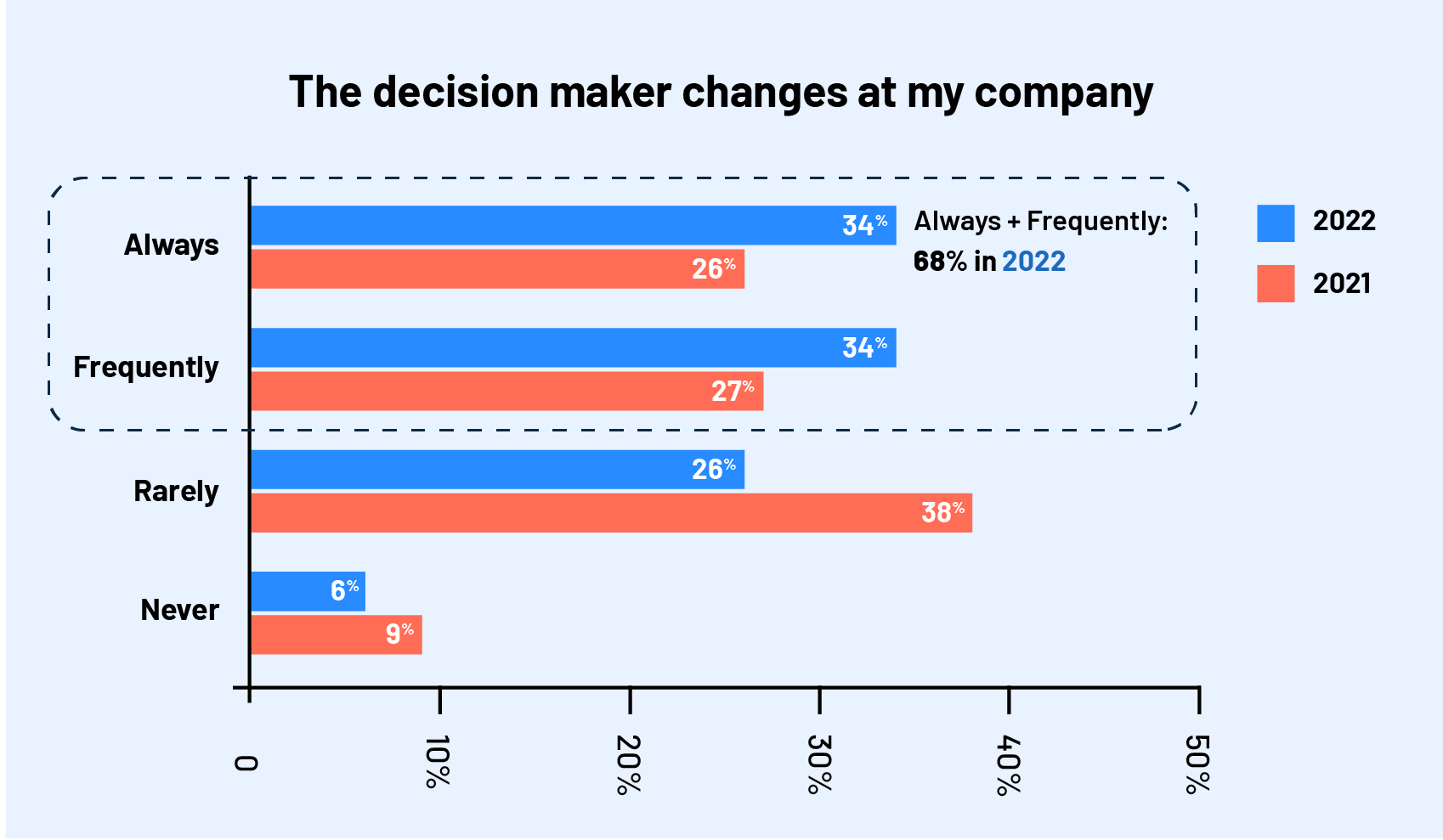
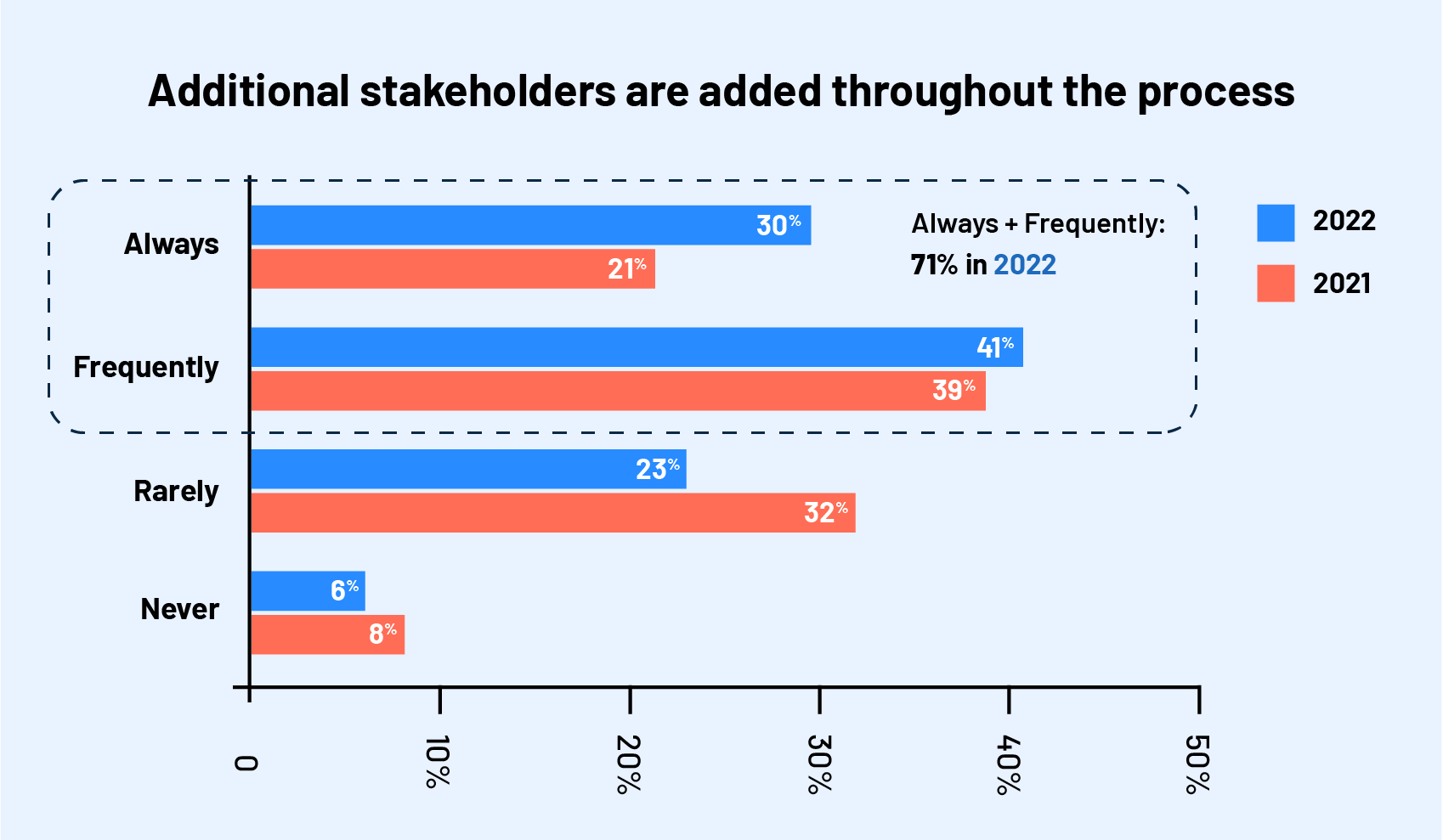
With buying committees changing frequently, it will be increasingly important to streamline the journey and allow seamless knowledge sharing. Digital sales room software enables organizations to navigate the complexities of B2B sales by centralizing correspondence and allowing an internal champion to bring in key decision makers on their own accord. Businesses can then gain insights from analytics to understand what prospects are viewing, who is viewing, and better cater to their needs.
B2B has traditionally followed the footsteps of B2C processes, and with consumers increasingly seeking self-service options, we can expect B2B buyers to follow suit. As such, buyers will likely seek to explore product offerings asynchronously. Companies that are able to efficiently create digital sales rooms for prospects earlier in the sales cycle, and incorporate additional collateral such as personalized demos, will understand customer needs earlier, build better rapport, and in turn, close more deals.
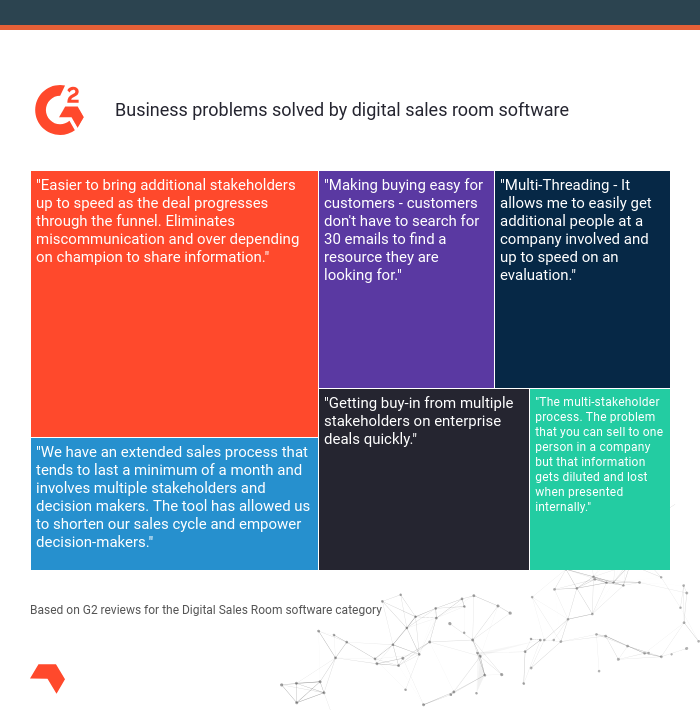
Last year, businesses realized the benefits provided by digital sales room software and its ability to streamline the buying process while facilitating communication across multi-stakeholder purchasing committees. With the ongoing economic turbulence, buying committees and key decision makers will continue to change throughout sales cycles, and we expect digital sales room solutions to grow in adoption as a guiding light orchestrating the buyer journey.
Removing friction and understanding needs is paramount
In order to thrive, sales teams will focus on removing friction in the buying experience and better catering to prospects' interests. Digital sales room solutions will rise as a conduit to facilitate a smooth experience for prospects and an insights tool for sellers to ensure timely and personalized outreach.
Edited by Sinchana Mistry