Advanced FiltersClear Filter
Star Rating
Categories
What Is Cloud Integration? Why Join On-Prem and Cloud Apps

What Is Cloud Integration? Why Join On-Prem and Cloud Apps

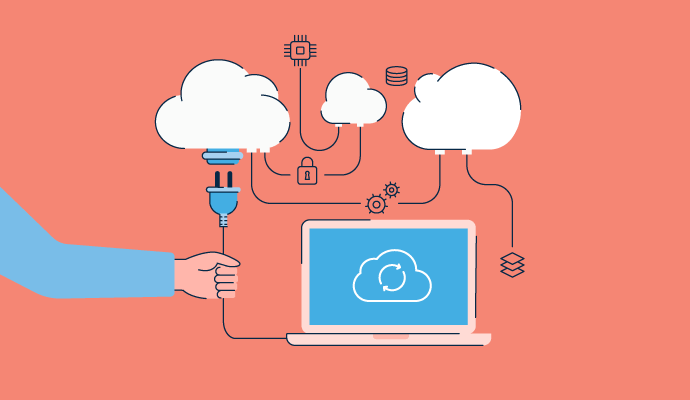
Hybrid environments with clouds and on-premise systems make information technology (IT) delivery challenging.Organizations with multiple lines of businesses (LOBs) use multiple disparate software-as-a-service (SaaS) applications on top of existing legacy systems. These new applications become part of the IT ecosystem with little involvement from the internal IT team. As a result, businesses suffer from security issues and a lack of data intelligence. The way forward for these enterprises with a hybrid SaaS and on-premise applications lies in simplifying application integration. Businesses must adopt an integration platform as a service (iPaaS) software to aggregate, integrate, and manage cloud and non-cloud services reliably. iPaaS systems enable organizations to unify applications, integrate cloud data, manage application programming interfaces (APIs), automate workflows, and visualize business intelligence.
by Aaron Walker
Hot POS Integrations in 2019 (+Which Ones Your Business Needs)

Hot POS Integrations in 2019 (+Which Ones Your Business Needs)

If you run a restaurant or retail store, you need a POS system to function.
by Lauren Fram
What Is Cloud Computing? Benefits and Practical Applications

What Is Cloud Computing? Benefits and Practical Applications

The cloud is taking the technology world by storm.
by Aaron Walker
Data Virtualization 101: Why Businesses Need to Virtualize Data

Data Virtualization 101: Why Businesses Need to Virtualize Data

Consumers like to conveniently access data with devices they love.
by Sagar Joshi
The Data Toolbox: The Expanding Domain of AI & Analytics

The Data Toolbox: The Expanding Domain of AI & Analytics

Killer robots. Threatening humanoids. Robo-apocalypses and evil robots taking over the world. (Just kidding.)
by Matthew Miller
2020 IT and Cloud Computing Trends

2020 IT and Cloud Computing Trends

This post is one part of G2's 2020 digital trends series. Read more about G2’s approach to digital transformation trends in an introduction from Michael Fauscette, G2's chief research officer.
by Zack Busch
Data Federation: Foolproof Guide on Data Management

Data Federation: Foolproof Guide on Data Management

Businesses manage a wide variety of data to run their operations effectively.
by Sagar Joshi
How to Reclaim Your Time With Workflow Automation Software

How to Reclaim Your Time With Workflow Automation Software

The average work week is 40 hours, but how much of that do you spend on repetitive tasks?
by Lauren Pope
What Is File Sharing? Top 10 Apps for Seamless File Sharing

What Is File Sharing? Top 10 Apps for Seamless File Sharing

So much of our daily lives have become digital.
by Mara Calvello
Data Lifecycle Management

Data Lifecycle Management

What is data lifecycle management? Data lifecycle management (DLM)  is the process of managing business data from creation to deletion. As work becomes increasingly data-driven, businesses must develop policies and procedures for generating, storing, and, eventually, retiring their data. DLM is not a specific product but rather an approach to managing proprietary data. The process includes managing applications, systems, databases, and storage media.

by Anthony Orso