Virtual Private Cloud (VPC) Software Resources
Articles, Glossary Terms, Discussions, and Reports to expand your knowledge on Virtual Private Cloud (VPC) Software
Resource pages are designed to give you a cross-section of information we have on specific categories. You'll find articles from our experts, feature definitions, discussions from users like you, and reports from industry data.
Virtual Private Cloud (VPC) Software Articles
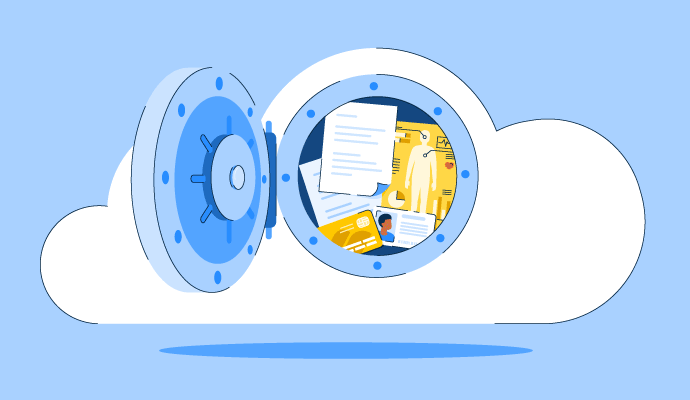
What Is Cloud Security? Understanding the Basics of Cloud
When a business decides to move its data into the cloud, there is always the underlying question of security.
by Mara Calvello
What Is Cloud Infrastructure and How Does It Ease Cloud Computing?
A business restricted to a single geographic location is now a thing of the past.
by Dibyani Das
Virtual Private Cloud (VPC) Software Glossary Terms
Virtual Private Cloud (VPC) Software Discussions
0
Question on: Alibaba Elastic Compute Service
Is there any threshold value for deploying an ECS instance in a Subnet, Virtual Network etc,?Like how many ECS instances can be there in a Subnet or a Virtual Network.
Show More
Show Less
If CIDR block is 192.168.0.0/16, it support 65,532 ECS Instance in a single VPC.
Show More
Show Less
0
Question on: Amazon Virtual Private Cloud (Amazon VPC)
What is Amazon Virtual Private Cloud (Amazon VPC) used for?What is Amazon Virtual Private Cloud (Amazon VPC) used for?
Show More
Show Less
Amazon Virtual Private Cloud (Amazon VPC) is a crucial service in Amazon Web Services (AWS) that allows users to create a logically isolated section of the AWS cloud where they can launch and manage AWS resources in a virtual network. Here are the main uses and benefits of Amazon VPC:
Network Isolation: Amazon VPC lets you isolate your cloud resources from other AWS customers and the public internet, providing a private and secure environment. You control who can access your resources by defining network access controls.
Customizable Network Configuration: You can configure your VPC with subnets, IP address ranges, route tables, and network gateways. This allows you to set up your network topology according to your specific needs, such as creating separate subnets for different application tiers (e.g., web, application, and database layers).
Secure Connectivity: Amazon VPC supports various security features such as security groups (firewall rules for instances) and network access control lists (ACLs) to control inbound and outbound traffic. It also supports VPN connections and AWS Direct Connect for secure, private connectivity to your on-premises data centers.
Elasticity and Scalability: You can easily scale your resources up or down within your VPC. AWS services like Elastic Load Balancing and Auto Scaling can be used within your VPC to handle varying levels of traffic and ensure high availability.
Hybrid Cloud Architectures: Amazon VPC facilitates hybrid cloud setups where you can extend your on-premises network to the cloud. This is useful for businesses looking to leverage the cloud for certain workloads while maintaining a connection to their existing infrastructure.
Subnet and IP Management: VPC allows you to create public and private subnets, providing flexibility in managing resources that need to be accessible from the internet versus those that don’t. It also offers control over IP address allocation and routing.
Monitoring and Logging: VPC integrates with AWS CloudWatch and AWS CloudTrail, enabling you to monitor network traffic, set up alarms, and log activity for security and compliance purposes.
Overall, Amazon VPC provides the foundational networking capabilities needed to build secure, scalable, and flexible cloud architectures on AWS.
Show More
Show Less
As an engineer who’s worked with Amazon VPC, I’d say it’s a rock-solid tool for managing a private slice of the AWS cloud. It’s like having your own little network playground—you can set up subnets, control who gets in or out with security groups, and connect it to your on-site systems if needed. I’ve used it to launch EC2 instances for a web app, splitting public-facing stuff (like a front-end server) into one subnet and keeping sensitive databases in a private one. The flexibility is awesome—I could tweak IP ranges, route tables, and gateways to match exactly what my project needed, like ensuring a client’s data stayed locked down but still accessible to their VPN. The integration with other AWS services, like RDS or Lambda, is seamless too, saving me headaches. That said, it’s not perfect—the setup can feel overwhelming at first, with all the networking jargon and options, and troubleshooting connectivity issues (like a misconfigured NAT gateway) can eat up time. Still, for keeping resources secure and organized in the cloud, it’s tough to beat. I’d give it a 9/10 for its power and control.
Show More
Show Less
0
Question on: Abacus Private Cloud
Who makes Abacus Software?Who makes Abacus Software?
Show More
Show Less
Avolution makes Abacus.
Show More
Show Less
Virtual Private Cloud (VPC) Software Reports
Mid-Market Grid® Report for Virtual Private Cloud (VPC)
Winter 2026
G2 Report: Grid® Report
Enterprise Grid® Report for Virtual Private Cloud (VPC)
Winter 2026
G2 Report: Grid® Report
Grid® Report for Virtual Private Cloud (VPC)
Winter 2026
G2 Report: Grid® Report
Momentum Grid® Report for Virtual Private Cloud (VPC)
Winter 2026
G2 Report: Momentum Grid® Report
Grid® Report for Virtual Private Cloud (VPC)
Fall 2025
G2 Report: Grid® Report
Momentum Grid® Report for Virtual Private Cloud (VPC)
Fall 2025
G2 Report: Momentum Grid® Report
Grid® Report for Virtual Private Cloud (VPC)
Summer 2025
G2 Report: Grid® Report
Momentum Grid® Report for Virtual Private Cloud (VPC)
Summer 2025
G2 Report: Momentum Grid® Report