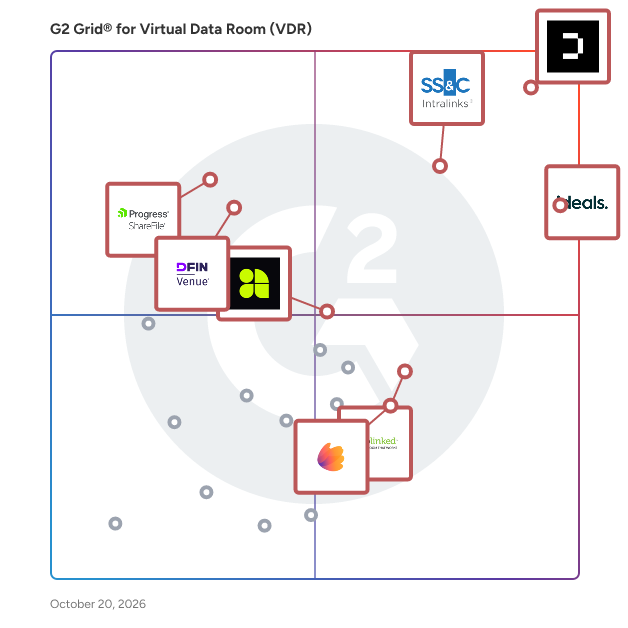
A virtual data room (VDR) is a secure online repository for storing and distributing confidential digital files and documents, enabling companies to share proprietary information with external parties in a controlled environment with robust security measures including encryption, two-factor authentication, and single sign-on controls.
Core Capabilities of Virtual Data Room Software
To qualify for inclusion in the Virtual Data Room (VDR) category, a product must:
- Enable secure storage and distribution of content, data, and documents in a controlled environment
- Provide security measures such as encryption, two-factor authentication, and single sign-on controls
- Offer customizable role-based permissions structures
- Support dynamic watermarking, link expiration, print and download restrictions, and information rights management controls
- Provide audit trails that enable verification, tracking, and enforcement of document permissions
- Enable data compartmentalization with isolated, project-specific environments to prevent overlap
Common Use Cases for Virtual Data Room Software
VDRs are used across industries where secure document sharing and due diligence are critical. Common use cases include:
- Managing due diligence processes for mergers, acquisitions, and private equity transactions
- Sharing confidential legal agreements and client documents for law firms and real estate professionals
- Distributing sensitive compliance-related files within regulated industries
How Virtual Data Room Software Differs from Other Tools
VDRs are purpose-built for high-security document sharing with granular access controls, distinguishing them from general file storage and sharing software that requires fewer security measures. While standard document repositories prioritize accessibility and collaboration, VDRs prioritize confidentiality, digital rights management, and audit compliance, making them the standard for M&A transactions and legal due diligence.
Insights from G2 on Virtual Data Room Software
Based on category trends on G2, granular permissions, audit trail capabilities, and watermarking stand out as standout security features. Ease of setup and reliable access controls stand out as primary reasons for adoption.