Third Party & Supplier Risk Management Software Resources
Articles, Glossary Terms, Discussions, and Reports to expand your knowledge on Third Party & Supplier Risk Management Software
Resource pages are designed to give you a cross-section of information we have on specific categories. You'll find articles from our experts, feature definitions, discussions from users like you, and reports from industry data.
Third Party & Supplier Risk Management Software Articles
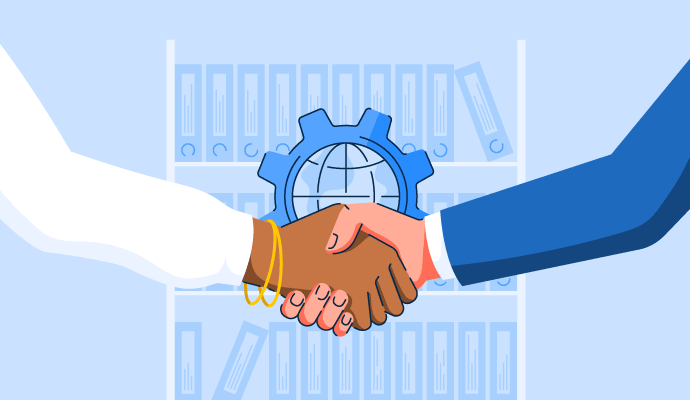
Vendor Management: The Key to Strong Business Partnerships
Products make a business.
by Harshita Tewari
2021 Trends in Supply Chain Technology
This post is part of G2's 2021 digital trends series. Read more about G2’s perspective on digital transformation trends in an introduction from Michael Fauscette, G2's chief research officer and Tom Pringle, VP, market research, and additional coverage on trends identified by G2’s analysts.

by Michael Gigante
How Technology Can Help Global Supply Chain Disruptions
The current state of the global supply chain is in an absolute whirlwind. With the coronavirus pandemic, the trade war between the United States and China, and the upcoming 2020 United States presidential election, supply chains across countless industries are facing unprecedented disruption.

by Michael Gigante
The Impact of the Coronavirus on Tech Supply Chains
Global supply chains are being severely affected by the COVID-19 (coronavirus) outbreak.
by Michael Gigante
Third Party & Supplier Risk Management Software Glossary Terms
Third Party & Supplier Risk Management Software Discussions
0
Question on: LogicManager
How long does it take to implement a risk management framework?How long does it take to implement a risk management framework?
Show More
Show Less
It depends on what you mean by “implemented.”
If you’re talking about a fully mature, integrated ERM program, that’s a multi-year journey. Most organizations take 1–2 years just to establish a compliant ERM program, and significantly longer to make it truly embedded in decision-making.
ERM is not a one-time project. It’s an ongoing discipline.
That said, you don’t need to wait years to get value.
With a structured approach and the right technology, organizations can stand up a functional ERM framework much faster. For example, with LogicManager, implementation is designed to take about 90 days to get to a point where:
• Risks are identified and assessed consistently
• Reporting is standardized
• Leadership has visibility into risk
The difference comes down to execution. Without software, ERM often gets slowed down by spreadsheets, siloed processes, and manual coordination. With purpose-built ERM software, you’re accelerating what is otherwise a very manual process.
Show More
Show Less
0
Question on: LogicManager
How do you build a business case for investing in ERM?How do you build a business case for investing in ERM?
Show More
Show Less
Building a business case for ERM starts with shifting the conversation from “we need software” to “here’s the risk we’re carrying today and the value we’re missing.”
A practical way to do that:
1. Start with current pain points
Most organizations rely on spreadsheets or disconnected tools. That leads to inconsistent risk language, manual reporting, and limited visibility. It also creates real exposure. Spreadsheets lack audit trails, are prone to errors, and make it difficult to aggregate and report risk data
2. Quantify inefficiency and hidden costs
Risk teams often spend more than half their time collecting data and building reports instead of managing risk. That’s time leadership is paying for but not getting value from
You can frame this simply:
• How many hours are spent chasing data?
• How long does it take to produce a board report?
• Where are we duplicating work across teams?
3. Highlight the risk of inaction
Without a structured system, you have blind spots. Risks stay siloed, root causes go unnoticed, and leadership lacks a complete picture. In many cases, organizations don’t realize the same risk is being managed multiple times in different departments
4. Connect ERM to real outcomes
ERM is not just about compliance. It helps:
• Reduce fraud, waste, and errors
• Improve decision-making with better data
• Eliminate duplicate work across teams
• Increase transparency from the front line to the board
5. Use maturity as a benchmark
Frameworks like the Risk Maturity Model (RMM) help show where your program stands today and what improvement looks like. More mature programs are not just more organized. They are more repeatable, more scalable, and more valuable to the business
6. Tie it to financial impact
This is what leadership cares about most. Research shows organizations with mature ERM programs can see up to a 25% increase in firm value
You can also point to:
• Time savings from automation
• Reduced audit and compliance costs
• Avoided losses from missed risks
At the end of the day, a strong business case for ERM is not about buying a tool. It’s about showing that your current approach creates inefficiency, blind spots, and real financial risk, while a structured, risk-based program improves performance and protects the organization.
Show More
Show Less
0
Question on: LogicManager
How does enterprise risk management help improve business results?How does enterprise risk management help improve business results?
Show More
Show Less
Enterprise risk management improves business results by helping organizations focus on what actually matters and act on it with confidence.
Here’s how that shows up in practice:
1. It surfaces the Risk Ripple
ERM connects risks across the organization, so issues don’t stay isolated. You can see how a breakdown in one area impacts others, which helps prevent downstream surprises instead of reacting after the fact.
2. It improves decision-making with board-ready reporting
ERM provides consistent, reliable data that can be reported to leadership and the board. This supports better decisions and demonstrates that proper oversight and reporting systems are in place.
3. It reduces cycle times and eliminates duplication
ERM creates a common risk language across teams. That reduces redundant work, improves coordination, and speeds up everything from assessments to reporting.
4. It prioritizes what matters most
ERM helps filter out noise. Instead of spreading resources thin, organizations can focus time and investment on the highest-impact risks and avoid waste in low-priority areas.
5. It strengthens oversight and accountability
Clear ownership, consistent processes, and transparent reporting ensure risks are actively managed and not ignored. This reduces exposure to fraud, waste, and negligence.
6. It drives measurable financial value
Companies with mature ERM programs, as measured by the Risk Maturity Model, have been shown to realize up to 25% higher firm value in a study by Queen’s University.
In short, ERM improves business results by making risk visible, comparable, and actionable so organizations can allocate resources more effectively and operate with fewer surprises.
Show More
Show Less
Third Party & Supplier Risk Management Software Reports
Mid-Market Grid® Report for Third Party & Supplier Risk Management
Spring 2026
G2 Report: Grid® Report
Grid® Report for Third Party & Supplier Risk Management
Spring 2026
G2 Report: Grid® Report
Enterprise Grid® Report for Third Party & Supplier Risk Management
Spring 2026
G2 Report: Grid® Report
Momentum Grid® Report for Third Party & Supplier Risk Management
Spring 2026
G2 Report: Momentum Grid® Report
Small-Business Grid® Report for Third Party & Supplier Risk Management
Spring 2026
G2 Report: Grid® Report
Enterprise Grid® Report for Third Party & Supplier Risk Management
Winter 2026
G2 Report: Grid® Report
Small-Business Grid® Report for Third Party & Supplier Risk Management
Winter 2026
G2 Report: Grid® Report
Mid-Market Grid® Report for Third Party & Supplier Risk Management
Winter 2026
G2 Report: Grid® Report
Grid® Report for Third Party & Supplier Risk Management
Winter 2026
G2 Report: Grid® Report
Momentum Grid® Report for Third Party & Supplier Risk Management
Winter 2026
G2 Report: Momentum Grid® Report