Relational Databases Resources
Articles, Glossary Terms, Discussions, and Reports to expand your knowledge on Relational Databases
Resource pages are designed to give you a cross-section of information we have on specific categories. You'll find articles from our experts, feature definitions, discussions from users like you, and reports from industry data.
Relational Databases Articles
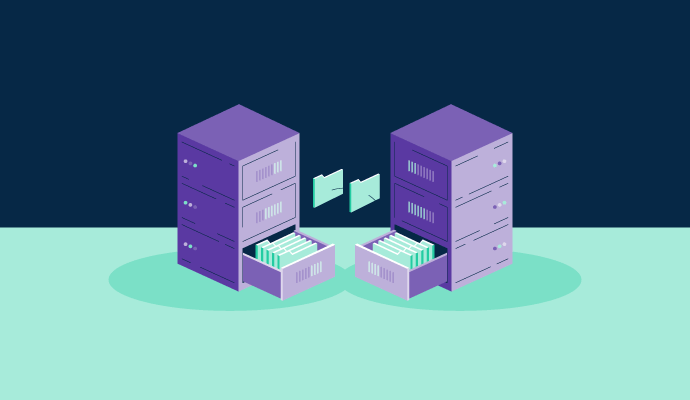
What is Database Replication? Everything You Need To Know
Consistent and reliable technology is the backbone of any successful business. While many organizations use multiple desktop and mobile devices, they often rely on a single database for critical operations. So, what happens when that database goes down?
by Holly Landis
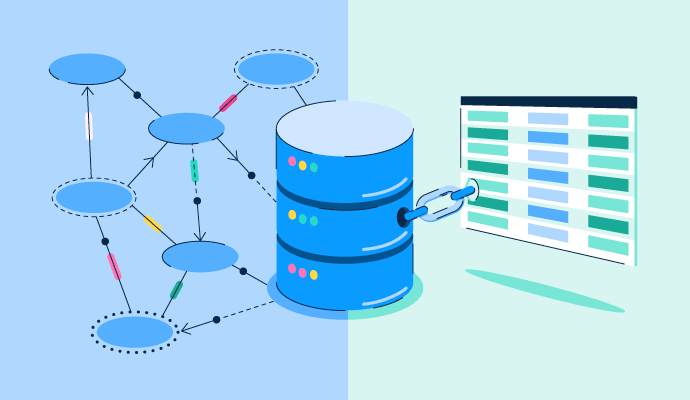
Graph Database Vs. Relational Database: Which One Wins?
Data remains an invaluable resource. When processed properly, it fuels savvy business decisions. How you store data has a lot to do with the ways you’re able to further process it.
by Sagar Joshi
What Is an Entity-Relationship Diagram? A Complete Guide
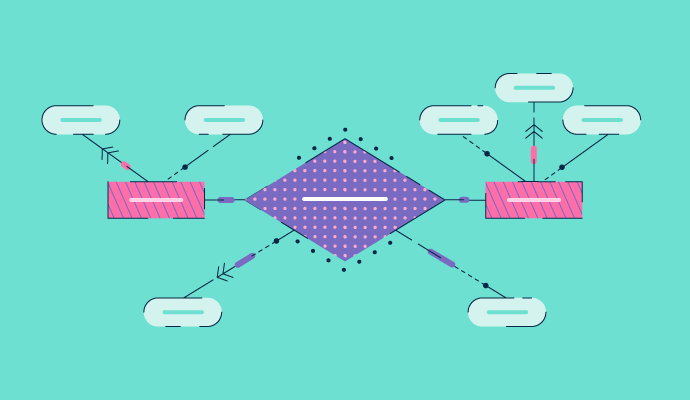
When designing a relational database, engineers create an entity-relationship diagram to represent how different pieces of data are related. These diagrams provide a clear visualization of data relationships, making it easier to understand the overall structure.
by Sagar Joshi
What Is Database Normalization? Types and Examples
Without adequate data collection and analysis, decision-making in any organization often goes haywire.
by Sagar Joshi
Mastering CRUD: Create, Read, Update, and Delete Data Effectively
You’ve probably thought about how data is created and used for web applications, databases, and content management systems. But think about this: do you ever get frustrated by the challenges of managing that data? Slow queries, information scattered across different systems, and a clunky user experience are all too common.
by Samudyata Bhat
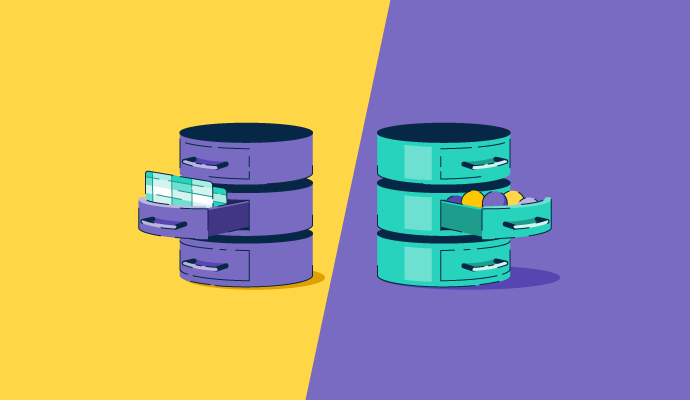
SQL vs. NoSQL: What Are the Key Differences?
The choice of SQL vs. NoSQL isn't technical; it's strategic.
by Washija Kazim
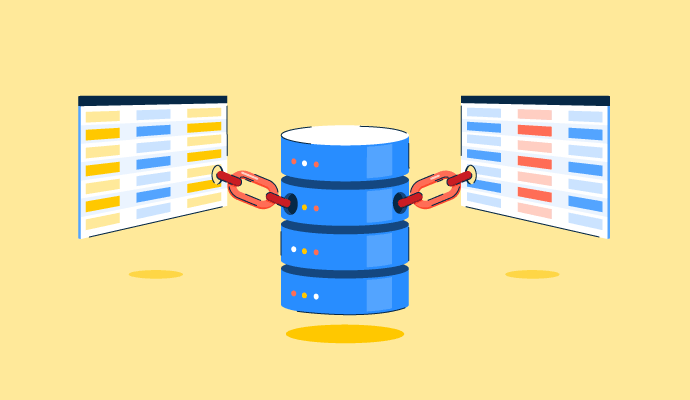
What Is a Relational Database? How Does RDBMS Organize Data
Imagine you run an e-commerce store. You have to keep daily track of customer information, order details, and product inventory. Without a proper system in place, chaos is just one sale away.
by Dibyani Das
What Makes DBaaS the Next Big “As a Service” Offering?
Whenever I hear the word database, I picture a mega-sized Oracle system at the back of a building collecting and storing our data. But if only were databases that simple!
by Preethica Furtado
Relational Databases Glossary Terms
Relational Databases Discussions
0
Question on: Oracle Database
What actually made the developers reduce the cost for 12c version?it's a question for a product manager
Show More
Show Less
0
Question on: Microsoft SQL Server
How could I make much easier the experience with the order of my database?I would like to make easier the way I use this program to organize the profile data of my employees in a simple database that I can just to look for each one easily and with no scrolling down throught all of the document
Show More
Show Less
You can create different tables with your employee information eg employee table, employee roles etc. Then you can create a single view that will pull data from the different tables using a primary key
Show More
Show Less
You can create a unique view that will extract data from the different tables using a primary key, as the ID of each employee and show everything you want to see on the screen, without needing to go down
Show More
Show Less
You are talking that you would like have an interface with a scroll button to data in 1 or more tables. So not using the Sqlserver management studio. You do that stuff in an application on top of the database. Such stuff is not possible in Sqlserver. You need to use other features like a report generator or build an application in VBA.
Show More
Show Less
If you have SQL knowledge you can generate queries to obtain the specific data you're looking for based on selected criteria.
Show More
Show Less
0
Have tried so with mysql admin.
Show More
Show Less
Create your admin users and grant all privileges to each of them
mysql> GRANT ALL PRIVILEGES ON xyz TO 'admin1@localhost';
(where xyz is the db name)
You can then use something like phpMyAdmin or write your own cpanel using PHP.
Show More
Show Less
Comment deleted by user.
Show More
Show Less
Relational Databases Reports
Mid-Market Grid® Report for Relational Databases
Spring 2026
G2 Report: Grid® Report
Grid® Report for Relational Databases
Spring 2026
G2 Report: Grid® Report
Enterprise Grid® Report for Relational Databases
Spring 2026
G2 Report: Grid® Report
Momentum Grid® Report for Relational Databases
Spring 2026
G2 Report: Momentum Grid® Report
Small-Business Grid® Report for Relational Databases
Spring 2026
G2 Report: Grid® Report
Enterprise Grid® Report for Relational Databases
Winter 2026
G2 Report: Grid® Report
Small-Business Grid® Report for Relational Databases
Winter 2026
G2 Report: Grid® Report
Mid-Market Grid® Report for Relational Databases
Winter 2026
G2 Report: Grid® Report
Grid® Report for Relational Databases
Winter 2026
G2 Report: Grid® Report
Momentum Grid® Report for Relational Databases
Winter 2026
G2 Report: Momentum Grid® Report