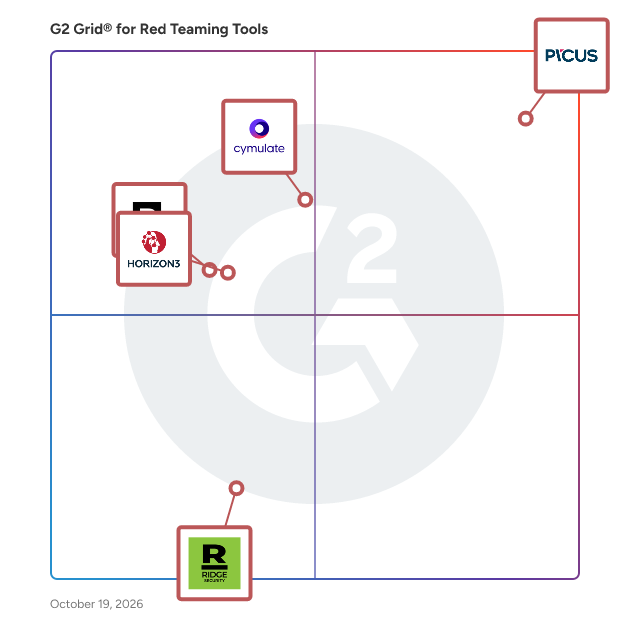
Red teaming tools enable security teams to simulate realistic, multi-stage adversary operations against their own environments. Unlike penetration testing tools, they support persistent, covert campaigns, such as managing command-and-control (C2) infrastructure, implant deployment, lateral movement, and exfiltration. These ethical hacking campaigns are structured around a defined objective and mapped to frameworks such as MITRE ATT&CK to emulate specific threat actor tactics, techniques, and procedures (TTPs).
Red teaming tools are used by in-house red teams, offensive security consultants, and purple team programs at organizations with mature security operations. They are related to but distinct from penetration testing tools, which focus on scoped vulnerability discovery rather than persistent adversary emulation, breach and attack simulation (BAS) software, which automates control validation continuously, and adversary intelligence platforms, which inform TTP selection. Red teaming tools are distinguished by their support for human-operated, covert campaigns and their measurement of blue team detection performance as a core output.
To qualify for inclusion in the Red Teaming Tools category, a product must:
- Simulate adversary attacks spanning two or more phases of the attack lifecycle, for example, initial access, execution, privilege escalation, lateral movement, persistence, or exfiltration, going beyond single-step vulnerability discovery or passive scanning
- Execute or emulate real attack techniques — including at least exploitation or post-exploitation activity — against live or representative environments to validate whether systems and security controls can withstand actual attack conditions
- Support post-exploitation activity such as lateral movement, credential access, persistence, or data collection, enabling evaluation of breach impact beyond initial access
- Align attack activities with MITRE ATT&CK or a comparable adversary framework, either in execution workflows, campaign planning, or output reporting
- Produce findings, metrics, or reporting that identify defensive gaps, undetected techniques, or prioritized remediation actions to help security teams improve their security posture