Machine Learning Software Resources
Articles, Glossary Terms, Discussions, and Reports to expand your knowledge on Machine Learning Software
Resource pages are designed to give you a cross-section of information we have on specific categories. You'll find articles from our experts, feature definitions, discussions from users like you, and reports from industry data.
Machine Learning Software Articles

What Is Image Annotation? Types, Use Cases and More
Be it B2B or B2C industry, the race to step up in artificial intelligence domain is bubbling on the surface with computer vision techniques like image annotation.
by Holly Landis
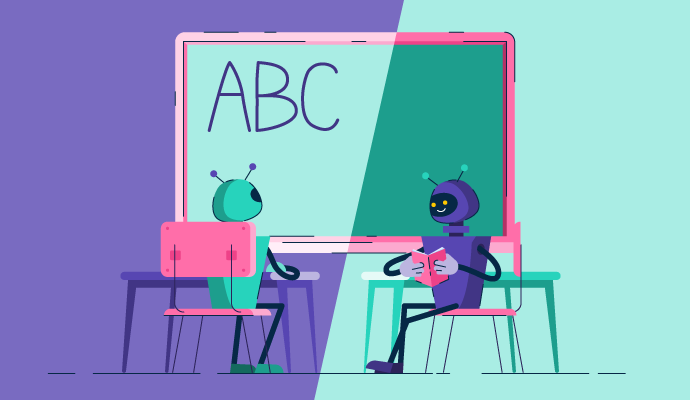
Supervised vs. Unsupervised Learning: Differences Explained

With the progression of advanced machine learning inventions, strategies like supervised and unsupervised learning are floating more in the market.
by Alyssa Towns
What Are Vector Embeddings? Explore Its Role in AI Models

Vector embeddings are numerical representations of data that help computers better understand that data and its representations. They’re like changing words into a special, unique code made with numbers.
by Sagar Joshi
What Is Machine Learning? Benefits And Unique Applications
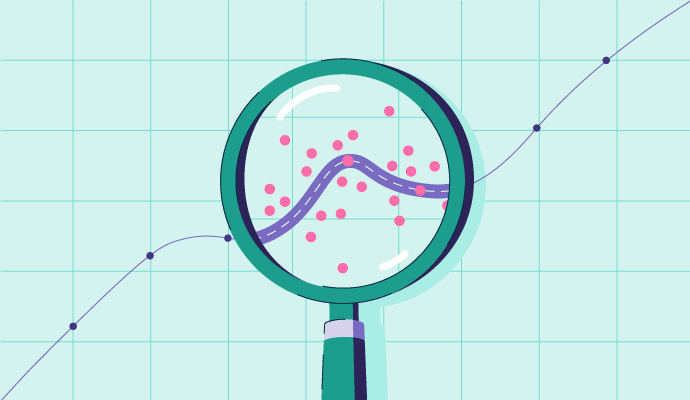
Imagine a world where computers can learn and adapt on their own. No longer stuck doing just what we program them to do, machines will be able to understand, analyze, and even predict how people behave. This isn’t just a dream; it’s a reality we are quickly moving toward.In today’s information-filled world, the amount of data can be overwhelming. While it’s easy to collect data, the real challenge is finding useful insights from all that information. This is where machine learning comes in.
by Amal Joby
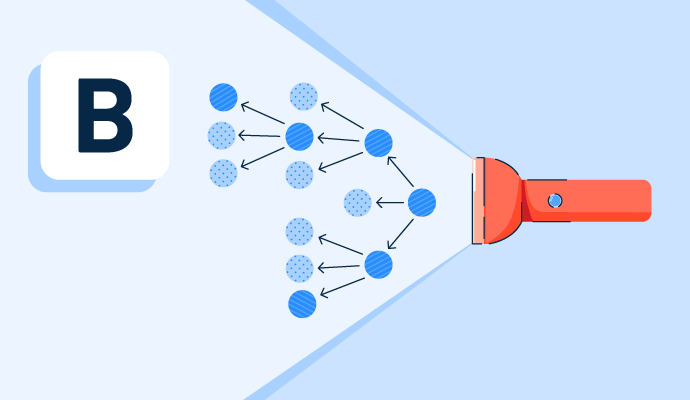
What Is a Support Vector Machine? How It Classifies Objects
Vladimir N. Vapnik developed support vector machine (SVM) algorithms to tackle classification problems in the 1990s. These algorithms find an optimal hyperplane, which is a line in a 2D or a 3D plane, between two dataset categories to distinguish between them.
by Sagar Joshi
Feature Extraction: How to Make Data Processing Easier

Feature extraction pulls the most helpful information from a large amount of data. It helps you make sense of overwhelming raw data that can be tricky to work with, especially in machine learning applications.
by Sagar Joshi
What is Image Processing? Examples, Types, and Benefits
We see thousands of images every day, online and out in the real world. It’s likely that the images have been changed in some way before being released into the wild.
by Holly Landis
What Is Artificial Intelligence (AI)? Types, Definition And Examples
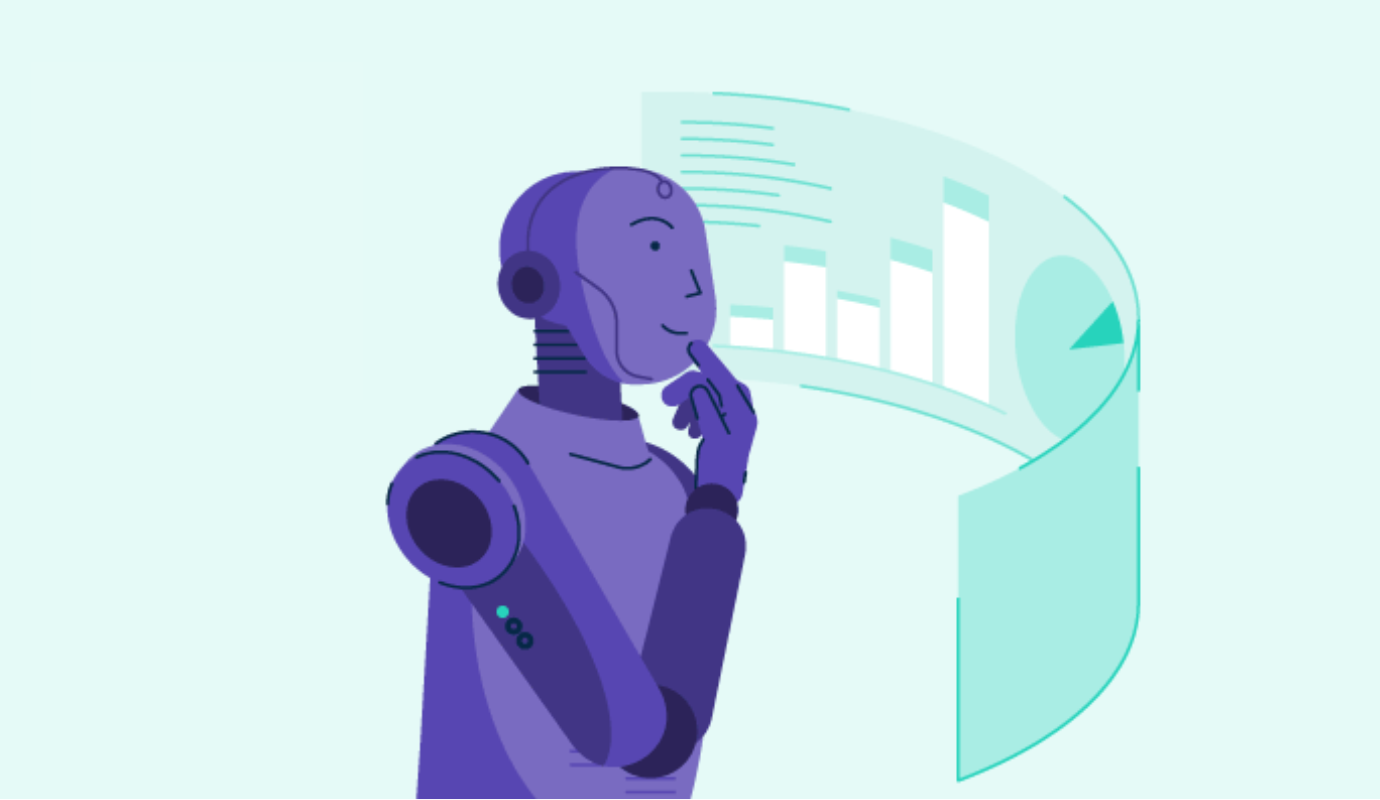
Remember Sophia, the humanoid that appeared on the late-night show with Jimmy Fallon?
by Amal Joby
What Is TinyML? A Brief Introduction And Benefits
When you hear the word machine learning (ML), do you instantly picture a large room of servers, sweating profusely, to crunch huge volumes of data?
by Amal Joby
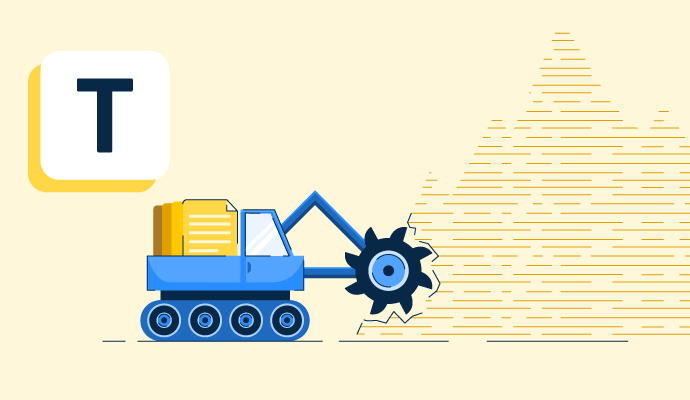
What Is Data Mining? How It Works, Techniques, and Examples

Brittany Kaiser, former Director of Business Development for Cambridge Analytica, stated in Netflix’s The Great Hack that data is now more valuable than oil.
by Mara Calvello
What Is Artificial General Intelligence (AGI)? The Future Is Here

Artificial general intelligence (AGI) could be the best or worst thing ever happening to us.
by Amal Joby
50 Autonomous Vehicle Statistics to Drive You Crazy in 2024

Let your car drive itself to you.
by Aayushi Sanghavi
Claim Peace of Mind: Decode the Work of Insurance Adjusters
Like the saying, "When life gives you lemons, make lemonade," we often find ways to make the best out of difficult situations.
by Devyani Mehta
2023 Trends in AI: Cheaper, Easier-to-Use AI to the Rescue

This post is part of G2's 2023 digital trends series. Read more about G2’s perspective on digital transformation trends in an introduction from Emily Malis Greathouse, director, market research, and additional coverage on trends identified by G2’s analysts.
by Matthew Miller
AWS re:Invent 2021 Roundup: A G2 Perspective

After almost a year filled with virtual-only events, Amazon Web Services (AWS) hosted the learning conference, AWS re:Invent 2021, from November 29 to December 3, 2021. Several announcements impacting cloud, computing, networking, database, and machine learning were made.
by Amal Joby
Democratizing AI With Low-Code and No-Code Machine Learning Platforms

Mastering machine learning (ML) isn’t easy.
by Amal Joby
What Is Statistical Modeling? When and Where to Use It

You can interpret data in multiple ways.
by Sagar Joshi
Quantum Computing: Myth or Reality?
Classical computing has come a long way, from solving simple mathematical problems to using additional resources to solve highly complex tasks. However, the limitations of classical computing prevent it from solving the much more complex challenges the world faces today, and that's where quantum computing steps in.
by Preethica Furtado
2021 Trends in Software Development
This post is part of G2's 2021 digital trends series. Read more about G2’s perspective on digital transformation trends in an introduction from Michael Fauscette, G2's chief research officer and Tom Pringle, VP, market research, and additional coverage on trends identified by G2’s analysts.
by Adam Crivello
2021 Trends in Accounting and Finance

This post is part of G2's 2021 digital trends series. Read more about G2’s perspective on digital transformation trends in an introduction from Michael Fauscette, G2's chief research officer and Tom Pringle, VP, market research, and additional coverage on trends identified by G2’s analysts.
by Nathan Calabrese
The Role of Artificial Intelligence in Accounting

Accounting is one of the most important, yet daunting and expensive departments in almost all companies.
Accountants oversee all financial operations of a business to help it run smoothly and efficiently. These include preparing and analyzing financial statements (e.g., cash flow, income statement, balance sheet), paying taxes on time, and maintaining the companies’ general ledger (GL). All these tasks require a great deal of human interaction that takes time and money; no matter how careful an employee may be, there is always the chance for human error, which could snowball and lead to devastating financial results in the future.
by Nathan Calabrese
When Platforms Collide, Analytics Evolves

Within the enterprise tech space, the seemingly endless evolution of data-driven insights continues apace—but when will it end?
by Tom Pringle
Tech Companies Bridging the Gap Between AI and Automation

Automation and artificial intelligence (AI) are important, interrelated tools that help organizations streamline their processes and add intelligence to their workflows.
They allow businesses to reach organizational goals by automating business processes, whereby they can increase efficiency and adapt to new business procedures.
by Matthew Miller
How Generative Design Supports Sustainability
About seven years ago, 3D printing was all the rage. For a few months, even years, it was one of the most discussed technologies on the market, with the potential to truly revolutionize how we manufacture.
by Michael Gigante
Data Mining Techniques You Need to Unlock Quality Insights

In today's rapidly growing technological workspace, businesses have more data than ever before.
by Mara Calvello
The Data Toolbox: The Expanding Domain of AI & Analytics

Killer robots. Threatening humanoids. Robo-apocalypses and evil robots taking over the world. (Just kidding.)
by Matthew Miller
What Is Fileless Malware and How Do Attacks Occur?

Fileless malware attacks are on the rise as more hackers use it to disguise their nefarious activities. These threats leverage a computer’s existing, whitelisted applications and computing power against itself. This is what security professionals refer to as “live off the land” threats.
by Aaron Walker
AI in Fintech: Use Cases and Impact
Artificial intelligence (AI) has proven useful to financial services institutions in multiple ways. From detecting potentially fraudulent charges to automating complex credit and loan processes, AI-powered fintech has proven invaluable when it comes to internally engineering value for financial services institutions.
by Patrick Szakiel
5 Clever Examples of How Machine Learning is Used Today
If you used Google, Spotify, or Uber in the past week, you’ve engaged with products that utilize machine learning.
by Devin Pickell
What Is the Future of Machine Learning? We Asked 5 Experts
Forget what you may have heard. Machine learning isn’t some new concept or study in its infancy.
by Devin Pickell
Machine Learning Software Glossary Terms

Machine Learning Software Discussions
0
Question on: Qlik Predict
How do I create a Google Big Query connection?My data is stored in Google Big Query, how do I connect my data to Kraken?
Show More
Show Less
Google Big Query Requirements:
Configuring Kraken to connect to Google Big Query will require that a service account be set up that has access to the datasets and tables you would like to use for predictive analytics. You will also need to generate a key in JSON format to authenticate using the Service Account.
For more information on service accounts and how to generate your credentials, refer to the Google Cloud Platform documentation:
- Understanding Service Accounts: https://cloud.google.com/iam/docs/service-accounts
- Generating a Service Account credential: https://cloud.google.com/storage/docs/authentication#generating-a-private-key
Adding a new Big Query Data Provider in Kraken:
- Log in to Kraken
- Click on the Menu in the top right corner
- Select Manage Data
- Click on the Google Big Query Data Provider Card
- Click Choose File and browse to where you downloaded your key file when setting up the Service Account in Google Cloud Platform. The key should be in JSON format
- Click Connect
Show More
Show Less
0
Question on: Qlik Predict
How do I create a Looker connection?We use Looker as our BI Platform, how do I connect that data to Kraken?
Show More
Show Less
Looker Requirements:
Setting up Kraken to connect to your Looker environment requires the generation of an API key prior to creating a Data Provider in Kraken. Kraken will also require the password for the user that has write access to the Scratch Database you have set up in your Looker connection settings.
Once connected, Looker will list table visualizations from your Personal Space in Looker. Kraken automatically filters out any Looks that are not using the same connection that you set up in the Data Provider. If you have multiple connections set up in Looker, a separate Data Provider will need to be created in Kraken for each Scratch Database you have set up in Looker.
Kraken currently supports the following Scratch Databases for write back:
- Redshift
- MySQL
Instructions for generating a Looker API key that can be used with Kraken can be found at: https://docs.looker.com/admin-options/settings/users#api3_keys
Adding a new Looker Data Provider in Kraken:
Connecting to the Looker API:
- Log in to Kraken
- Click on the Menu in the top right corner
- Select Manage Data
- Click on the Looker Data Provider Card
Port: Default port for Looker instances is 19999 but can be changed in your Looker configuration. Check with your Looker Admin if you do not know the port your Looker instance is using.
Domain: The domain of your Looker instance. For example: If your Looker instance URL is https://mycompany.looker.com, your domain would be mycompany
Client ID: This can be generated on the Users page in the Admin section of your Looker instance.
Client Secret: This can be generated on the Users page in the Admin section of your Looker instance.
- Click Connect
Connecting your Looker Scratch Database:
NOTE: In order to push predictions back to a place that can be integrated with your Looker dashboards, Kraken requires read/write access to the Looker Scratch Database that is configured in your Looker connection.
Database Password: This is the password that can be used to connect to the database that Looker is using to create Persistent Derived Tables.
- Click Connect
Show More
Show Less
0
Question on: Qlik Predict
How do I create a Tableau connection?We use Tableau as our BI Platform, how do I connect that data to Kraken?
Show More
Show Less
Tableau Requirements:
Configuring Kraken to connect to your Tableau Server or Tableau Online will allow you to sync predictions in Tableau's native Hyper format.
A couple of things to consider when connecting to Tableau Server or Tableau Online:
- The Tableau connector is a WRITE ONLY connection. You must have another Data Provider connected in Kraken to pull data to use in creating a Project
- Hyper files will be available in Tableau as a new data source
Adding a New Tableau Connection in Kraken:
- Log in to Kraken
- Click on the Menu in the top right corner
- Select Manage Data
- Click on the Tableau Data Provider Card
Tableau Server URL: The URL for your Tableau server. Example: https://tableau.myserver.com
Site: The Tableau server site you would like Kraken to connect to
Username: The user name that you use to log in to Tableau Server
Password: The password used to authenticate your Tableau user
- Click Connect
NOTE: After you've connected to your Tableau Server, be sure to set up a second connection to your primary data source as well. For more information on what Kraken can connect to, visit our Data Provider documentation: https://support.bigsquid.com/hc/en-us/sections/115000802333-Connecting-to-Data-Providers
Show More
Show Less
Machine Learning Software Reports
Mid-Market Grid® Report for Machine Learning
Spring 2026
G2 Report: Grid® Report
Grid® Report for Machine Learning
Spring 2026
G2 Report: Grid® Report
Enterprise Grid® Report for Machine Learning
Spring 2026
G2 Report: Grid® Report
Momentum Grid® Report for Machine Learning
Spring 2026
G2 Report: Momentum Grid® Report
Small-Business Grid® Report for Machine Learning
Spring 2026
G2 Report: Grid® Report
Enterprise Grid® Report for Machine Learning
Winter 2026
G2 Report: Grid® Report
Small-Business Grid® Report for Machine Learning
Winter 2026
G2 Report: Grid® Report
Mid-Market Grid® Report for Machine Learning
Winter 2026
G2 Report: Grid® Report
Grid® Report for Machine Learning
Winter 2026
G2 Report: Grid® Report
Momentum Grid® Report for Machine Learning
Winter 2026
G2 Report: Momentum Grid® Report