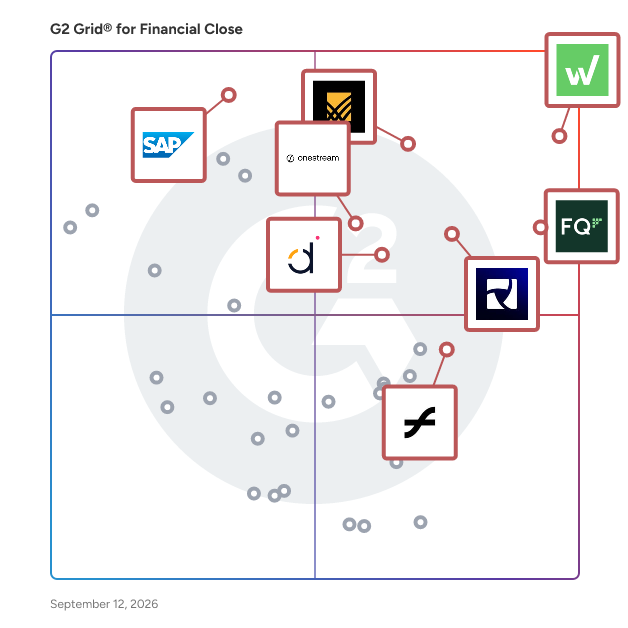
Financial close software provides tools to help businesses complete the financial close cycle, enabling accountants to ensure books are accurate, track task completion via checklists, manage reconciliations, and monitor individual progress and deadlines across each close period.
Core Capabilities of Financial Close Software
To qualify for inclusion in the Financial Close category, a product must:
- Allow users to create checklists and individual tasks related to closing accounting books
- Track the financial close process so users can view progress, timelines, and approvals
- Provide tools such as reconciliation repositories or reconciliation management to help users compare financial data
- Integrate with or import spreadsheets from other database or accounting software products
Common Use Cases for Financial Close Software
Accounting teams use financial close software to streamline the end-of-period close process and reduce errors. Common use cases include:
- Managing month-end and year-end close checklists with task assignment and deadline tracking
- Reconciling accounts and comparing financial data sets to identify inconsistencies
- Maintaining a historical database of past close periods organized by month and transaction type
How Financial Close Software Differs from Other Tools
Financial close software is purpose-built for the accounting close cycle, distinguishing it from broader financial platforms. These tools typically integrate with spreadsheets and accounting software to document relevant data, and may also integrate with or come packaged with corporate performance management (CPM) features such as financial consolidation or budgeting and forecasting tools.
Insights from G2 on Financial Close Software
Based on category trends on G2, task-level tracking and reconciliation management stand out as the most valued capabilities. These platforms deliver reductions in close cycle time and improved auditability as primary outcomes of adoption.