Continuous Integration Tools Resources
Articles, Glossary Terms, Discussions, and Reports to expand your knowledge on Continuous Integration Tools
Resource pages are designed to give you a cross-section of information we have on specific categories. You'll find articles from our experts, feature definitions, discussions from users like you, and reports from industry data.
Continuous Integration Tools Articles
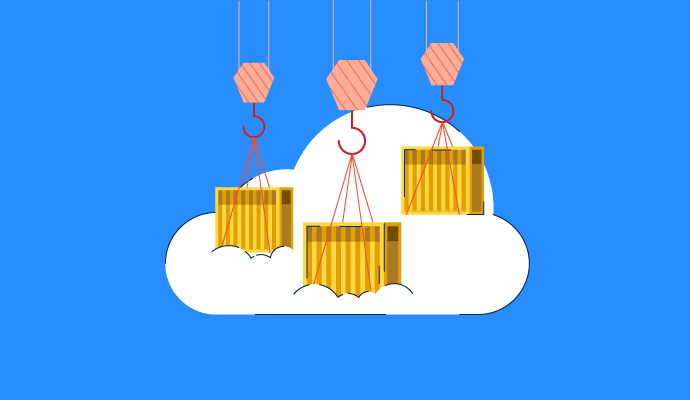
Containers as a Service: Types, Benefits, and Best Software in 2023
The longevity of the underlying software is responsible for a product’s lifetime, but businesses working with traditional software deployment have a hard time enhancing the depth of their apps. Most of their time is spent troubleshooting and completing production.
by Shreya Mattoo
Continuous Integration Tools Glossary Terms
Continuous Integration Tools Discussions
0
Question on: Travis CI
Why choose Enterprise over travis-ci.com?- Support for GitHub Enterprise: You can use your GitHub
Enterprise installation as the authentication and authorization
layer for Travis CI Enterprise, allowing you to leverage your
existing LDAP or SAML with no extra configuration.
- Meets security and regulatory requirements: With your
servers and hosts being deployed inside your firewall, you have
full ownership and control of your data, helping to make it
possible to meet the security requirements of your company.
- Customizable images: We provide a range of build
environment images, covering an extensive set of languages,
updated with the current dependences each community is
using. If you or your team need specific changes, they are easily
customizable, which can then be deployed for use by your team.
- Hosted on your infrastructure: Travis CI Enterprise supports
the cloud or on-premises environment of your choice. This
includes AWS, Google Compute Engine, VMware, OpenStack and
Azure.
Show More
Show Less
0
Question on: Travis CI
[On-prem] What are the features of Travis CI Enterprise?- Easy configuration: Your build configuration is just as
important as your code. That’s why it’s committed to your
repository, and we fetch it when needed. This also means
your configuration is versioned with every change, allowing
you to see the history of changes, and who changed it.
- Isolated builds: All of your builds are run in an isolated
container that offers a fresh build environment with every
commit. Security teams love this feature because it reduces
the likelihood of secure credentials being leaked accidently,
and your developers will love it as each build has a
consistent environment.
- Scales to your needs: Your team has the flexibility to spin
up as much build capacity as needed. If it’s a busy week
before a production release, all you need to do is to start up
some more capacity and let your team test to their hearts
content.
- High availability: Your continuous integration system is
just as critical as your GitHub Enterprise. Travis CI
Enterprise can run in a multi node setup behind a load
balancer, providing safety from hardware failures.
- Great Support: Our team is fluent in a range of languages
and tools. As an added bonus, we are also experienced with
GitHub Enterprise.
Show More
Show Less
0
Question on: CloudBees CodeShip
How to provide support in Private Cloud ?Private Cloud Bees Code Ship Support Integration is not available
Show More
Show Less
I don't think CodeShip offers a self-hosted/private cloud solution.
Show More
Show Less
Continuous Integration Tools Reports
Mid-Market Grid® Report for Continuous Integration
Spring 2026
G2 Report: Grid® Report
Grid® Report for Continuous Integration
Spring 2026
G2 Report: Grid® Report
Enterprise Grid® Report for Continuous Integration
Spring 2026
G2 Report: Grid® Report
Momentum Grid® Report for Continuous Integration
Spring 2026
G2 Report: Momentum Grid® Report
Small-Business Grid® Report for Continuous Integration
Spring 2026
G2 Report: Grid® Report
Enterprise Grid® Report for Continuous Integration
Winter 2026
G2 Report: Grid® Report
Small-Business Grid® Report for Continuous Integration
Winter 2026
G2 Report: Grid® Report
Mid-Market Grid® Report for Continuous Integration
Winter 2026
G2 Report: Grid® Report
Grid® Report for Continuous Integration
Winter 2026
G2 Report: Grid® Report
Momentum Grid® Report for Continuous Integration
Winter 2026
G2 Report: Momentum Grid® Report


