Big Data Integration Platforms Resources
Articles, Glossary Terms, Discussions, and Reports to expand your knowledge on Big Data Integration Platforms
Resource pages are designed to give you a cross-section of information we have on specific categories. You'll find articles from our experts, feature definitions, discussions from users like you, and reports from industry data.
Big Data Integration Platforms Articles
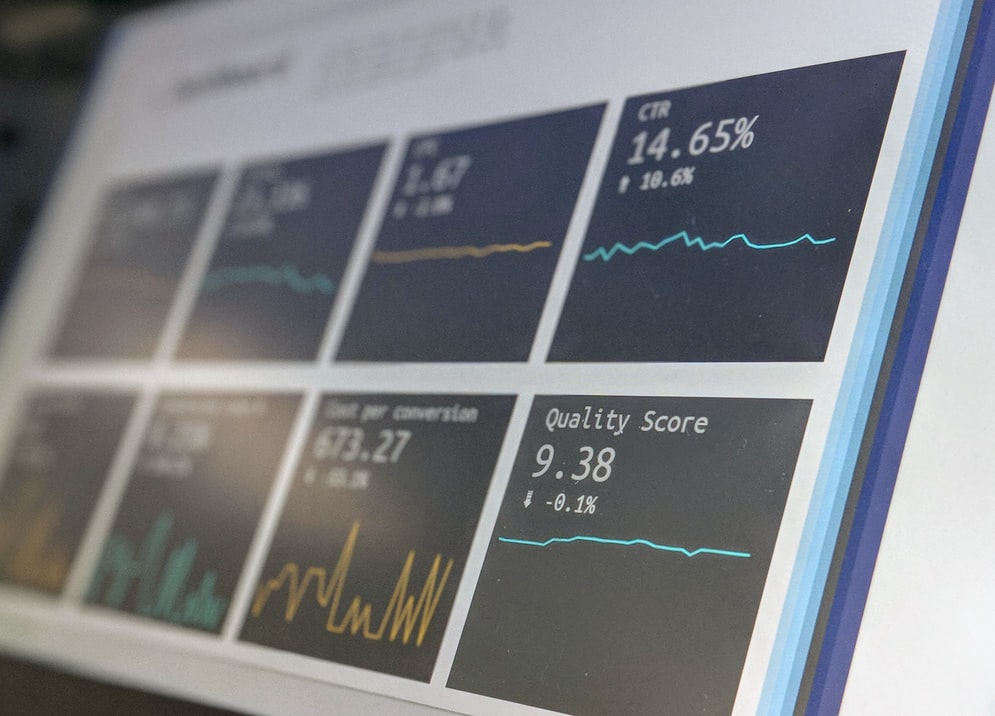
G2 Launches New Category for DataOps Platforms
Big Data Integration Platforms Glossary Terms
Big Data Integration Platforms Discussions
Hi everyone! I’m exploring AI platforms available on AWS Marketplace that can help organizations streamline operations, automate workflows, and unlock new insights. I’m especially interested in tools that integrate well with cloud environments and can scale across different business use cases.
Here are a few top-rated options based on G2 reviews in the AWS Marketplace category:
Base64.ai Automated Document Data Extraction – Specializes in AI-driven document processing. It extracts data from invoices, receipts, and IDs in seconds, reducing manual data entry and improving accuracy. For teams that have used it, how effective is it at handling different document formats at scale?
Python – While known as a programming language, Python is one of the most important AI enablers on AWS. With libraries like TensorFlow, PyTorch, and Scikit-learn, teams use it to build custom machine learning models. Has anyone used Python on AWS to operationalize AI workloads successfully?
Amazon EC2 – Provides the compute backbone for training and deploying AI models. Its support for GPU instances makes it popular for deep learning. Curious to hear if anyone has leveraged EC2 for cost-effective model training at scale.
Ubuntu 20.04 LTS – A reliable OS for AI workloads. Many teams choose Ubuntu because it’s compatible with most ML frameworks and works well for containerized deployments. How has it performed for those running AI pipelines in production?
Boomi – Enhances AI workflows by integrating data across applications and platforms. This helps ensure that machine learning models on AWS are trained with accurate, unified data. Has anyone used Boomi to feed cleaner data into their AI pipelines?
If your team has worked with any of these—or shifted from one AI solution to another—I’d love to know what influenced your decision. Which features were the most valuable, and how well did they scale with your AI use cases?
From what I’ve seen, AWS Glue is a go-to for teams already building inside AWS, while Azure Data Factory seems more popular for hybrid migrations. Has anyone here tried IBM StreamSets to keep migrations continuous instead of one-time lifts?
Combining data from different sources—databases, SaaS apps, on-prem systems, and cloud platforms—is a critical step for creating a single source of truth. Without the right tools, teams risk inconsistent reporting and incomplete insights. Based on highly rated solutions in the Big Data Integration Platforms category, here are some of the top options:
Workato – Best for SaaS and Application Integrations
Workato helps unify data across apps, databases, and cloud platforms through automation-driven pipelines. Its low-code recipes allow teams to blend multiple data sources while applying validation rules, making it a strong fit for business and IT teams working together.
Azure Data Factory – Best for Enterprise-Scale Orchestration
Azure Data Factory is widely used for orchestrating ETL and ELT pipelines across on-prem and cloud sources. It supports a large library of connectors, helping enterprises combine structured and unstructured data into analytics-ready pipelines.
IBM StreamSets – Best for Complex, Multi-Source Pipelines
IBM StreamSets enables organizations to merge streaming and batch data from many systems. Its DataOps approach ensures data is monitored, governed, and processed in real time, which is especially valuable when combining large-scale, multi-source data flows.
AWS Glue – Best for Schema Matching and Transformation
AWS Glue simplifies the process of combining data from different sources by automatically detecting schemas and storing metadata in its catalog. With built-in transformations, it ensures that data from multiple origins is harmonized before being loaded into analytics platforms.
5X – Best for Modern Data Stack Integration
5X provides a managed framework that helps businesses stitch together multiple tools in their modern data stack. It supports integrations across warehouses, BI tools, and pipelines, making it a flexible option for fast-growing organizations.
Have you used any of these platforms to combine data from diverse sources? Which features mattered most to your team—automation, governance, or ease of scaling?
I’ve seen Azure Data Factory shine for enterprise-scale integrations, while Workato feels lighter and faster to deploy for SaaS-heavy teams. Has anyone here tested 5X to manage a modern data stack that pulls from both operational and analytics sources?


