


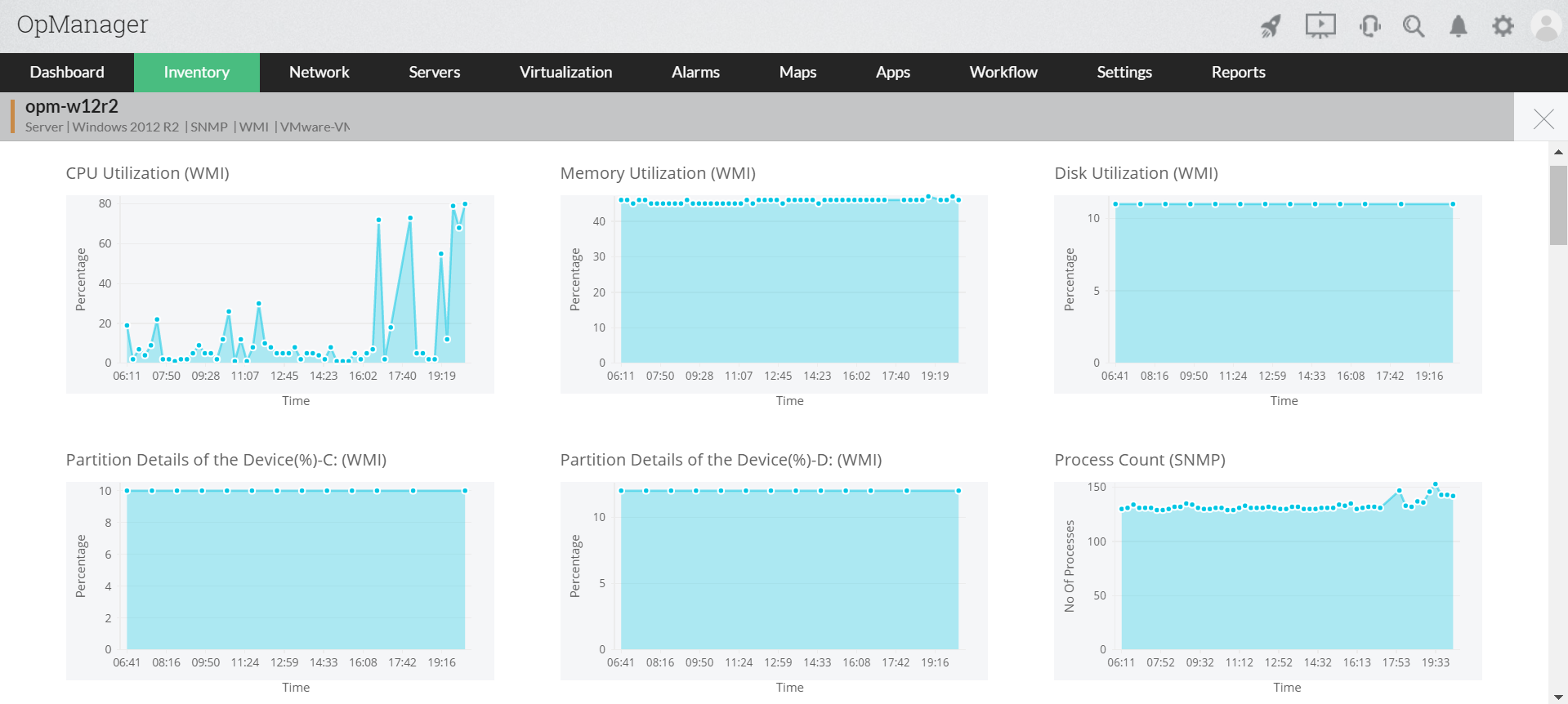


One of its strongest points is the all-in-one visibility. It provides a unified view of networks, servers, virtual machines, and even storage, without needing a bunch of add-ons. That makes it much easier to correlate issues, rather than jumping between different tools every time something breaks.
Another standout is the visual interface. The dashboards and network maps aren’t just nice to look at—they’re genuinely useful. You can quickly spot bottlenecks or outages, which really matters when you’re troubleshooting under pressure.
The alerting system is also flexible enough to avoid constant false alarms while still being responsive when something actually needs attention. It’s possible to fine-tune thresholds and escalation paths without too much friction. Avis collecté par et hébergé sur G2.com.
Setup and configuration can get messy
This is probably my biggest complaint. While it’s “easy” at a basic level, real-world deployments—especially across larger networks—get complicated quickly. The initial setup, along with configuring and fine-tuning alerts, can be time-consuming and technically demanding.
Performance and scalability hiccups
Once you scale up to hundreds of devices or more, users report slow UI refreshes and overall sluggishness. It’s not a dealbreaker, but it becomes noticeable in larger environments. Avis collecté par et hébergé sur G2.com.


