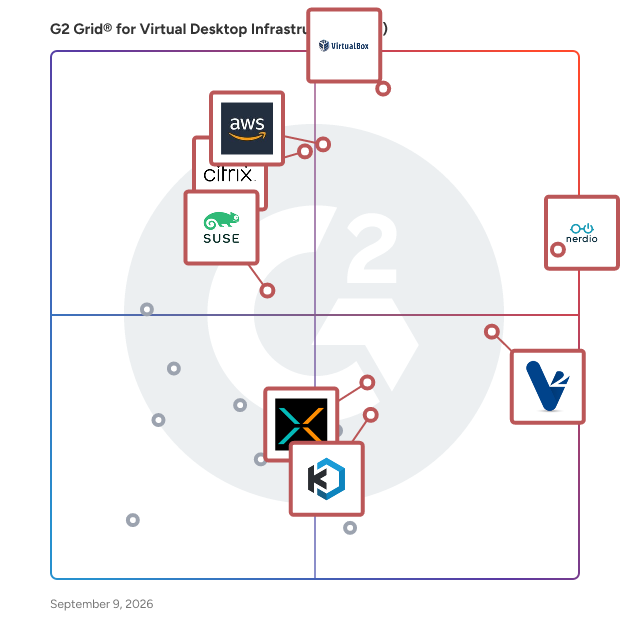
Virtual desktop infrastructure (VDI) software provides and manages virtual desktops hosted on-premises or in the cloud. These desktops run on virtual machines located on servers in a data center instead of the actual desktop hardware. VDI software allows users to run and manage operating systems in a data center and helps to host desktops remotely. A “virtual image" of the user's desktop is sent over the network to the remote user, allowing the user to access the desktop image as if it was being accessed locally. Once users gain access to the virtual desktops, they can continue their work and run applications.
Businesses use VDI software to leverage existing computer resources without increasing costs, update enterprise software tools, and allow employees to access desktop images using their own or company devices while maintaining data security. VDI tools are often the key component in infrastructure as a service (IaaS) providers, in which host servers provide virtual tools (most commonly desktop infrastructures). VDI tools can also integrate with or launch any additional business software a team or company requires.
To qualify for inclusion in the Virtual Desktop Infrastructure category, a product must:
- Provide users with a virtual desktop they can remotely access anywhere, anytime
- Support device portability. Users should be able to access their desktop from multiple devices such as mobiles, laptops, and tablets
- Ensure end-to-end security and regulatory compliance