PromptClip
Who Is the Company Behind PromptClip?
- Seller: Kirill Mirgorod
- HQ Location: N/A
-
LinkedIn® Page: www.linkedin.com
1 employees on LinkedIn®
Total Products under this Category: 87
Last updated: October 01, 2026
Why You Can Trust G2's Software Rankings:
G2's software rankings are built on verified user reviews, rigorous moderation, and a consistent research methodology maintained by a team of analysts and data experts. Each product is measured using the same transparent criteria, with no paid placement or vendor influence. While reviews reflect real user experiences, which can be subjective, they offer valuable insight into how software performs in the hands of professionals. Together, these inputs power the G2 Score, a standardized way to compare tools within every category.
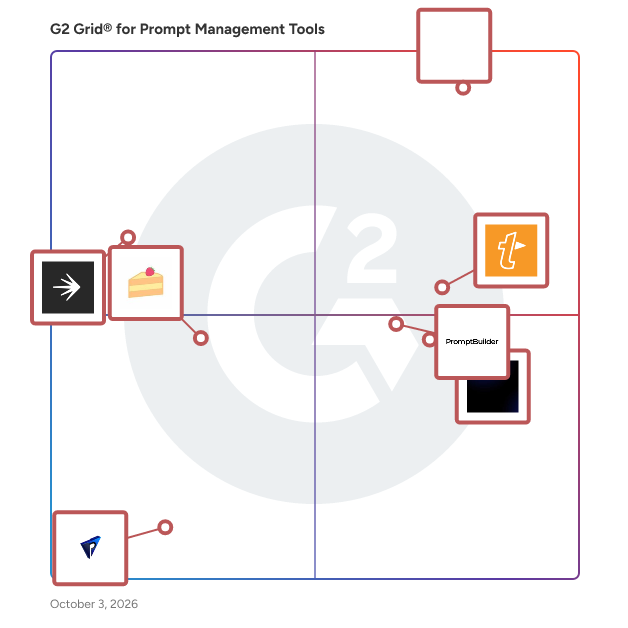
Highlighted products: Langchain, TextExpander, PromptxArt, Prompt Builder, LaunchDarkly, PromptLayer, and Prompting Systems.
Underlying data: [Grid® JSON](https://www.g2.com/categories/prompt-management-tools/grids.json?focus%5B%5D=langchain&focus%5B%5D=textexpander&focus%5B%5D=promptxart&focus%5B%5D=prompt-builder&focus%5B%5D=launchdarkly&focus%5B%5D=promptlayer&focus%5B%5D=prompting-systems)
Prompt Engine turns your simple ideas into professional-grade prompts that get exceptional results every single time.
Prompt Engines is a cutting-edge platform designed to enhance the efficiency and effectiveness of prompt engineering for AI models. It offers a suite of tools that streamline the creation, testing, and optimization of prompts, enabling users to achieve more accurate and contextually relevant AI-generated outputs. By providing an intuitive interface and robust analytics, Prompt Engines empowers developers, researchers, and businesses to harness the full potential of AI language models. Key Features and Functionality: - Prompt Creation and Management: Users can design and organize prompts with ease, facilitating a structured approach to prompt engineering. - Testing and Optimization: The platform allows for the testing of prompts against various scenarios, providing insights to refine and improve performance. - Analytics and Reporting: Comprehensive analytics offer detailed reports on prompt effectiveness, helping users make data-driven decisions. - Collaboration Tools: Teams can collaborate seamlessly, sharing prompts and insights to foster innovation and consistency. - Integration Capabilities: Prompt Engines integrates with popular AI models and platforms, ensuring compatibility and ease of use. Primary Value and Solutions Provided: Prompt Engines addresses the challenges of prompt engineering by offering a centralized platform that simplifies the process, reduces time spent on trial and error, and enhances the quality of AI outputs. It solves common issues such as inconsistent results, inefficiency in prompt development, and lack of collaboration tools. By leveraging Prompt Engines, users can achieve more reliable and contextually appropriate AI-generated content, leading to improved outcomes in applications ranging from content creation to customer service automation.
Connect G2 to Claude or ChatGPT for answers grounded in G2's trusted reviews, comparisons, and pricing from real user insights.
PromptEval is a prompt engineering platform for developers and AI teams building with LLMs. It covers the full prompt lifecycle, from evaluation and iteration to versioning, conflict detection, and production deployment. The core is a prompt quality scorer: paste any prompt and receive a score from 0 to 100 across four dimensions, clarity, specificity, structure, and robustness — with a full technical breakdown and concrete recommendations on what to fix and why. From there, the platform extends across the entire workflow: - Prompt Library with full version history, so teams iterate without losing what worked before - Production Iterator for surgical, targeted improvements to existing prompts without rewriting from scratch - Playground to test prompts against real scenarios before they touch production. Includes A/B testing. - AI-powered rewrite that delivers an improved version of any prompt instantly (Basic and above) - Prompt Map, a visual conflict graph that flags when instructions contradict each other — color-coded by severity - REST Evaluation API to integrate prompt quality scoring directly into CI/CD pipelines — available on every plan, including Free - Library Slug API to serve versioned prompts to production apps at runtime, eliminating redeploys every time a prompt changes (Pro and above) - Learning hub for prompt engineering - CI regression gate and an official GitHub Action that fails a pull request when a score drops, when instructions contradict each other, or when a prompt regresses against production (Pro and above) Built for prompt engineers, LLM developers, and teams who ship AI products and need to treat prompts as a first-class engineering artifact — versioned, scored, and deployed with the same rigor as code.
The problem: most enterprises now use AI everywhere and govern it nowhere. Prompts live in personal chats, output quality swings from one employee to the next, and leaders have no reliable view into how AI is being used or what it returns. Adoption keeps climbing while the systems, standards, and measurement needed to use AI well fall behind. What PromptFluent is: the execution and governance layer for enterprise AI, a system of record for the prompts, workflows, and standards your teams use to produce real work. It is not a prompt marketplace, a static library, or a model-monitoring tool. It governs the layer where the work actually happens, so scattered, untracked AI use becomes consistent, visible, and measurable. What teams get: Version control, approval workflows, and audit trails, so approved practice is reused across the organization instead of stranded with individuals. Reusable, multi-step AI workflows, so strong AI work becomes repeatable rather than a one-off. Team workspaces, roles, and ownership, so responsibility for AI execution is clear. Analytics on adoption, quality, cost, and risk, so AI investment can be connected to business results. A practitioner-built library of 20,000+ prompts across 13 business functions, so new teams start from proven work instead of a blank screen. Who it is for: organizations where multiple teams use generative AI, employees run several assistants, and leaders need governance without freezing experimentation. Next step: see how governed AI execution works, or take the AI Execution Health Check at promptfluent.com/ai-execution-health-check to size your organization's AI Execution Debt.
Promptfoo is a comprehensive platform designed to streamline the development, testing, and evaluation of Large Language Model (LLM) prompts. It enables users to efficiently manage prompt engineering workflows, ensuring optimal performance and reliability in AI applications. Key Features and Functionality: - Prompt Management: Organize and version-control prompts to maintain consistency and track changes over time. - Automated Testing: Implement robust testing frameworks to validate prompt outputs, ensuring they meet desired criteria. - Evaluation Metrics: Utilize built-in metrics to assess prompt effectiveness, facilitating data-driven improvements. - Integration Capabilities: Seamlessly integrate with various LLM providers and development environments for a cohesive workflow. - Collaboration Tools: Support team collaboration through shared resources and feedback mechanisms, enhancing productivity. Primary Value and User Solutions: Promptfoo addresses the challenges of prompt engineering by providing a structured environment for developing and refining LLM prompts. It reduces the time and effort required to test and evaluate prompts, leading to more reliable AI outputs. By offering tools for organization, testing, and collaboration, Promptfoo empowers users to create high-quality prompts that drive better performance in their AI applications.
PromptHelm is an advanced platform designed to streamline and enhance the development and management of AI prompts. It offers a comprehensive suite of tools that enable users to create, test, and optimize prompts efficiently, ensuring high-quality outputs from AI models. The platform caters to developers, data scientists, and businesses seeking to leverage AI capabilities effectively. Key Features and Functionality: - Prompt Creation and Management: Users can design and organize prompts with an intuitive interface, facilitating easy modification and version control. - Testing and Optimization: The platform provides robust testing environments to evaluate prompt performance, allowing for iterative improvements and fine-tuning. - Collaboration Tools: Teams can collaborate seamlessly, sharing prompts and insights to enhance collective productivity and innovation. - Integration Capabilities: PromptHelm supports integration with various AI models and platforms, ensuring compatibility and flexibility in deployment. - Analytics and Reporting: Users gain access to detailed analytics, offering insights into prompt effectiveness and areas for enhancement. Primary Value and Solutions Provided: PromptHelm addresses the challenges associated with prompt engineering by offering a centralized solution that simplifies the creation, testing, and management of AI prompts. By providing tools for optimization and collaboration, it empowers users to achieve more accurate and reliable AI outputs, thereby accelerating development cycles and improving overall efficiency in AI-driven projects.
PromptHub is a comprehensive platform designed to streamline the management, versioning, testing, and deployment of prompts for teams working with large language models (LLMs). By providing a centralized repository, PromptHub enables teams to collaboratively develop, evaluate, and deploy prompts efficiently, ensuring consistency and quality across AI-driven applications. Key Features and Functionality: - Git-Based Version Control: Implementing a Git-inspired workflow, PromptHub allows teams to branch, commit, merge, and review prompt changes, facilitating structured collaboration and easy rollback when necessary. - Collaborative Workflows: The platform supports merge-request style reviews, enabling team members to discuss changes, provide feedback, and approve updates collectively, enhancing transparency and accountability. - Prompt Testing and Evaluation: Users can conduct side-by-side comparisons and batch evaluations to assess how prompt modifications impact outputs, ensuring optimal performance before deployment. - Automated Pipelines and Guardrails: PromptHub offers automation of checks on commits, merge requests, or API calls, ensuring that prompts meet predefined standards and pass necessary validations prior to release. - Deployment API: The platform provides an API to retrieve the latest prompts from specific branches, facilitating seamless integration into production systems. Primary Value and Problem Solved: PromptHub addresses the challenges associated with managing and deploying prompts in LLM applications by offering a structured, collaborative environment. It transforms prompt development from an ad hoc process into a managed asset, akin to software release management. By centralizing prompt libraries, enabling systematic testing, and automating deployment workflows, PromptHub ensures that teams can maintain high-quality, consistent, and efficient AI-driven outputs. This approach mitigates the risks of prompt regressions, output drift, and inconsistencies, ultimately enhancing the reliability and effectiveness of AI applications.
The home for prompt engineering—discover, manage, version, test, and deploy prompts in a community-driven platform
Promptifi is a comprehensive AI prompt library tailored specifically for B2B sales teams, offering over 2,000 structured prompts designed to enhance every stage of the sales process. These prompts are meticulously crafted for various AI tools, including Claude, ChatGPT, Gemini, Copilot, Grok, and Perplexity, enabling sales professionals to seamlessly integrate AI into their workflows. Key Features and Functionality: - Extensive Prompt Library: Access to more than 2,000 prompts covering 15 distinct sales stages, such as Prospecting, Outreach, Discovery, Demo & Presentation, Proposal & Pricing, Negotiation, and Closing. - AI Tool Compatibility: Prompts are engineered for multiple AI platforms, ensuring versatility and ease of use across different tools. - User-Friendly Process: Users can browse prompts by task, copy and customize them by filling in specific variables, and paste them into their chosen AI tool, streamlining the content creation process. - Personalized Playbook Creation: The platform allows users to save favorite prompts, chain them together, and run multi-step workflows, facilitating the development of a personalized AI sales stack that evolves over time. Primary Value and User Solutions: Promptifi empowers B2B sales professionals by providing a structured and efficient approach to leveraging AI in their sales activities. By offering a vast array of tailored prompts, it addresses common challenges such as time-consuming content creation, inconsistent messaging, and the need for personalized communication strategies. Sales teams can enhance their productivity, improve outreach quality, and ultimately drive better sales outcomes by integrating Promptifi into their daily operations.
Professional prompt editors with gpt-4o, claude-3-opus, gemini-1.5-pro and more models, function call simulation and more!
Prompt Lake is an AI-powered prompt management platform designed to streamline the creation, versioning, and deployment of prompts for developers and teams. It offers a centralized system to manage prompts efficiently, ensuring consistency and collaboration across projects. Key Features and Functionality: - Version Control: Track changes across different versions of prompts, allowing for easy comparison and rollback when necessary. - Prompt Editor: Utilize an intuitive editor to create, edit, and manage prompts seamlessly. - API Access: Programmatically access and integrate prompts into applications using a robust API. - Testing Environment: Run and test prompts to ensure optimal performance before deployment. - Sharing and Collaboration: Collaborate with team members by sharing prompts and working together in a unified workspace. - Advanced Analytics Dashboard: Monitor usage, analyze performance metrics, and optimize prompts with detailed insights. Primary Value and Solutions Provided: Prompt Lake addresses the challenges of managing AI prompts by offering a structured and collaborative environment. It enables developers and teams to maintain a comprehensive history of prompt versions, ensuring that changes are documented and reversible. The platform's API facilitates seamless integration into existing workflows, while the testing environment ensures that prompts function as intended before going live. By providing advanced analytics, Prompt Lake empowers users to make data-driven decisions to enhance prompt effectiveness. Overall, it simplifies prompt management, fosters collaboration, and enhances the efficiency of AI-driven projects.
