Palladyne AI
Who Is the Company Behind Palladyne AI?
- Seller: Palladyne AI
- HQ Location: Salt Lake City, US
-
LinkedIn® Page: www.linkedin.com
88 employees on LinkedIn®
Total Products under this Category: 1,682
Last updated: September 01, 2026
Why You Can Trust G2's Software Rankings:
G2's software rankings are built on verified user reviews, rigorous moderation, and a consistent research methodology maintained by a team of analysts and data experts. Each product is measured using the same transparent criteria, with no paid placement or vendor influence. While reviews reflect real user experiences, which can be subjective, they offer valuable insight into how software performs in the hands of professionals. Together, these inputs power the G2 Score, a standardized way to compare tools within every category.
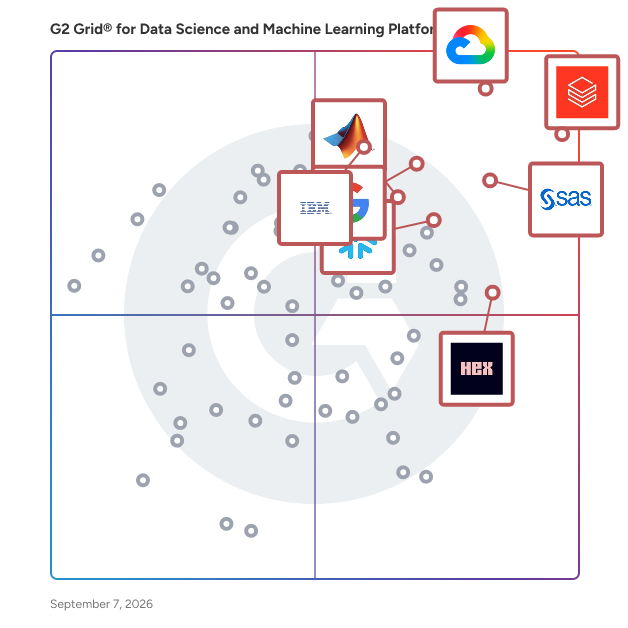
Highlighted products: Databricks, Gemini Enterprise Agent Platform, SAS Viya, Google Cloud AutoML, IBM watsonx.data, Snowflake, MATLAB, and Hex.
Underlying data: [Grid® JSON](https://www.g2.com/categories/data-science-and-machine-learning-platforms/grids.json?focus%5B%5D=databricks&focus%5B%5D=gemini-enterprise-agent-platform&focus%5B%5D=sas-sas-viya&focus%5B%5D=google-cloud-automl&focus%5B%5D=ibm-watsonx-data&focus%5B%5D=snowflake&focus%5B%5D=matlab&focus%5B%5D=hex-tech-hex)
Palona AI is an advanced artificial intelligence platform designed to revolutionize the way businesses analyze and interpret data. By leveraging cutting-edge machine learning algorithms, Palona AI enables organizations to extract meaningful insights from complex datasets, facilitating informed decision-making and strategic planning. Its intuitive interface and robust analytical tools make it accessible to users across various industries, empowering them to harness the full potential of their data assets. Key Features and Functionality: - Data Integration: Seamlessly connects with multiple data sources, ensuring comprehensive analysis without the need for manual data consolidation. - Predictive Analytics: Utilizes sophisticated algorithms to forecast trends and outcomes, aiding in proactive strategy development. - Natural Language Processing (NLP): Processes and understands human language, allowing for the analysis of unstructured data such as customer feedback and social media content. - Customizable Dashboards: Offers user-friendly dashboards that can be tailored to display relevant metrics and visualizations, enhancing data interpretation. - Automated Reporting: Generates detailed reports automatically, saving time and reducing the potential for human error. Primary Value and Solutions Provided: Palona AI addresses the challenge of data overload by transforming vast amounts of raw information into actionable insights. It empowers businesses to make data-driven decisions with confidence, leading to improved operational efficiency, enhanced customer experiences, and a competitive edge in the market. By automating complex analytical processes, Palona AI reduces the reliance on specialized data science teams, making advanced analytics accessible to a broader range of users within an organization.
PandasAI is an innovative Python library that enhances data analysis by integrating generative AI capabilities directly into pandas dataframes. This tool allows users to interact with their data using natural language queries, streamlining the process of data exploration and insight generation. Beyond querying, PandasAI offers functionalities to visualize data through graphs, cleanse datasets by addressing missing values, and enhance data quality through feature generation, making it a comprehensive tool for data scientists and analysts. Key Features and Functionality: - Natural Language Querying: Enables users to ask questions directly to their data in plain English, eliminating the need for complex SQL or Python code. - Data Visualization: Automatically generates graphs and charts to represent data insights visually. - Data Cleansing: Identifies and addresses missing values within datasets to improve data integrity. - Feature Generation: Enhances datasets by creating new features that can lead to more robust analyses. - Data Connectors: Supports connections to various data sources, including CSV, XLSX, PostgreSQL, MySQL, BigQuery, Databricks, and Snowflake, facilitating seamless data integration. Primary Value and Problem Solved: PandasAI democratizes data analysis by allowing users to interact with their datasets through natural language, significantly reducing the technical barrier associated with traditional data querying methods. This approach not only accelerates the data analysis process but also makes it more accessible to individuals without extensive programming or SQL expertise. By automating tasks such as data visualization, cleansing, and feature generation, PandasAI empowers users to derive meaningful insights more efficiently, thereby enhancing decision-making processes across various domains.
Pandas is a fast, powerful, flexible, and easy-to-use open-source data analysis and manipulation tool built on top of the Python programming language. It provides data structures and functions needed to work seamlessly with structured data, making it an essential library for data scientists and analysts. Key Features and Functionality: - Data Structures: Offers two primary data structures—Series (one-dimensional) and DataFrame (two-dimensional)—that handle a wide variety of data types. - Data Manipulation: Supports operations such as merging, reshaping, selecting, and data cleaning, enabling efficient data manipulation. - Data Analysis: Provides tools for performing statistical analysis, including descriptive statistics and aggregations. - Data Visualization: Integrates with libraries like Matplotlib and Seaborn to create informative visualizations. - Input/Output Operations: Facilitates reading from and writing to various file formats, including CSV, Excel, SQL databases, and more. Primary Value and User Solutions: Pandas simplifies the process of data analysis by offering intuitive and high-level data structures and methods. It addresses common challenges in data manipulation, such as handling missing data, aligning data from different sources, and performing complex transformations. By providing a consistent and efficient framework, Pandas enables users to focus on deriving insights from data rather than dealing with the intricacies of data processing.
Parabrain is an advanced artificial intelligence platform designed to enhance decision-making processes across various industries. By leveraging cutting-edge machine learning algorithms and data analytics, Parabrain provides users with actionable insights, predictive analytics, and automated solutions to complex problems. Its intuitive interface ensures seamless integration into existing workflows, enabling organizations to harness the power of AI without extensive technical expertise. Key Features and Functionality: - Predictive Analytics: Utilizes historical data to forecast future trends and outcomes, aiding in proactive decision-making. - Automated Decision Support: Offers real-time recommendations and solutions, reducing manual intervention and increasing efficiency. - Data Integration: Seamlessly connects with various data sources, ensuring comprehensive analysis and insights. - Customizable Models: Allows users to tailor AI models to specific industry needs and challenges. - User-Friendly Interface: Designed for ease of use, enabling quick adoption and minimal learning curve. Primary Value and Solutions: Parabrain addresses the challenge of data-driven decision-making by providing organizations with tools to analyze vast amounts of information efficiently. It empowers users to make informed decisions, optimize operations, and identify new opportunities, ultimately driving growth and competitive advantage. By automating complex processes and offering predictive insights, Parabrain reduces the burden on human resources and minimizes the risk of errors, leading to improved outcomes and increased productivity.
ParadeDB is a modern alternative to Elasticsearch, designed as a PostgreSQL extension to enhance Postgres with advanced search and analytics capabilities. It enables real-time, full-text, semantic, and hybrid search directly within Postgres, eliminating the need for external search engines and complex ETL processes. By integrating seamlessly with existing Postgres deployments, ParadeDB simplifies data management and ensures data consistency without additional infrastructure overhead. Key Features and Functionality: - Full-Text Search with BM25 Scoring: Implements the BM25 algorithm for relevance ranking, supporting boolean, fuzzy, boosted, and keyword queries. - Hybrid Search: Combines semantic relevance (vector search) with full-text relevance for improved search accuracy. - Faceted Search: Facilitates easy bucketing and metric collection over search results, enhancing analytical capabilities. - Advanced Tokenization: Offers over 12 different tokenizers to process text into searchable tokens, with support for more than 20 languages, including dictionary-based tokenizers. - Real-Time Search: Ensures that text indexes and vector columns are automatically synchronized with underlying data, providing up-to-date search results. - Zero ETL Integration: Operates as a logical replica of any managed Postgres or can be installed within self-hosted Postgres, eliminating the need for data duplication and complex ETL pipelines. Primary Value and User Solutions: ParadeDB addresses the challenges associated with integrating external search engines like Elasticsearch, such as operational complexity, data duplication, and consistency issues. By embedding powerful search and analytics functionalities directly into Postgres, it provides a unified, efficient, and scalable solution for developers seeking to enhance their applications with advanced search capabilities without the burden of managing separate search infrastructures.
Paradigm is an AI-native workspace that revolutionizes data management by automating manual research and spreadsheet tasks. With a familiar spreadsheet interface, it enables users to gather, structure, and act on data with human-level precision. By integrating AI capabilities, Paradigm streamlines workflows, enhances data accuracy, and significantly reduces the time spent on data-related tasks. Key Features and Functionality: - Data Integration: Seamlessly upload data from various sources, including existing spreadsheets, CRMs, or APIs, and watch it instantly integrate into your workspace. - AI-Powered Enrichment: Enhance your data by adding columns and prompts that pull in relevant information from trusted sources, providing comprehensive insights. - Custom Columns: Define custom columns using AI to fetch specific data on demand, tailoring the workspace to your unique needs. - Collaborative Environment: Work with your team in real-time to track changes, leave comments, and enrich data together, fostering a collaborative and connected workspace. - Automated Actions: Create automations for data flow into and out of Paradigm, integrating seamlessly with your favorite third-party tools to streamline processes. Primary Value and Solutions: Paradigm addresses the inefficiencies of manual data collection and processing by automating these tasks, allowing users to focus on strategic decision-making. It provides a centralized platform where scattered datasets are unified, ensuring data consistency and accuracy. By leveraging AI, Paradigm offers actionable insights, reduces operational costs, and accelerates project timelines, making it an invaluable tool for professionals across various industries.
Parcle AI is an advanced artificial intelligence platform designed to revolutionize data analysis and decision-making processes for businesses across various industries. By leveraging cutting-edge machine learning algorithms and natural language processing capabilities, Parcle AI enables organizations to extract valuable insights from complex datasets, automate routine tasks, and enhance overall operational efficiency. Key Features and Functionality: - Data Integration: Seamlessly consolidates data from multiple sources, providing a unified view for comprehensive analysis. - Predictive Analytics: Utilizes sophisticated algorithms to forecast trends and outcomes, aiding in proactive decision-making. - Natural Language Processing (NLP): Interprets and processes human language, facilitating intuitive interactions and data interpretation. - Automated Reporting: Generates detailed reports and visualizations, simplifying the communication of insights. - Scalability: Adapts to varying data volumes and business sizes, ensuring consistent performance as organizational needs evolve. Primary Value and Solutions Provided: Parcle AI addresses the challenge of managing and interpreting vast amounts of data by offering a streamlined, intelligent solution that transforms raw information into actionable insights. This empowers businesses to make informed decisions, optimize operations, and maintain a competitive edge in their respective markets. By automating data analysis and reporting, Parcle AI reduces the time and resources required for these tasks, allowing organizations to focus on strategic initiatives and innovation.
Parsagon is a cutting-edge platform designed to streamline data extraction and analysis from various web sources. It empowers users to efficiently gather, process, and interpret web data, facilitating informed decision-making and strategic planning. Key Features and Functionality: - Automated Data Extraction: Parsagon automates the process of collecting data from diverse web pages, saving time and reducing manual effort. - Data Transformation: The platform offers tools to clean and transform raw data into structured formats suitable for analysis. - Integration Capabilities: Parsagon seamlessly integrates with various data analysis and visualization tools, enhancing workflow efficiency. - User-Friendly Interface: Designed with simplicity in mind, Parsagon provides an intuitive interface accessible to users with varying technical expertise. Primary Value and User Solutions: Parsagon addresses the challenge of efficiently extracting and utilizing web data by automating and simplifying the process. This enables businesses, researchers, and analysts to focus on deriving insights and making data-driven decisions without the complexities of manual data collection and processing.
