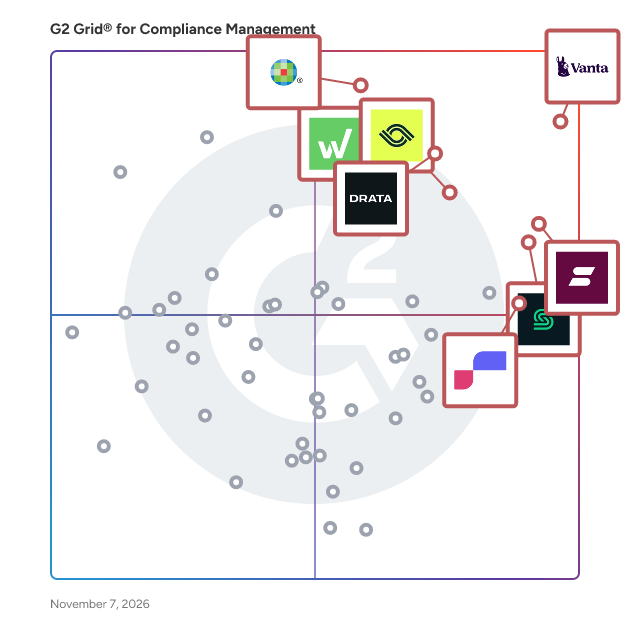
Compliance management software helps organizations track and maintain adherence to regulatory requirements and internal policies across the business. It provides a centralized system to organize compliance activities, documentation, controls, and evidence, and to keep programs aligned with obligations on an ongoing basis. This software supports audit programs run by the organization's own audit team and is not solely a portal for compiling and sharing evidence with an external certification auditor.
Organizations use compliance management software to run their compliance programs as a continuous operation rather than a one-time event. Compliance, risk, legal, and operations teams, along with other stakeholders responsible for demonstrating adherence, rely on these tools to define and maintain policies, assign and track compliance tasks, collect evidence, and follow issues through to remediation. By serving as a single system of record, compliance management software reduces the risk of gaps or lapses, increases visibility into compliance status, and keeps organizations audit-ready between formal audits. It is most widely used in regulated industries such as financial services, healthcare, technology, and manufacturing.
Core capabilities of compliance management software
To qualify for inclusion in the Compliance Management category, a product must:
- Store and manage compliance data, including policies, controls, regulatory obligations, and evidence, in a centralized system of record spanning multiple frameworks, regulations, or standards
- Manage workflows for ongoing compliance activities, including task assignment, tracking, and completion
- Track and manage compliance issues, including remediation actions and status updates
- Provide reporting on compliance status, activity history, and supporting documentation
How compliance management software differs from other tools
Compliance management software differs from audit management software, which runs the internal audit lifecycle, including risk-based planning, fieldwork, workpapers, findings, and reporting, for discrete audit engagements that have a defined scope, timeline, and endpoint. Audit management evaluates whether controls are operating effectively at a point in time through those engagements. However, compliance management continuously operates the underlying program, maintaining policies, controls, obligations, and evidence so the organization stays adherent day to day and remains audit-ready between engagements. Compliance management software also differs from security compliance software, which emphasizes automated technical control monitoring and evidence collection against specific cybersecurity frameworks such as SOC 2 and ISO 27001; by contrast, compliance management software centers on managing compliance programs across the business through structured workflows, policy management, and centralized tracking of controls, obligations, and documentation.