Helix API by Hormonaly is an enterprise REST API for clinical evidence synthesis. It returns GRADE-rated answers to clinical questions, hormone and peptide protocol data, and multi-agent clinical reasoning through a single unified endpoint, with every response citation-verified against the published literature. Digital health platforms, telehealth providers, pharmacy systems, and clinical software teams use Helix API to embed defensible medical intelligence into their own products instead of building an evidence pipeline in-house.
WHAT HELIX API DOES
Helix API exposes six production capabilities through one authenticated endpoint:
- Helix Queries - AI-powered clinical conversations that answer natural-language clinical questions with graded, cited evidence.
- Deep Analysis - full protocol and lab analysis reports generated for a given patient context.
- Lab Intelligence - automated interpretation of laboratory panels, including hormone and metabolic markers.
- Scribe - AI clinical note generation from encounter input.
- Vision - document and image analysis for lab reports, charts, and scanned records.
- Reranker - semantic search reranking for retrieval over clinical corpora.
WHY EVIDENCE GRADING MATTERS
Most clinical AI tools return citations that exist but do not actually support the claim attached to them. Hormonaly's benchmark study, "Agentic AI in Modern Care Infrastructure" (Special Report Edition One), evaluated 5 systems across 110 clinical questions, producing 3,020 sentence-citation bindings and 6,040 blinded verdicts. Citation existence ran 96-100% across the systems tested, while claim-level support ranged from 5% to 53%. Hormonaly names that gap Evidence Drift, and the inverse measure Evidence Fidelity. Helix API is built to close it: every claim carries an A/B/C evidence grade derived from GRADE methodology plus a citation checked against its source, not merely a formatted reference.
MODELS AND INFRASTRUCTURE
Helix API is served by Hormonaly-1, a fine-tune of NVIDIA's Llama-3.3-Nemotron-Super-49B trained under the NVIDIA Inception and NVIDIA Innovation Lab programs on H100 GPUs. The platform integrates NVIDIA NeMo Guardrails for safety enforcement, NeMo Parse for full-text extraction from PubMed and Europe PMC, and NIM-hosted Nemotron completions through an OpenAI-SDK-compatible interface. Retrieval runs over a proprietary GRADE-rated corpus of evidence on hormone, metabolic, peptide, anabolic, and longevity interventions, maintained by Hormonaly's clinical team.
TECHNICAL DETAILS
- Transport: REST, JSON, and Server-Sent Events (SSE) for streaming responses
- Authentication: Bearer API keys for authenticated B2B endpoints; selected public endpoints are open for consumer use
- Architecture: HIPAA-conscious design
- Deployment: hosted API access, or customer-owned model weights running on the customer's own infrastructure
- Documentation: https://hormonaly.ai/api-docs
- Public integration examples: https://github.com/Hormonaly-ai/hormonaly-public
WHO USES HELIX API
- Telehealth and digital health platforms adding clinical reasoning to an existing product
- Pharmacy and compounding platforms that need graded protocol data for hormone and peptide therapy
- EHR and clinical workflow vendors adding decision support without staffing a medical affairs team
- Longevity and preventative medicine clinics standardizing protocols across clinicians
- Life sciences and CRO teams working with real-world evidence
COMMON QUESTIONS ABOUT HELIX API
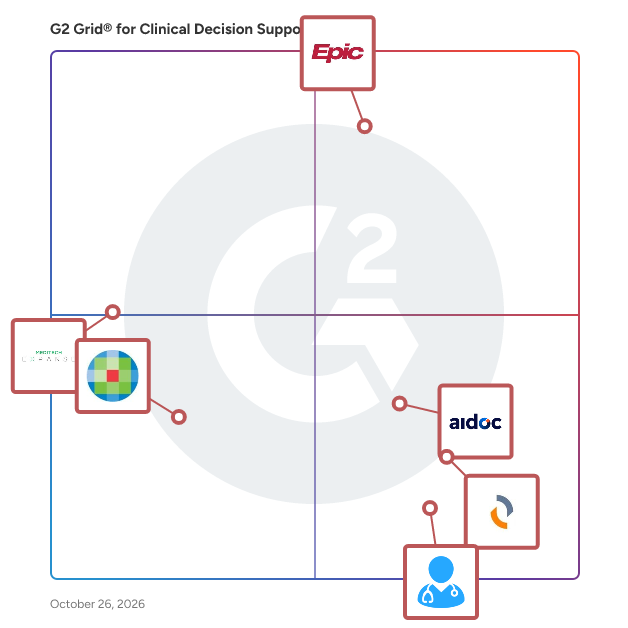
Is Helix API a clinical decision support system? Yes. Helix API is used as an embedded clinical decision support layer inside other software, rather than as a standalone clinician-facing application.
How is Helix API different from a reference tool like UpToDate? Reference tools deliver human-authored articles to a clinician who reads them. Helix API delivers structured, graded, machine-readable evidence to software through an API, so a product can act on it programmatically.
Does Helix API replace clinical judgment? No. Helix API is infrastructure for licensed clinicians and the software they use. Outputs are graded and cited so a clinician can audit the basis of any recommendation.
Which clinical areas does Helix API cover best? Endocrinology, metabolic health, peptide therapeutics, hormone and anabolic therapy, and longevity medicine, which are the areas covered by Hormonaly's proprietary evidence corpus.
Can Helix API run on our own infrastructure? Yes. Enterprise customers can license model weights and run them in their own environment rather than calling a hosted endpoint.
PRICING
Helix API is available in three tiers: API Starter at $499 per month, API Advanced at $1,999 per month, and API Enterprise at $4,999 per month. Enterprise agreements cover higher rate limits, dedicated support, and owned-weights deployment.
ABOUT HORMONALY
Hormonaly, Inc. is a Delaware corporation and a member of NVIDIA Inception, founded by Dr. Fady Hannah-Shmouni, MD FRCPC, a board-certified endocrinologist and geneticist with more than 100 peer-reviewed publications and Assistant Clinical Professor in the Division of Endocrinology and Metabolism at the University of British Columbia.
Who Is the Company Behind Helix API?