Buyer Intent Data Providers Resources
Articles, Glossary Terms, Discussions, and Reports to expand your knowledge on Buyer Intent Data Providers
Resource pages are designed to give you a cross-section of information we have on specific categories. You'll find articles from our experts, feature definitions, discussions from users like you, and reports from industry data.
Buyer Intent Data Providers Articles

Sales Prospecting: Tips and Tactics for a Strong Pipeline

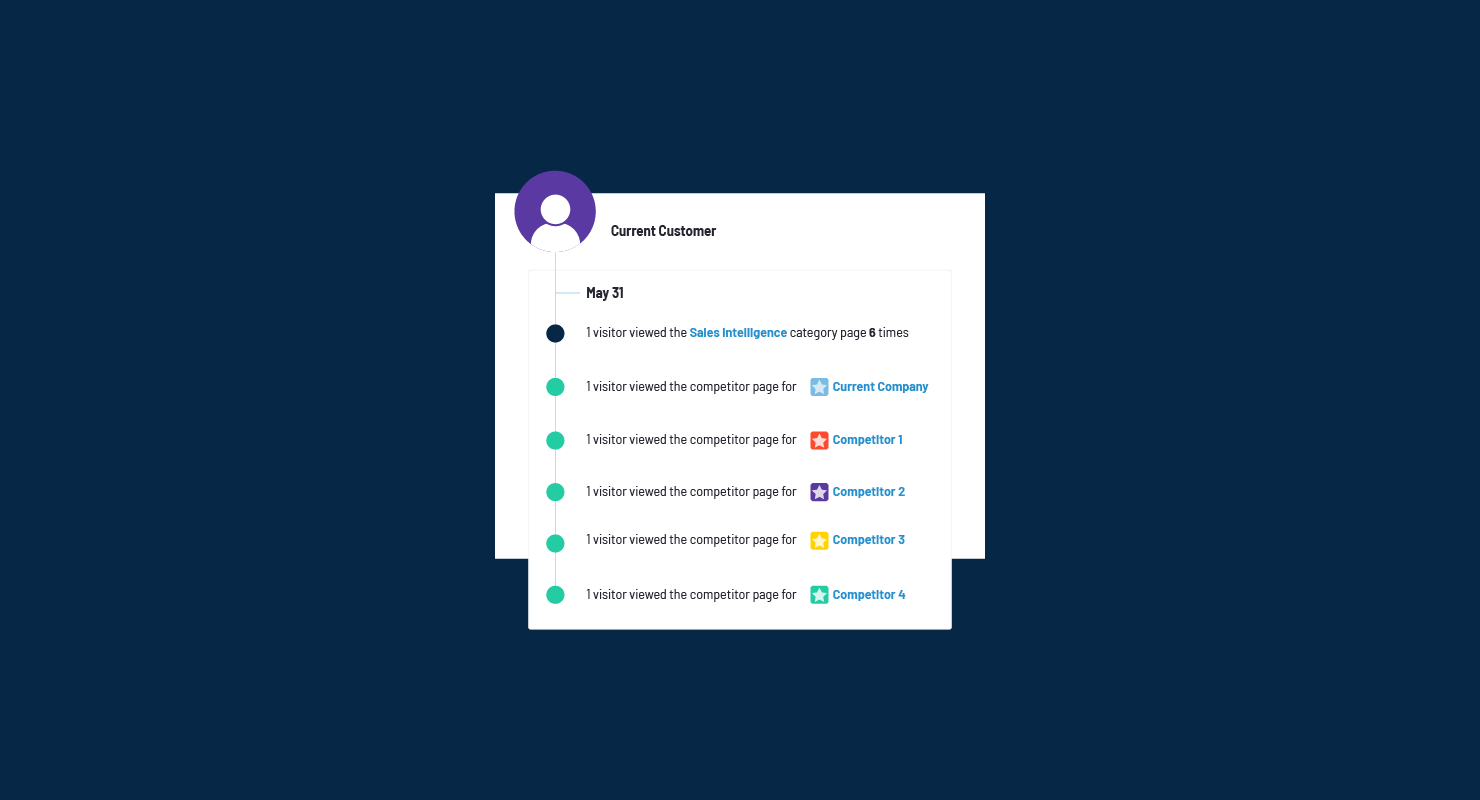
Make the Most of Your Buyer Intent TODAY
Buyer Intent Data Providers Glossary Terms

Intent data is sales intelligence that collects user behavior based on interests. Learn the benefits of collecting this data for sales and marketing teams.
Explore our Technology Glossary
Browse through dozens of terms to better understand the products you purchase and use everyday.
Buyer Intent Data Providers Discussions
I've been looking into which buyer intent data providers integrate directly with your CRM without manual list uploads for a sales ops team tired of exporting spreadsheets and importing them by hand every week. The real question is whether intent scores land on the account or contact record automatically, or whether someone still has to run a weekly upload. Here's what stood out in the Buyer Intent Data Providers category on G2.
- Demandbase One. Native Salesforce and HubSpot integrations write intent scores directly to account records. Best for Salesforce or HubSpot-native sales teams.
- 6sense Revenue Marketing. Syncs intent and predictive scores into CRM fields automatically, aimed at teams that want scoring visible without leaving the CRM. Best for teams wanting scores inside existing CRM views.
- Lead Forensics. Identifies visiting companies and pushes that data into CRM and marketing automation tools directly. Best for teams focused on website visitor identification.
- UpLead. CRM integrations available, though the workflow leans more toward list building than continuous intent scoring. Best for teams building lists rather than tracking ongoing intent.
- Apollo.io. Combines prospecting data with CRM sync, useful for teams that want intent signals alongside outbound sequencing in one tool. Best for teams wanting intent and outbound in one platform.
One thing worth checking before assuming "CRM integration" solves the manual work: whether the sync pushes new intent signals continuously or just refreshes on a daily or weekly batch, since a lot of "real-time" claims turn out to mean overnight.
For sales ops folks running one of these, did the CRM sync actually eliminate manual uploads, or did someone still end up doing cleanup work behind the scenes?
I’d also test how much cleanup the CRM sync creates after the data lands. An automated feed only saves time if sales ops isn’t still fixing duplicates, mismatched accounts, or stale intent fields every week.
I've been researching what's the best buyer intent data provider for account-based marketing programs for a team moving from broad demand gen toward targeting named accounts. The distinction that matters for ABM specifically is whether the intent signal maps cleanly to an account list, not just a firmographic match. Here's what stood out in the Buyer Intent Data Providers category on G2.
- Demandbase One. Built around account-based orchestration from the ground up, with intent as one input into a broader account scoring model. Best for teams running full ABM programs.
- 6sense Revenue Marketing. Predictive intent scoring designed to surface accounts already in-market before they've filled out a form. Best for teams wanting predictive account scoring.
- GTM Workspace - Powered by ZoomInfo. Combines intent signals with contact and company data in one workspace, useful when sales and marketing need the same account view. Best for teams wanting intent alongside contact data.
- Bombora Company Surge®. Pure-play intent data that plugs into other ABM platforms rather than being a full orchestration layer itself. Best for teams that already have an ABM platform and just need the intent feed.
- Clearbit. Company and contact enrichment with intent-adjacent signals, often used to build and qualify the account list that intent data then scores. Best for building the target account list itself.
Worth being honest that intent data is only as useful as the account list it's matched against. A lot of ABM programs spend months tuning intent scoring before realizing their account list was too broad in the first place.
For marketers running ABM with intent data, which provider's signal actually correlated with closed deals, and which one produced a lot of noise that sales ignored?
I’d want to separate signal coverage from signal usefulness here. A provider can surface a lot of “in-market” accounts, but that only helps ABM if sales actually acts on them. I’d be curious whether teams track acceptance or opportunity creation by intent source, because that seems like a cleaner test than simply measuring how many accounts get flagged.
I've been researching what's the best buyer intent data provider for account-based marketing programs for a team moving from broad demand gen toward targeting named accounts. The distinction that matters for ABM specifically is whether the intent signal maps cleanly to an account list, not just a firmographic match. Here's what stood out in the Buyer Intent Data Providers category on G2.
- Demandbase One. Built around account-based orchestration from the ground up, with intent as one input into a broader account scoring model. Best for teams running full ABM programs.
- 6sense Revenue Marketing. Predictive intent scoring designed to surface accounts already in-market before they've filled out a form. Best for teams wanting predictive account scoring.
- GTM Workspace - Powered by ZoomInfo. Combines intent signals with contact and company data in one workspace, useful when sales and marketing need the same account view. Best for teams wanting intent alongside contact data.
- Bombora Company Surge®. Pure-play intent data that plugs into other ABM platforms rather than being a full orchestration layer itself. Best for teams that already have an ABM platform and just need the intent feed.
- Clearbit. Company and contact enrichment with intent-adjacent signals, often used to build and qualify the account list that intent data then scores. Best for building the target account list itself.
Worth being honest that intent data is only as useful as the account list it's matched against. A lot of ABM programs spend months tuning intent scoring before realizing their account list was too broad in the first place.
For marketers running ABM with intent data, which provider's signal actually correlated with closed deals, and which one produced a lot of noise that sales ignored?
I’d want to separate signal coverage from signal usefulness here. A provider can surface a lot of “in-market” accounts, but that only helps ABM if sales actually acts on them. I’d be curious whether teams track acceptance or opportunity creation by intent source, because that seems like a cleaner test than simply measuring how many accounts get flagged.