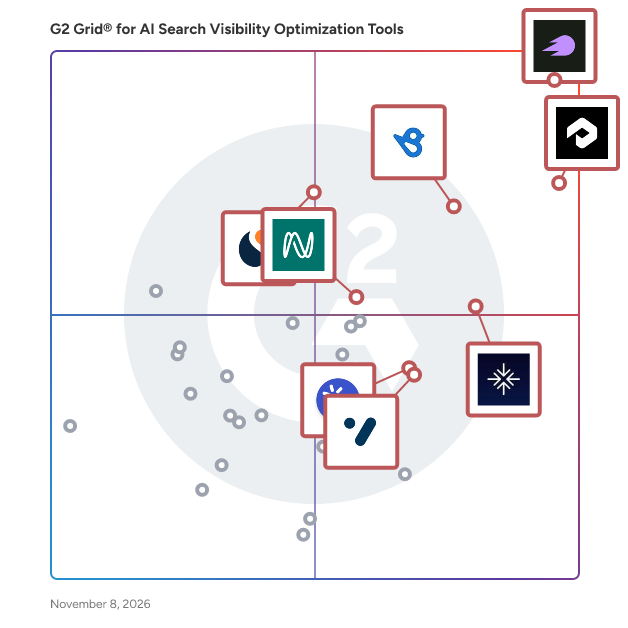
AI search visibility optimization tools help organizations structure, enrich, and optimize digital content so it can be accurately discovered, retrieved, and cited by AI-powered search engines and answer systems.
Core Capabilities of AI Search Visibility Optimization Tools
To qualify for inclusion in the AI Search Visibility Optimization category, a product must:
- Provide tools to structure, enrich, or optimize digital content specifically for AI-powered search or answer engines
- Improve semantic discoverability through entity recognition, schema structuring, or contextual enrichment
- Improve how AI systems interpret, retrieve, or prioritize content, whether through retrieval pipeline optimization, LLM-ready content structuring, semantic entity clarity, or technical readiness audits that directly affect AI citation outcomes
- Provide monitoring, reporting, or analysis of content visibility within AI-generated responses or answer systems
- Integrate with content management systems, web platforms, or digital publishing workflows
Common use cases for AI Search Visibility Optimization Tools
As AI-driven search experiences replace traditional keyword-based search results, organizations face a new challenge: ensuring their content is understood, retrieved, and surfaced when large language models (LLM) software, generate responses. These platforms improve how content is structured, semantically indexed, and entity-linked so that AI systems can identify authoritative information and incorporate it into generated answers.
Organizations use AI search visibility optimization tools to increase discoverability across AI-native search platforms, answer engines, chat-based interfaces, and retrieval-augmented generation (RAG) systems. Rather than focusing solely on page rankings, these solutions optimize for semantic relevance, structured data clarity, entity recognition, and retrieval accuracy.
These platforms are typically used by marketing teams, SEO specialists, content strategists, digital operations teams, and AI innovation leaders seeking to maintain visibility as search behavior shifts from links to generated answers.
How AI Search Visibility Optimization Tools Differs from Other Tools
Unlike traditional SEO tools, which primarily focus on keyword ranking and backlink optimization, AI search visibility optimization tools are designed to improve how AI systems interpret, retrieve, and reference content during answer generation.
These tools are also different from answer engine optimization (AEO) tools, which focus on structuring content to surface in direct answer formats, in that AI search visibility optimization tools go further, targeting how AI models weight, cite, and retrieve content across generative and agentic contexts. AI search visibility optimization tools fit within the broader AI infrastructure ecosystem as a content-layer optimization capability to ensure that organizational knowledge and digital assets remain accessible and authoritative in AI-mediated discovery systems.
They may integrate with CMS tools, structured data frameworks, analytics platforms, and AI monitoring tools to track how content performs within AI-powered ecosystems.
Insights from G2 on AI Search Visibility Optimization Tools
Based on category trends on G2, content structuring for AI answer engines and monitoring of visibility in AI-generated responses stand out as primary strengths. Marketing and SEO teams use these tools to improve how AI systems retrieve and cite their content.