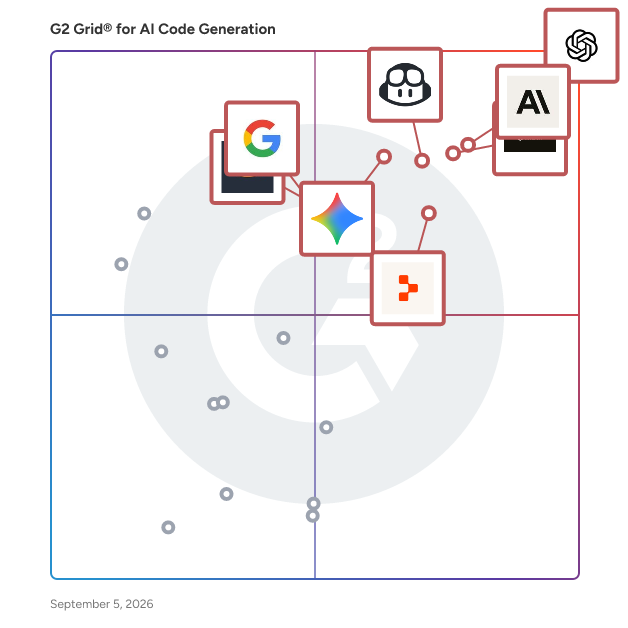
AI code generation software uses artificial intelligence and machine learning to automatically produce code from natural-language inputs, helping developers create efficient, functional code that aligns with best practices. These tools streamline repetitive tasks, improve consistency, and integrate either through chat interfaces or directly into IDEs as AI code assistants.
Core Capabilities of AI Code Generation Software
To qualify for inclusion in the AI Code Generation category, a product must:
- Be a general-purpose solution that generates code based on natural-language user inputs
- Generate code beyond simple autocomplete or inline code completion
- Serve as a standalone code generation tool or integrate with developers’ existing environments
- Support multiple programming languages
- Allow users to customize the AI-generated code
How AI Code Generation Software Differs from Other Tools
AI code generation tools focus on producing new code from natural-language prompts, whereas broader AI developer tools may center on debugging, suggestions, or documentation. These solutions prioritize automated code creation at scale, enabling developers to translate intent into working code across multiple languages.
Insights from G2 on AI Code Generation Software
Based on category trends on G2, increased productivity, reduced time spent on repetitive tasks, and improved code consistency. These platforms often point to strong IDE integrations and customization options stand out as key contributors to a smooth development experience.